

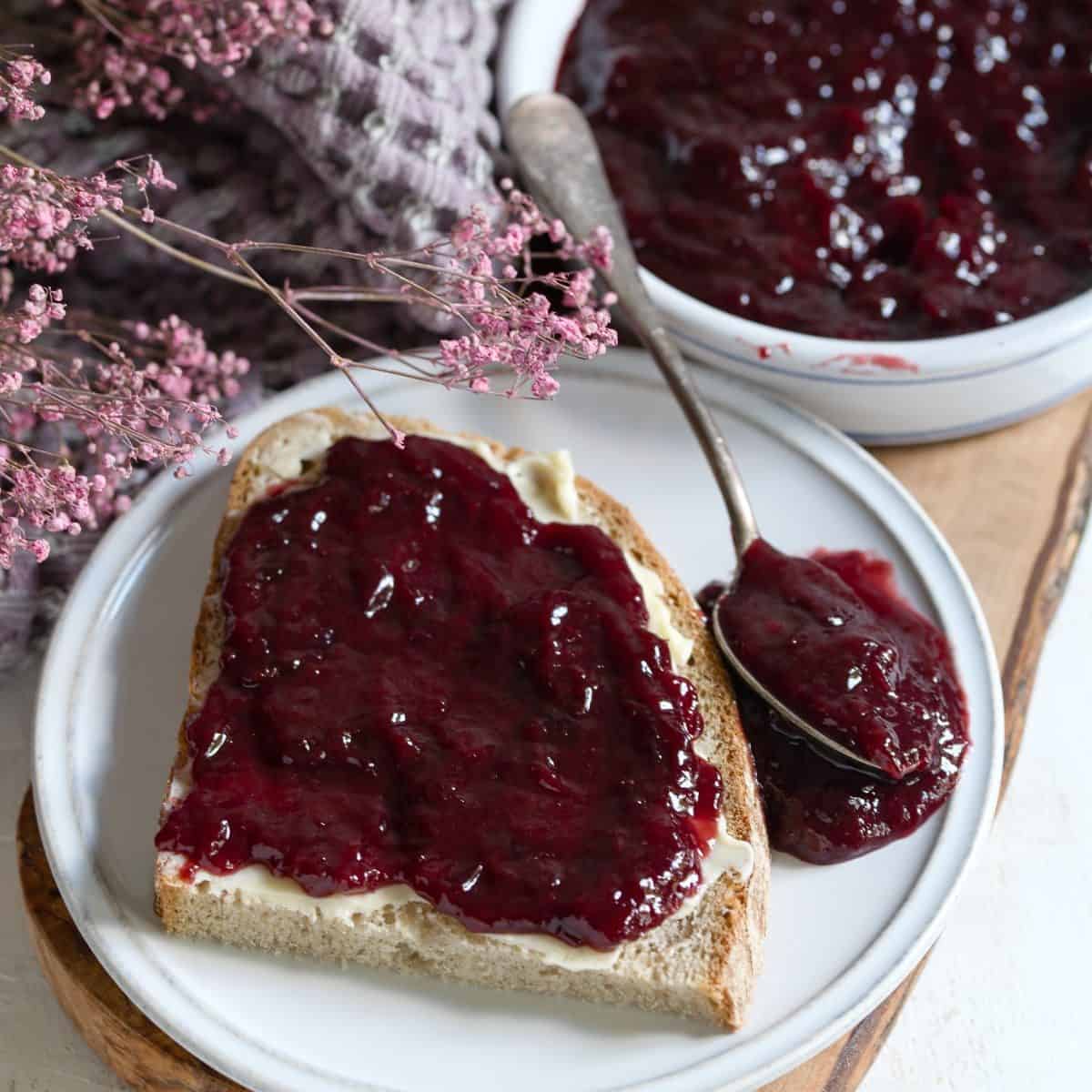
If your grandmother kept a jar of something dark, thick, and sweet as late summer in the pantry, it was most likely povidla, Czech plum butter. Spread on fresh chleba bread or tucked into kolaches (koláče) as a plum filling, this humble preserve has been part of Czech kitchens for generations. Today, I will show you how to make your own batch at home.
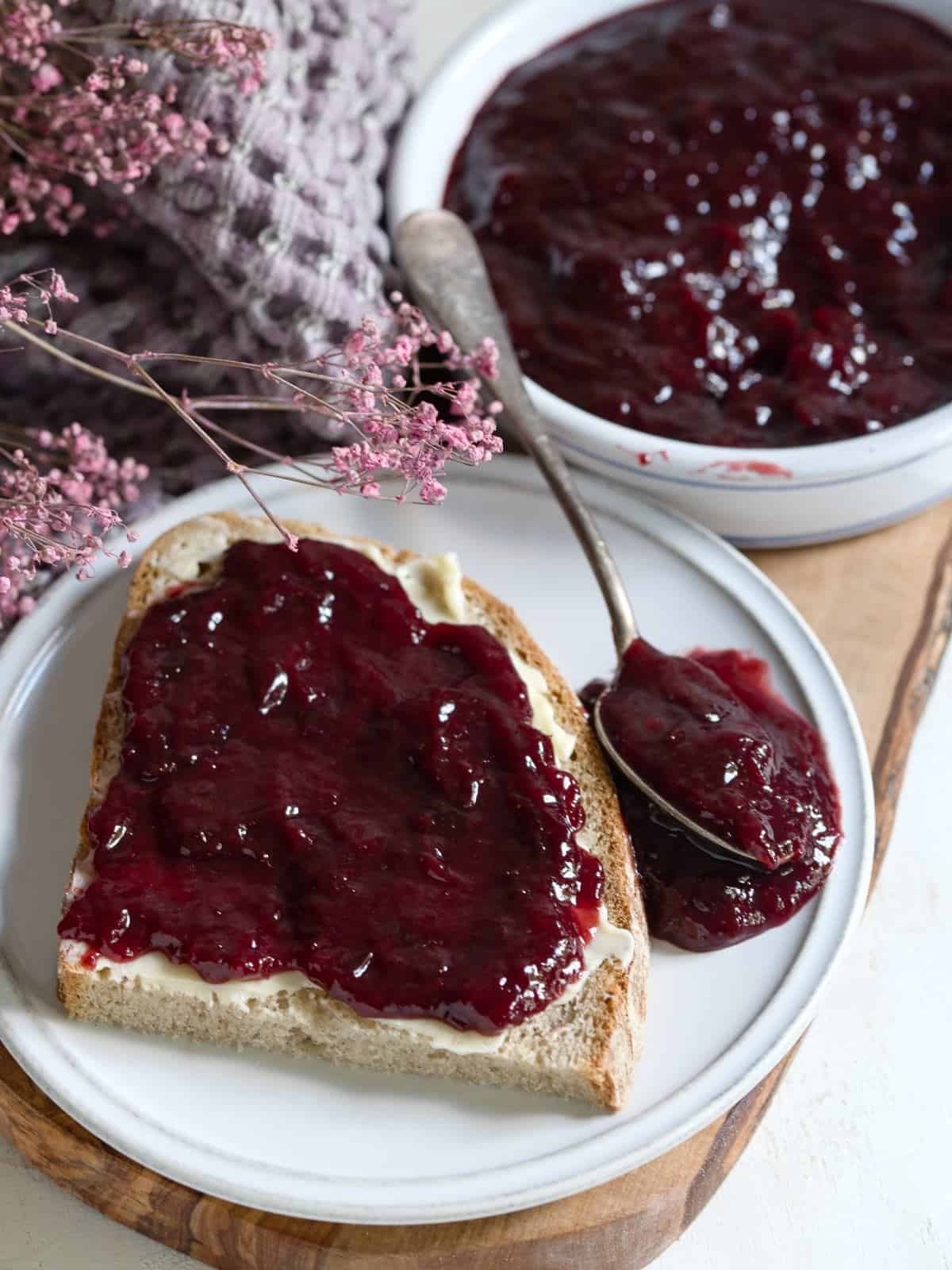
What is plum butter? Plum butter, in Czech povidla, is a rich, deep-colored fruit spread made by slowly cooking down ripe plums until their juices evaporate and the flavor concentrates. Unlike plum jam, it needs no added pectin and much less sugar. The long, gentle simmering alone makes povidla dense and glossy. Czechs often finish it with a pinch of warm spices and a shot of rum.
My recipe is the traditional stovetop method: the plums rest overnight with sugar and a splash of vinegar, then simmer for 3 to 3 ½ hours the next day. It asks for patience more than skill; the only step that truly matters is stirring often toward the end. I cook a big batch every plum season, and the jars keep in my pantry all year.
Jump to
➜ Why this povidla recipe works
- Start with less sugar than you think you need. As the butter cooks down, the plums' own sweetness concentrates, and too much sugar keeps povidla from setting thick, even after cooling. You can always sweeten at the end; taste first.
- Do not skip the vinegar. A splash of 5% apple cider vinegar poured over the plums overnight brightens the plum flavor, keeps the color rich, and draws out juice for easier cooking. It is an old Czech trick, not a typo!
- Judge doneness by the plate, not the clock. How long povidla need depends on how much water your plums hold; 3 hours is a guide, not a promise. You will find the simple cold-plate test at STEP 7.
"My brother sniffed the air and said, 'What are you making? It smells like Grandma's kitchen.' We last saw our grandmother about 65 years ago… It was a real thrill to taste homemade lekvar again!"
Ann
If you are stocking up on kolache fillings, also try my poppy seed filling (maková náplň), sweet cheese filling (tvarohová náplň), or even sweet cabbage filling, less traditional but soo good!
➜ The story of povidla in the Czech lands
Plum butter has deep roots in Czech history. In the 18th century, during the reign of Empress Maria Theresa, fruit trees were planted on a large scale along roads, to improve traffic safety and to provide fruit for the people. Plums soon became especially important: they were rich in natural sugar, while white sugar was still a costly luxury.
Villagers cooked large batches of plum butter in cauldrons set over an open fire, with anyone passing by stopping to stir so it would not burn. The butter was cooked very thick, without any added sugar, and lasted for months in the pantry. When a housewife wanted to bake with povidla, she softened it with a little water, sometimes flavored it with spices, and used it in both sweet and savory dishes.

For over 70 years, Czechs and Slovaks shared a common state called Czechoslovakia. Plum butter is just as beloved in today's Slovakia, where it is known as slivkový lekvár. If your family came from Slovak or Hungarian lands and called it lekvar, you are remembering the very same thing.
The plums of my childhood grew on the old trees at my grandparents' place. The ripe ones my grandma and I turned into plum compote (švestkový kompot) or povidla, and the fallen ones my grandpa distilled into slivovitz (slivovice), the famous Czech plum brandy. To this day, my mom uses povidla for her kecanej koláč, a sheet cake specialty from our home region of Podještědí in northern Bohemia.
Czech pronunciation
The full Czech name of this recipe is švestková povidla, which sounds roughly like SHVEST-ko-vah PO-vid-lah. I recorded a short audio clip so you can hear it from a native Czech speaker. Click and listen!
➜ Ingredients
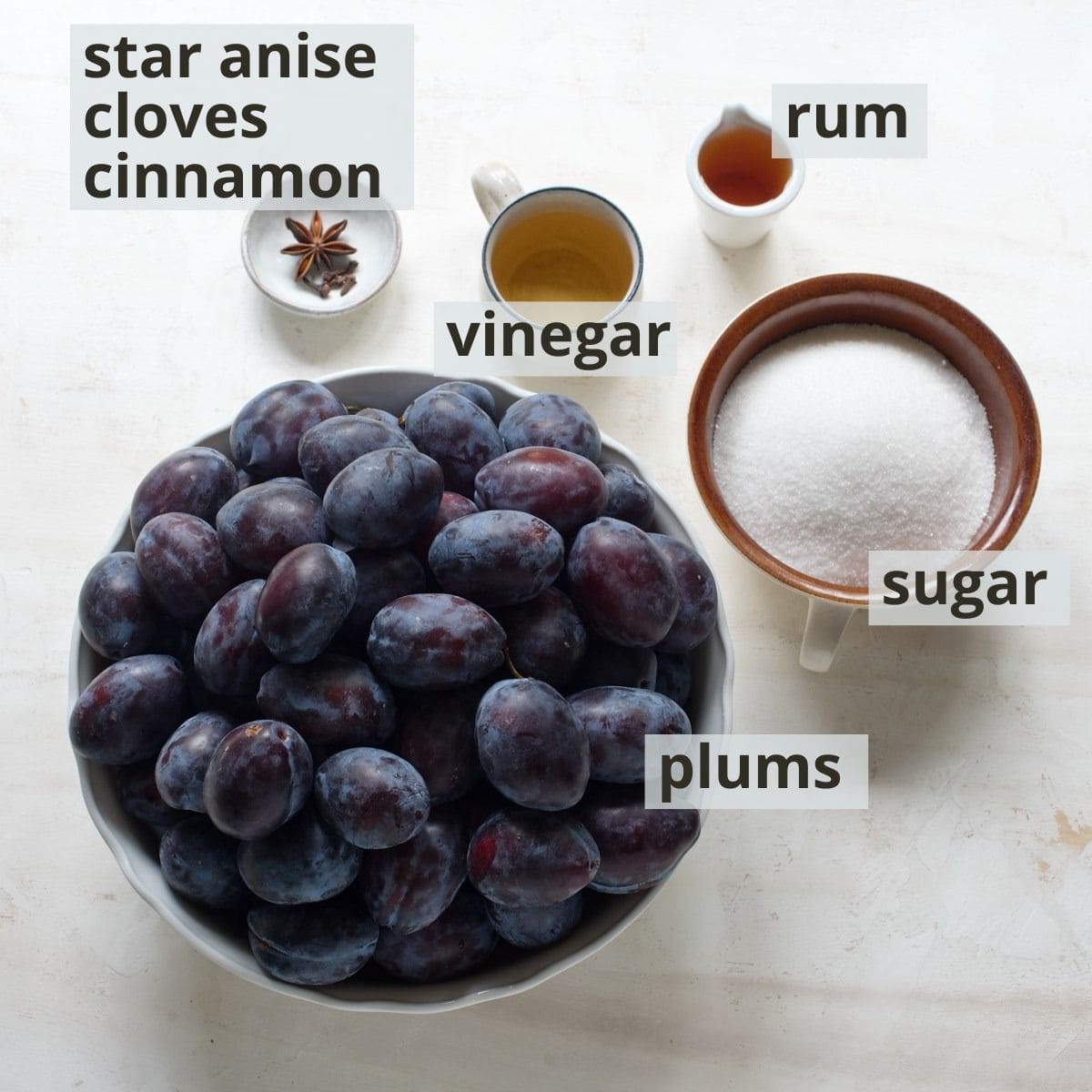
- Fresh plums, ideally Italian prune plums: small and oval, with a freestone pit that separates easily. They should be ripe and sweet, so they cook down into a naturally thick butter with no added pectin. Damsons, the small tart plums of Britain and Ireland, work beautifully as well. The season is short, from mid-August into September, so when you spot them at the market, do not hesitate.
- Granulated sugar, the amount depends on how sweet your plums are. It rounds out the flavor, supports the plums' natural pectin, and helps the jars keep longer in the pantry.
- Apple cider vinegar with 5% acidity, an ingredient common in old Czech recipes. Czech vinegar (ocet) has 8% acidity, so the milder apple cider vinegar is the closest match abroad.
- Czech rum (tuzemák), optional but very welcome: a shot in the middle of cooking adds a warm, caramel-like aroma. Real tuzemák is hard to find abroad, but Austrian Stroh or a spiced rum such as Kirkland from Costco works well. And if a friend from the Czech Republic ever visits, ask them to bring a bottle!
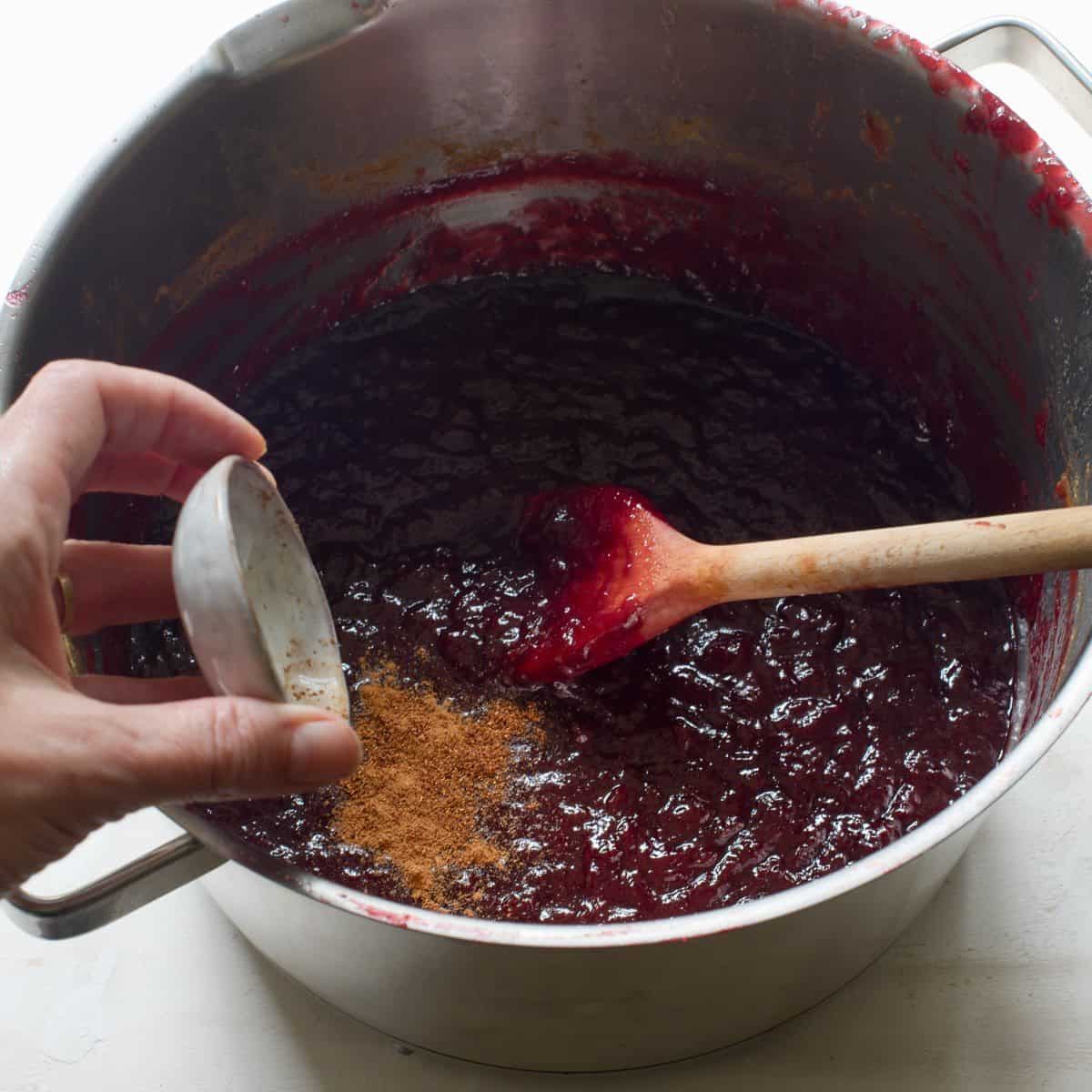
- Spices, a pinch each of ground star anise, cloves, and cinnamon, stirred in at the very end. Never add too much; you can adjust the flavor later. I grind the whole spices in a dedicated coffee grinder and sift them through a coarse sieve. If grinding whole spices is new to you, see how to grind whole spices at home.
Equipment
- Large pot (affiliate link), high sides keep the hot, splattering butter under control.
- Long-handled wooden spoon (affiliate link), for stirring at a safe distance from the bubbling butter.
- Preserving jars with screw lids (affiliate link), washed in the dishwasher; fill them while still warm so the glass does not crack.
- Wide-neck preserving funnel (affiliate link), set on the jar, it keeps the butter off the rims while filling.
➜ How to make plum butter
STEP 1: Prepare the plums. Wash and dry the plums. Cut each one lengthwise around, open it, and remove the pit. Cut the halves into smaller pieces and place them in a large pot.
👉 TIP: Wear disposable food gloves when pitting and cutting plums; they can stain your fingers and nails brown for days.
Do I need to peel the plums? No. The skins give the butter color and body, and they cook down completely.
STEP 2: Add sugar and vinegar. Stir the sugar and vinegar into the plums. Cover the pot with a clean cloth and leave it on the kitchen counter overnight. This simple trick draws out juice and flavor, which makes the cooking easier and faster.
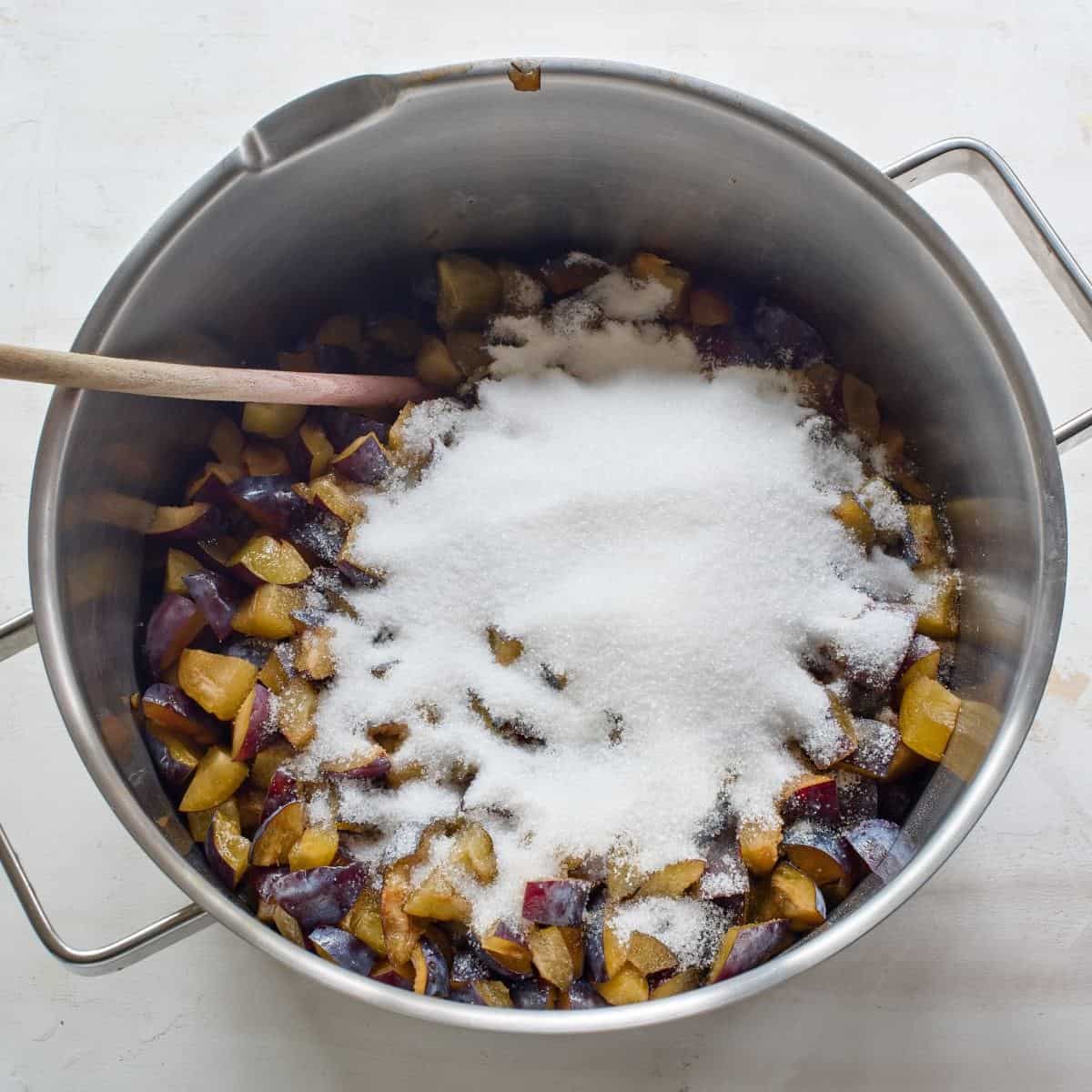
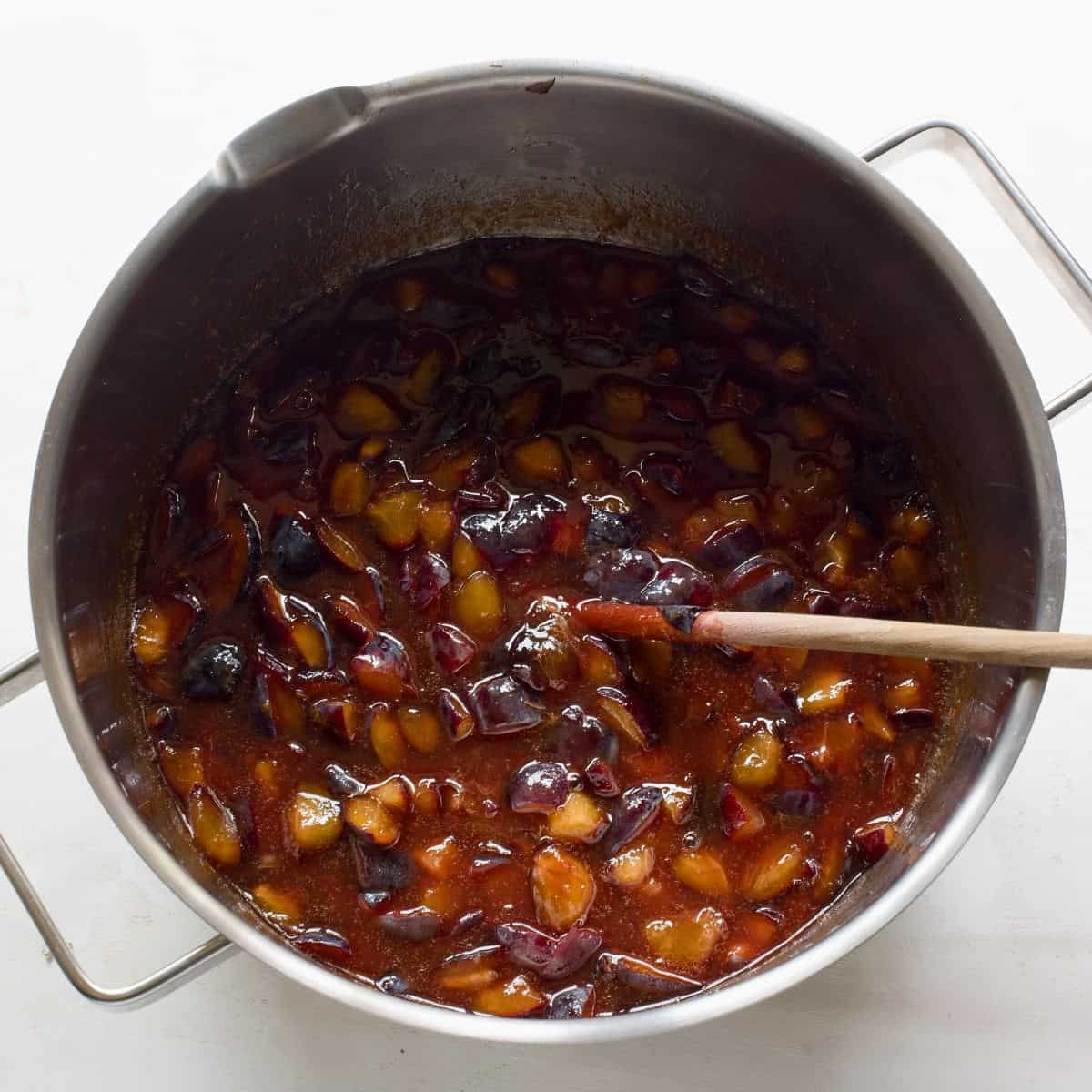
STEP 3: Start cooking. In the morning, stir the plums; they should be sitting in plenty of juice. Place the pot on the stove over high heat and bring the mixture to a gentle boil. Do not cover with a lid: plum butter thickens by letting the liquid evaporate.
👉 If you cook on a gas stove, place a heat diffuser or cast iron plate under the pot to spread the heat evenly.
STEP 4: Skim the foam. During cooking, foam will rise to the surface. Skim it off with a spoon or a flat sieve and discard it. This keeps the butter smooth.
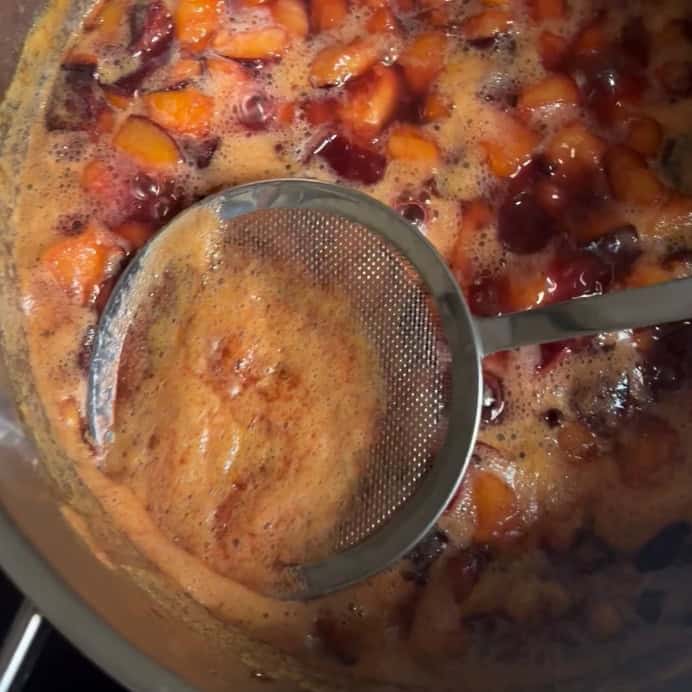
STEP 5: Simmer, thicken, and stir. Once boiling, lower the heat so the mixture simmers gently, and stir from time to time. As the liquid evaporates and the butter thickens, lower the heat further and stir more often so it does not scorch.
Should I stir constantly? Not at the beginning. But the thicker the butter gets, the more often you need to stir, and near the end I do not leave the pot unattended at all.
STEP 6: Add rum (optional). After about two hours, stir in a shot of rum. The butter will thin slightly, but it will thicken again as it cooks.
STEP 7: Check for doneness. After about 3 to 3 ½ hours, depending on your plums, the butter should be thick, glossy, and richly flavored. Drop a spoonful onto a cold plate: the mound should hold its shape, no juice should seep around the edges, and it should stay put even when you tilt the plate.
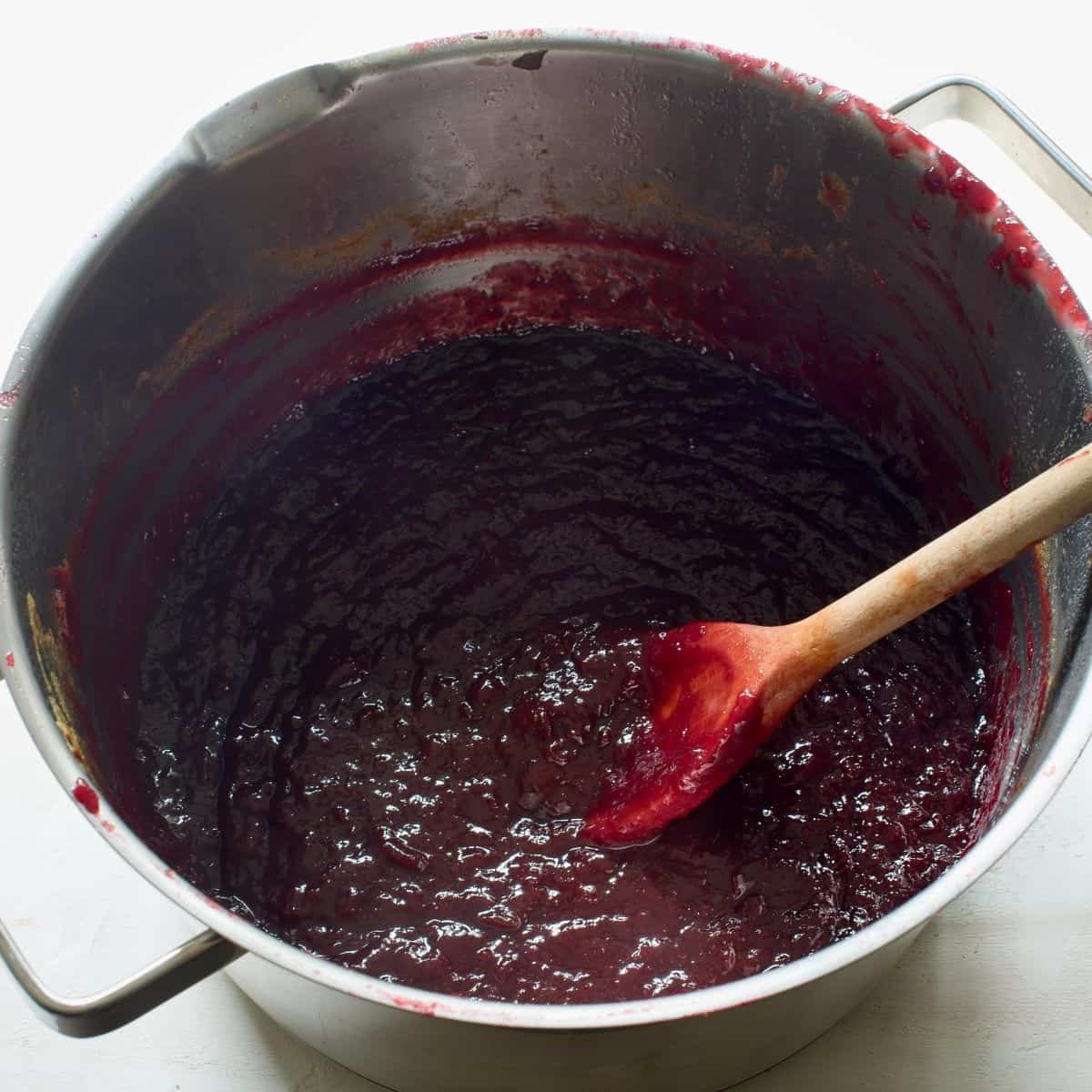
STEP 8: Add the spices. Stir in the ground star anise, cloves, and cinnamon. Taste, and adjust the sweetness with a little extra sugar if needed. In my experience, the butter is usually sweet enough on its own.
STEP 9: Fill the jars. Set a wide preserving funnel on a clean, dry, heated jar and fill it with hot plum butter. Wipe the rims clean if needed, screw the lids on tightly, and turn the jars upside down right away. Leave them like that for about an hour.
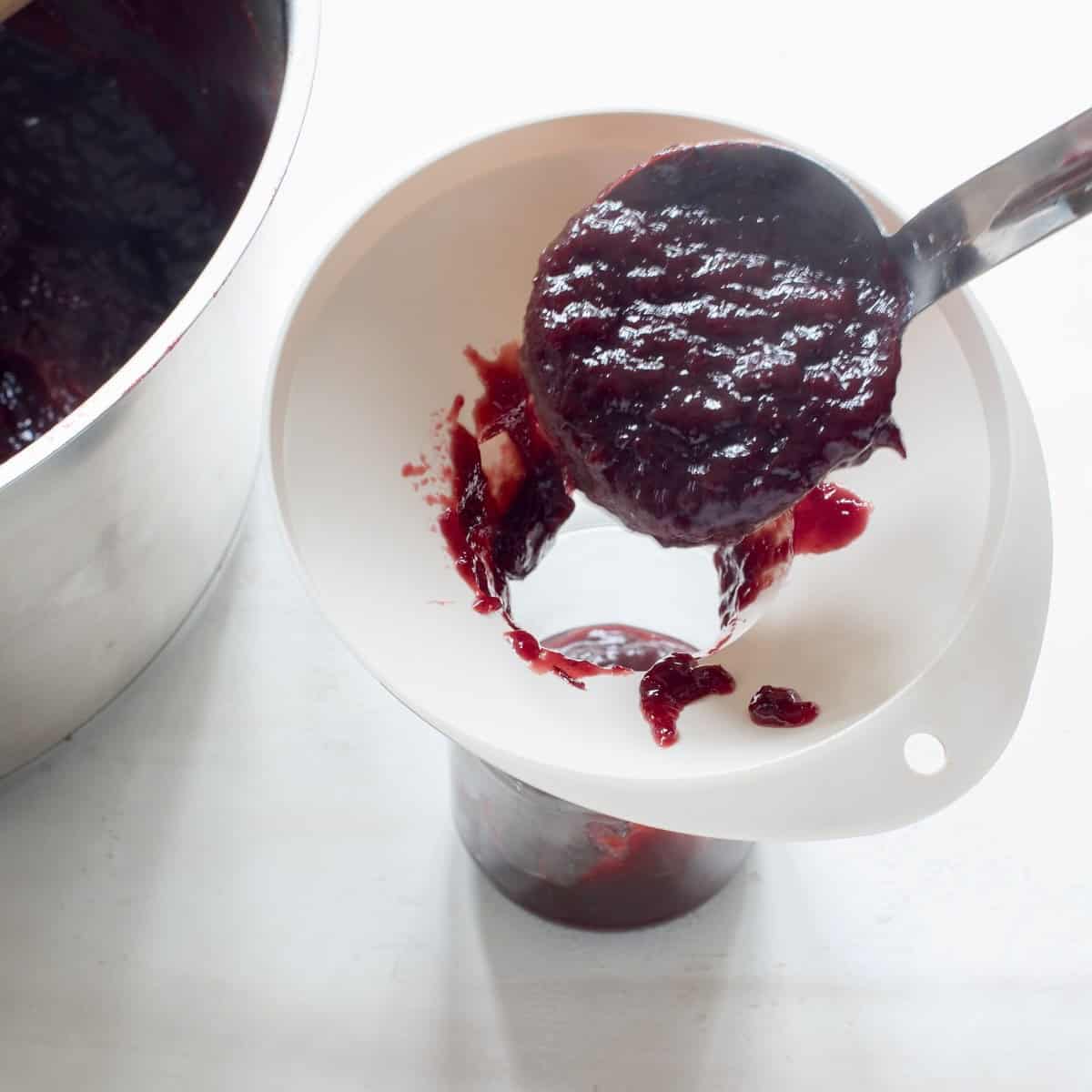
👉 Butter smeared on the rim can glue the lid shut, and opening the jar months later becomes a wrestling match.
➜ Video recipe
If you are more of a visual person, I recorded a quick video of making plum butter. You can find it on my YouTube channel here: Plum butter (povidla) short recipe.
➜ Variations
- Prepared another way, some cooks grind the pitted plums in a meat grinder before cooking, while others chop or tear them by hand. In the old days, plums went into the pot unpitted, and the finished butter was strained through a coarse sieve.
- Baked in the oven, a popular low-effort method in the Czech Republic: spread the marinated plums in a deep baking pan and bake uncovered, first at 450°F (230°C) for about 30 minutes, then at 285°F (140°C) for another 3 to 6 hours until thick. No stirring is needed, and nothing splatters over your stovetop.
- Cooked in a slow cooker, the modern hands-off way: first on HIGH for about 2 hours until the plums soften, then on LOW for 8 to 10 hours, ideally overnight. Prop the lid open with a wooden spoon handle so the steam can escape, and give it a stir now and then.
➜ How to use plum butter
Plum butter made this way is perfect for baking: it holds its shape in the oven and will not melt or run like softer jams. It shines in Moravian kolache (koláče), buchty sweet buns, and plum-filled crescent cookies (povidlové šátečky), but it is just as delicious on a slice of a rohlík bread roll. Some Czech cooks also fill fruit dumplings (ovocné knedlíky) with povidla instead of fresh fruit.
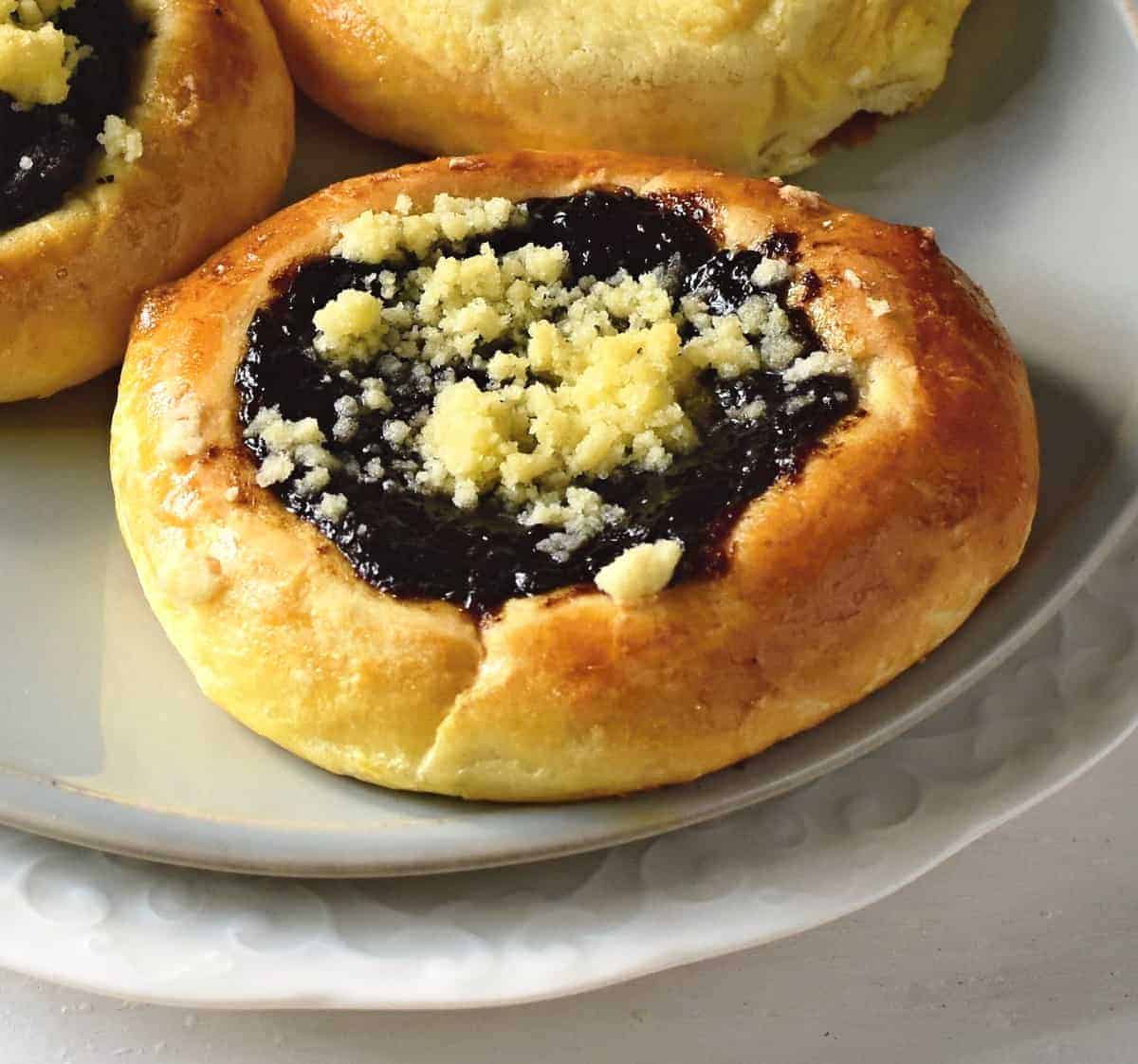
In the old days, Czechs also turned povidla into a warm plum butter sauce (švestková omáčka), served alongside meat and dumplings. And if plum season has left you with more fruit than jars, browse all the plum recipes on my blog. Dobrou chuť!
➜ How to store
As it cools, plum butter thickens even more. Store the sealed jars in a cool, dark pantry, where they keep well until the next plum season. Once a jar is opened, keep it in the refrigerator.
From time to time, check the jars in the pantry to make sure the surface stays clean, with no sign of mold.
➜ FAQ
Plum butter is cooked much longer, until the fruit breaks down completely and the juices evaporate, giving a dense, smooth, dark spread with less added sugar. Plum jam cooks briefly, keeps pieces of fruit, and relies on more sugar, often with added pectin, to set.
Yes. Prune butter, sometimes sold as lekvar in America, is made exactly this way: simmer pitted prunes in a little water until soft, about 15 to 20 minutes, then mash or blend them into a thick paste and sweeten to taste. It needs no hours of cooking, since the fruit is already concentrated.
Traditionally, no. I cook the butter thick, add sugar as a preservative, fill the jars hot, and turn them upside down; that has always been enough in my kitchen. If you prefer extra peace of mind, process the jars in simmering water for 10 minutes.
Warm it gently with a spoonful of water or rum, stirring until spreadable. Never let it get runny.
It needs more time. Plum butter thickens only by evaporation, so juicy plums can take an extra hour of uncovered simmering.
Tried this recipe?
Leave a review down in the comments! ⭐⭐⭐⭐⭐
Other readers and I love hearing what you think. Stay in touch by following me on Facebook and Pinterest. For more Czech stuff, subscribe to my newsletter!
📖 Recipe

Homemade Plum Butter (Czech Povidla)
Tap or hover to scale
This recipe was developed in grams. For the most accurate results, tap the purple METRIC toggle and use a kitchen scale.
Ingredients
- 7 pounds Italian plums fresh, ripe and sweet
- 1 ¾ cups granulated sugar adjust to the sweetness of your plums
- ½ cup apple cider vinegar 5% acidity
- ⅓ cup Czech rum optional; or Austrian Stroh or spiced rum
- 1 star anise ground
- 5 cloves ground
- ½ teaspoon cinnamon ground
Instructions
- Wash and dry 7 pounds Italian plums. Cut them lengthwise, remove the pits, then cut into smaller pieces. Place in a large pot.
- Stir 1 ¾ cups granulated sugar and ½ cup apple cider vinegar into the plums. Cover the pot with a clean cloth and leave on the counter overnight.
- The next day, stir and bring the mixture to a gentle boil over high heat, uncovered.
- Reduce the heat and simmer gently, stirring from time to time. Skim off any foam. As the butter thickens, lower the heat further and stir more often so it does not scorch.
- After about 2 hours, stir in ⅓ cup Czech rum (optional).
- After 3 to 3 ½ hours of cooking, test for doneness: a spoonful dropped onto a cold plate should hold its shape, with no juice seeping around the edges.
- Grind and sift 1 star anise and 5 cloves, then and add ½ teaspoon cinnamon. Stir in the ground spices. Taste and adjust the sweetness with a little sugar if needed.
- Spoon the hot plum butter into clean, heated jars using a wide funnel. Wipe the rims, seal tightly with lids, and turn the jars upside down for about 1 hour.
Notes
- Yield: the basic recipe makes about 6 full 8-oz (250 ml) jars.
- Sugar: start with less than you think you need; the plums' sweetness concentrates as the butter cooks down, and too much sugar keeps povidla from setting thick.
- Stirring: the thicker the butter, the more often it needs stirring; near the end, do not leave the pot unattended.
- Storage: sealed jars keep in a cool, dark pantry until the next plum season; refrigerate after opening.
- Canning: traditionally not needed. For extra peace of mind, process the jars in simmering water for 10 minutes.


Ellen says
I love trying jams and spreads from around the world, so when I found a glass of plum butter in my local supermarket, I was delighted! My first kolache made with plum butter filling were great, I can see why Czechs love this.
Petra Kupská says
Hello Ellen, plum jam is really at the top of popularity when Czechs make kolache or buchty buns! A quick tip: adding a little rum to the powidl / lekvar makes them even more fragrant and tasty! 🙂
Margie says
Can you make the povidl without the spices?
Petra Kupská says
Yes, absolutely, Margie. The spices, star anise, cloves, and cinnamon, and the shot of rum are both stirred in only at the very end and are entirely optional. Simply skip that step and cook the povidla exactly the same way, you will get a plain, pure plum flavor.
Harriet Fanzo says
Somebody just gave me 4 (1lb) bags of dried plums can I add all ingredients and boil it down if I chop up plums 🤔
Nick says
I have not made your recipe yet, but I am writing to let you know that just reading it brought back memories of my child hood in England in the late 1940s and 50s. We had a plum tree in the garden which was very prolific. My mum used to make Plum butter and your recipe and directions are very similar even down to putting the plum butter on a small plate and tilting it to see if it was ready. However it was always pure plums, no spices and no rum. The plums are in season now in Ontario where I live now so I am going to try this.
Petra Kupská | Cook Like Czechs says
Hi Nick, thank you for your comment and kind words! I am so glad the recipe brings back memories of your mom’s cooking. The rum and spices are optional, but they do add extra flavor to the povidla. Traditionally, plum butter was made by slowly cooking the plums until they thickened; in fact, it was considered a semi-finished product. Whenever housewives wanted to use it in cooking, they would first dilute it and season it as needed. In any case, I wish you the best of luck with the recipe, and I would love to hear how it turns out!
Kiley says
Hi Petra, I am so glad I came across this recipe! We just picked dozens of pounds of damsons, which are wild Irish plums that look very similar to the Italian plums so I am going to make this recipe with them. Povidla is my favourite filling for kolache! I have had plum butter with chopped walnuts before and really enjoyed it, but if I wanted to add them, when during cooking would I? At the end with the spices? Thank you for these amazing recipes that always remind me of my childhood and my babi's cooking.
Ann Williams says
I made a batch of lekvar today. (I have to use the Slovak name in honor of my ancestors.) It took all day in my crock pot, and it’s wonderful!
My brother came over as it was simmering away. He sniffed the air and said, “ What are you making ? It smells like Grandma’s kitchen.” For us, we last saw our grandmother about 65 years ago, and my brother was only 5 years old! But we both remember. It was a real thrill to taste homemade lekvar again! Thank you for writing about how it is made.
Petra Kupská | Cook Like Czechs says
That is such a lovely memory. It is wonderfull that the scent of your cooking brought all the good memories back for you and your brother, even after so many years. I am so glad the recipe helped you recreate that special feeling.❤️You are very welcome and thank you for sharing!
Steven Kulhanek says
I love this stuff! So easy to make and so good.
Petra Kupská says
That makes me so happy! 🙂
Diana Rhoades says
This is a fabulous recipe! I've never made it before, but povidla has been a family favorite. I made it last fall and plan to do it again this year when the plums are ready. Thanks for the recipe!
Petra Kupská says
I am delighted that povidla has become a family favorite in your kitchen too. I hope this year's batch turns out just as good once the plums come in!
Leslie Gries says
Just great! I would only add one note: if you don’t have enough liquid from the plums on the 2nd day you can just add water as needed to cover them because it just boils off, does not weaken the flavor.
Petra Kupská says
Thank you for the practical advice. The plums lose nothing that way, and it saves a few nerves during the long simmer. I am sure other readers will be glad to know. 🙂
Ivan says
This is the first time I made plum butter.Recipe turned to be easy and butter is delicious.Thank you.
Petra Kupská says
Congratulations on your very first batch! This is a recipe that rewards patience more than skill, and it sounds like you had plenty of it. 👍
Ulla says
I made it yesterday and it is just delicious! Thank you for sharing this wonderful recipe!!!
Petra Kupská says
What a lovely message to read! Homemade povidla has a depth no jar from the store can match. Enjoy every spoonful. ❤️
Diane says
Thank you for the recipe! It is absolutely delicious! I used the spices and since I didn't have rum I used port wine and brandy. I used plums and will try prunes this winter. I'm so glad I found you!
Petra Kupská says
So happy the povidla turned out well for you! Port wine and brandy sound like a lovely pairing with plums. Prunes work nicely in winter too, the result is just a little darker and sweeter. Welcome to Cook Like Czechs, I am glad you are here. 🧡