

Lenten fasting in the Czech lands was closely connected with religious life and remained a visible part of society throughout the 19th century and into the early decades of the 20th century. For many families, especially in rural communities, the forty days before Easter shaped daily routines, cooking habits, and the rhythm of village life.
Over time, the strictness of fasting gradually softened. During the communist period in former Czechoslovakia, when public religious life was significantly restricted, many of these customs faded from everyday practice.
For earlier generations, Lent was not an abstract concept. It was something you could see on the table, taste in the soup pot, and feel in the quieter atmosphere of the village.
Jump to
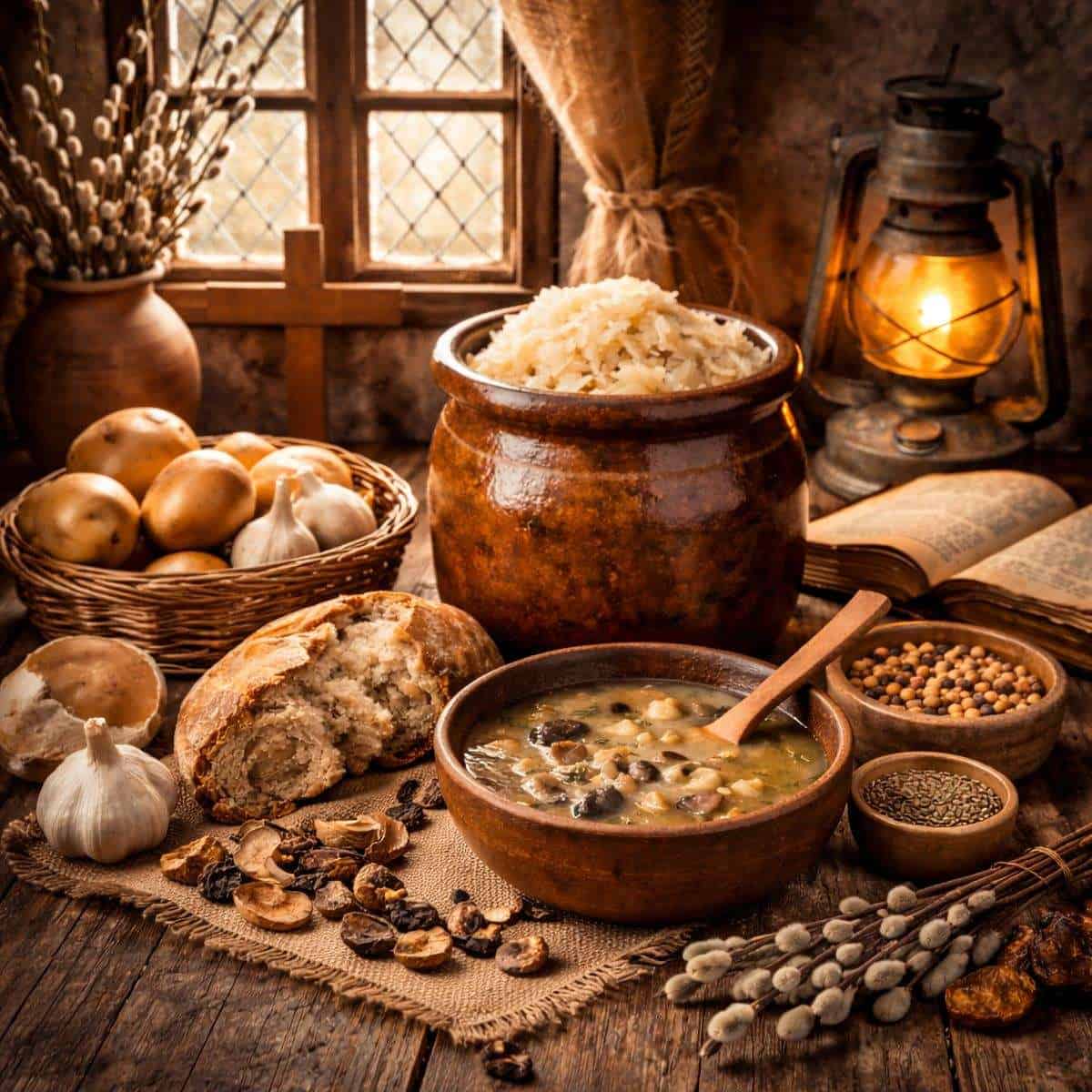
CZECH LENTEN RECIPE #1: Pučálka, sprouted pea fried in a pan
➜ From Masopust celebration to Lenten quiet
Lent began on Ash Wednesday (Popeleční středa), marking a clear turning point in the year. Just a day earlier, villages were still alive with the joyful spirit of Masopust. There were winter balls, dance parties, pig slaughter feasts, weddings, and spinning gatherings (přástky), where neighbors met to work on handicrafts and enjoy one another's company.
Then, quite suddenly, everything changed.
The contrast between Masopust Tuesday and Ash Wednesday was striking. Old-World Czechs were known for trying to prolong the celebration as long as possible. Sometimes neighbors gathered for one final evening of music before the fasting truly began. But once Lent arrived, daily life shifted toward restraint and simplicity.
Ash Wednesday itself was sometimes called škaredá (ugly), černá (black), or even bláznivá (crazy). The word "ugly" may have referred to the soot that was traditionally swept from chimneys at that time, or it may have reflected the strictness of the fasting period that followed.
CZECH LENTEN RECIPE #2: Farmers' cheese pancakes - tvarohové placky

➜ How long did Lent last?
Lent was traditionally observed as forty days of fasting leading up to Easter. Although there are 46 calendar days between Ash Wednesday and Easter Sunday, the six Sundays were not counted among the fasting days. Sundays were treated as small celebrations within the season, when the strictness of the fast was eased.
This rhythm of discipline and brief relief shaped the spiritual and practical calendar of village life.
➜ What did fasting mean in practice?
In its strictest form, Lenten fasting meant avoiding all food of animal origin. Not only meat, but also milk, cheese, butter, and eggs were excluded from the diet. Alcohol and tobacco were also avoided.
These rules were observed most carefully in rural communities, where traditional religious life tended to persist longer than in towns and cities. In urban areas, the strictness of fasting began to soften earlier, and even in the countryside the practice gradually became less rigorous over time, with many families keeping only selected elements of the fast.
CZECH LENTEN RECIPE #3: Caraway soup - Kmínová polévka

➜ Traditional Lenten foods in Czech kitchens
The fasting table was simple but nourishing. Families relied on ingredients that were affordable, stored for winter, and free of animal fat.
Common Lenten foods included:
- Soups made from dried mushrooms such as Kyselo sourdough soup
- Caraway seed and garlic soups
- Legumes such as peas, lentils and beans
- Potatoes
- Simple bread and grain porridges
- Dried fruit such as Křížaly
- Sauerkraut, carefully pickled in autumn
Sauerkraut played a particularly important role. Stored in large earthenware crocks throughout the winter, it helped sustain households during the final cold weeks before spring.
Meals were modest but practical, reflecting both religious discipline and the economic realities of rural life.
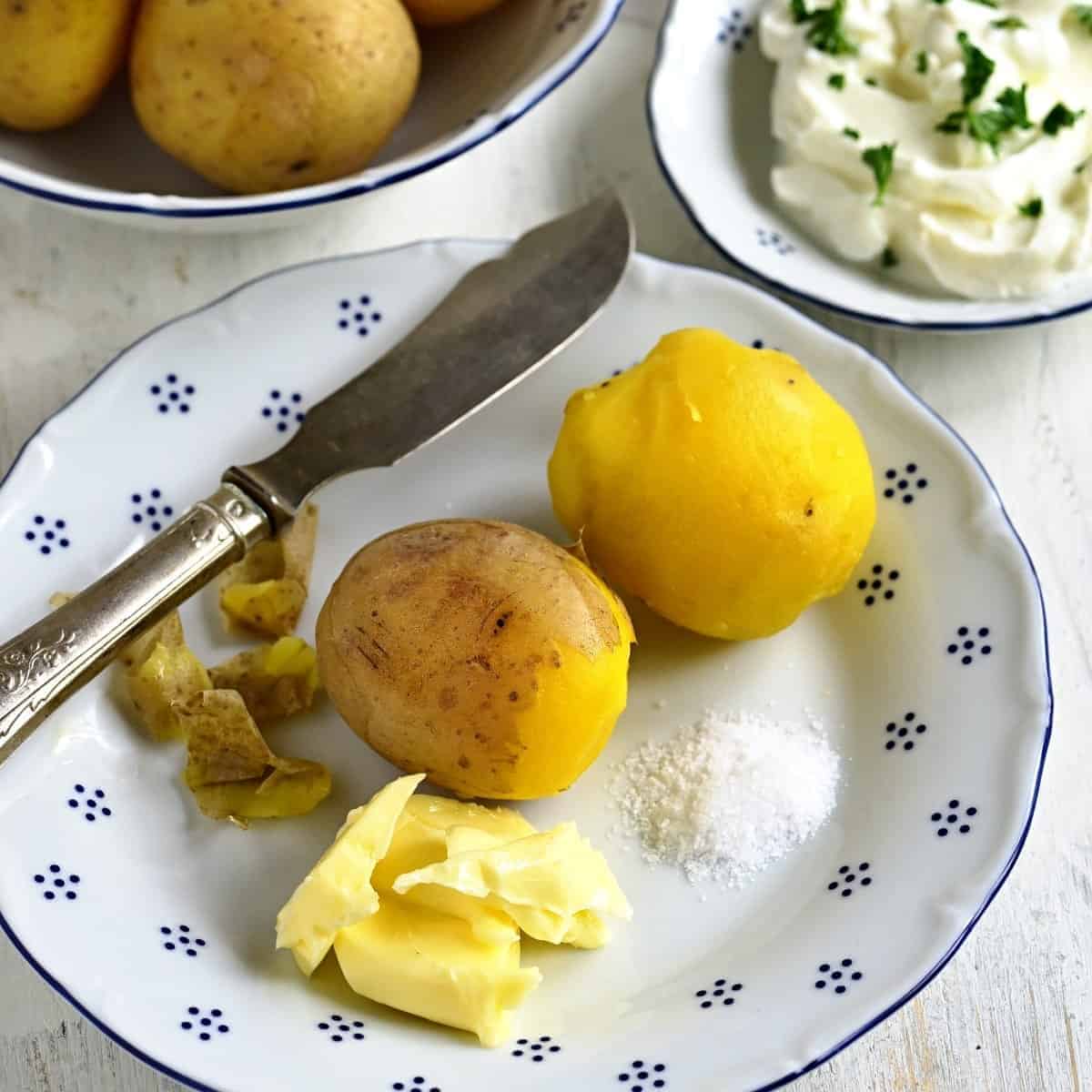
CZECH LENTEN RECIPE #4: Peeled potatoes - Brambory na loupačku
➜ Separate dishes for Lent
In some households, the beginning of Lent brought visible changes in the kitchen itself. Plates and utensils normally used for meat and lard were put away. In their place, wooden bowls and clay spoons that had never touched grease were brought out.
Faith was not only spoken about; it was practiced in everyday details.
CZECH LENTEN RECIPE #5: Green spinach sauce - Špenátová omáčka
➜ A local custom from northern Bohemia
From my region, the Liberec area in northern Bohemia, there is a charming record of a local custom that feels very human to me. On Ash Wednesday, a man dressed in unusual, slightly ridiculous clothes would walk through the village carrying a lit lantern. He would explain, quite seriously, that he was searching for the lost Masopust.
People laughed as he asked to look inside their houses, carefully peeking into corners as if the celebration might still be hiding somewhere. In the end, he was rewarded with leftover festive food. It was a gentle, playful way of saying goodbye to the season of joy before the quiet of Lent truly began.
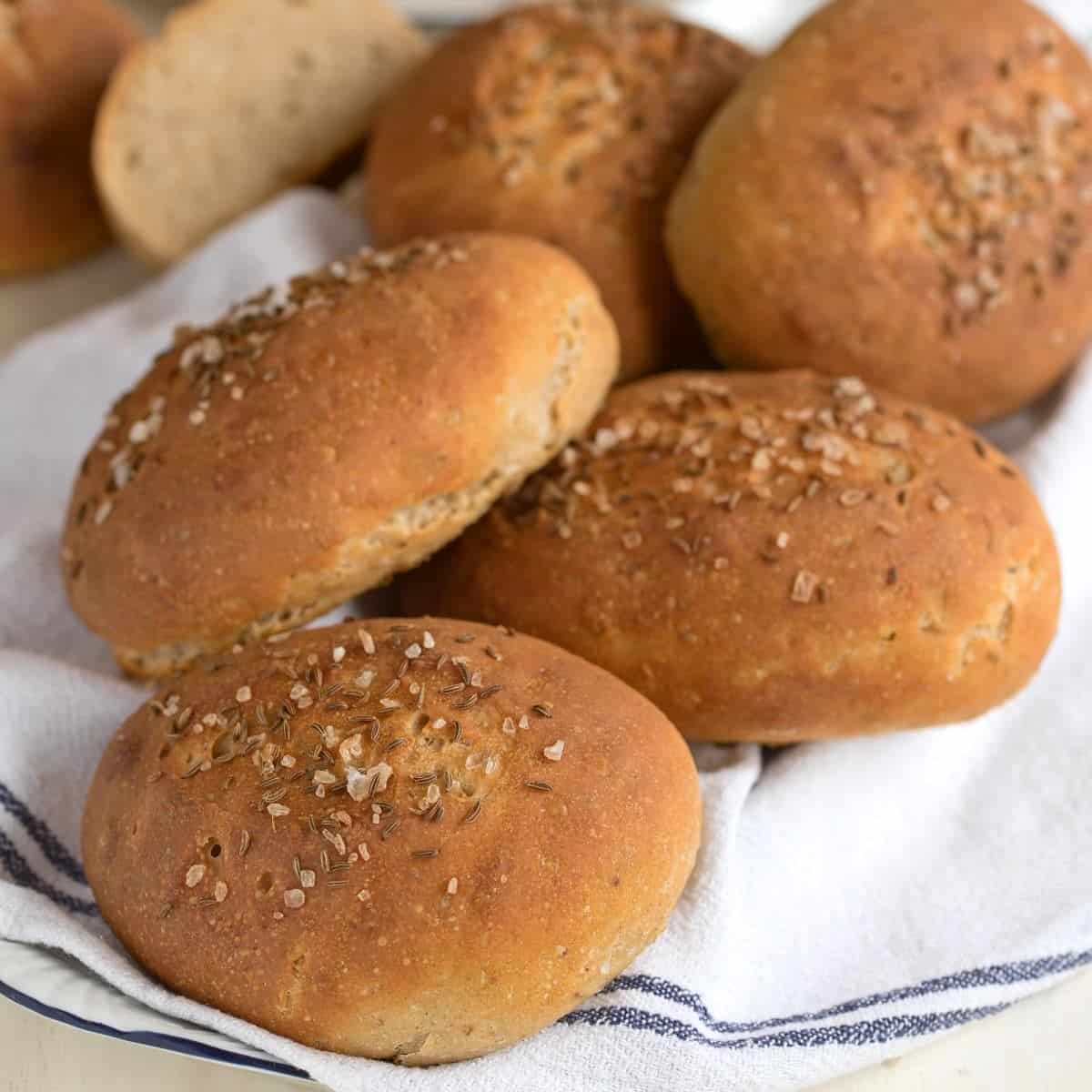
CZECH LENTEN RECIPE #6: Rye rolls - Dalamánky
➜ The gradual fading - and rediscovery - of the tradition
For generations, Lenten fasting remained a recognizable and often visible part of life in the Czech lands, especially in rural areas. Over time, these practices became less strict and eventually faded during the communist period in former Czechoslovakia (1948-1989), when public religious life was significantly restricted.
Today, although the Czech Republic is largely secular and strict religious fasting is no longer widely observed, many traditional customs connected with Lent are being rediscovered. Through renewed interest in regional heritage, historical cooking, and old village traditions, Lenten foods and practices are once again finding their place in Czech kitchens - not necessarily as obligation, but as a way of reconnecting with cultural roots.
Elaine says
Ahoj Petra . I am Czech. through
my grandmother and mother. I live in the US. I still remember many of my grandmother's cooking during Lent, we still follow some of the old traditions including no meat on Fridays at all during Lent. i enjoy making recipes that were passed down. thank you for your website! it brings a lot of fond memories and still love making fruit dumplings with plums. the best with melted butter and sugar sprinkled on top!
Petra Kupská says
Ahoj!
Thank you so much for your lovely message. It truly means so much to me to hear from someone who keeps Czech traditions alive. What beautiful memories of your grandmother.
I love that you still follow the Lenten traditions. And plum fruit dumplings with melted butter and sugar on top? That is pure comfort food, the very best! 😊
I am so happy my website brings back fond memories for you. That is exactly why I do this.
Warm greetings to you in the US! 💛
Xenia says
Just the thought of my mom’s plum dumplings sends my heart to heaven! She would make a plum sauce to pour over the dumplings, to amplify the plum deliciousness! She liked to put sugared bread crumbs on top, or poppy seed. For my husband, who thinks he does not like plums (??!!!!) she would make him a peach one, and the same with plum kitchen. You are inspiring me to perhaps try them, but getting Italian plums at this time of the year will not be available?
Irena Antoniou says
Hello Petra!
I'm really glad I found your website.
I am half czech from my mother's side so finding your recipies and trying them out could not be better!
Your recipies bring back happy memories.
Thank you!
Best regards
Irena
Petra Kupská says
Hi Irena!
Thank you so much, that is such sweet comment. I am glad you found me too. If my recipes bring you at least a little bit of good memories, then that makes it all worth it to me.
Wish you happy baking!
Courtney Appel-Sadler (Appl) says
One of my Czech family names is Masopust. When Masopusts came to America, one branch of the family literally changed their name to Lent. Immigration officials did not force this change. Masopust is easy enough to say and write in English and most Masopusts kept the Czech name.
Reading about the older fasting practices was very interesting, because I’m Catholic and still practice my faith. The abstaining from meat and animal products is still done in America, but mostly restricted to Ash Wednesday and Fridays. Putting away dishes used for meat consumption reminds me of the Jewish practice during their times of repentance. I don’t think I’ve ever seen Christians in America do this, but I’m not surprised (since Christianity comes out of Judaism).
Karen Frybort says
Petra...I live in Canada with my husband who was born in Olomouc. I quickly learned that food in his household was very different from my British roots, I was born in Birmingham, England. Every meal is a Celebration of the goodness of food that is provided for us. Every morsel to be tasted, appreciated and a source of nourishment. Every table gathering is a blessing. Your site teaches and shows appreciation. I studied my mother in law over 40+ years and her knowledge how to make plentiful meals from little and to stretch the food dollar as far as it could go. I do the same as Babi did. I really enjoy your recipes and blog.
Stephanie Stonaha-LaFlash says
Thank you for this very interesting article! I remember many traditions of Lent from my childhood. I wish I could turn back the clock. It was a much simpler time and although we live very simply here on our homestead, something always seemed to be missing. After reading your article, I now know what it is and we will welcome back the old ways of my Parents and Grandparents.
Alice Caressimo (Kubik) says
Ahoj Petra!
I am first generation American, both my parents and grandmother born in Czech Republic. I am so glad to found your website, too. The recipes that you share brings so much memories from my grandmothers cooking, especially the plum fruit dumplings with melted butter and sugar on top - those where my favorite. The Lenten tradition that you share, also have fond memories. I would love to continue these traditions with my family!
Děkuju, Alice
Kathy LloydT says
Petra, So glad I found your site! Bubba and Mom kept all the traditions andl holiday foods. your recipe for hrutka is the same we grew up with My sister and I try to do the same. Beets and horseradish, hrutka, paska,ham and kielbasa,, butter lamb, nut and poppyseed rolls and it all goes into the Eaater basket that is taken to church Easter Saturday to be blessed, Can't wait. Thank you for keeping the recipes coming.
Petra Kupská says
Hi there, thank you so much for your kind message! I love hearing about families keeping these beautiful traditions alive. It’s so special that you and your sister are continuing what your Bubba and mom started. That blessing of the basket on Easter Saturday always brings back such warm memories. There’s something about preparing all those foods with care and sharing them as part of the celebration. Of course I will keep the recipes coming. Keep checking them out. 😊
I hope that your Easter had been blessed and happy.