

Every Easter in Slovak families, there is something special hanging in a cheesecloth overnight. Hrutka, or egg cheese, slowly forms, ready to be placed in the Easter basket and brought to church to be blessed. This humble cheese stands among the most cherished Slovak Easter traditions, as families proudly keep it alive for generations.
Jump to
➜ What is hrutka
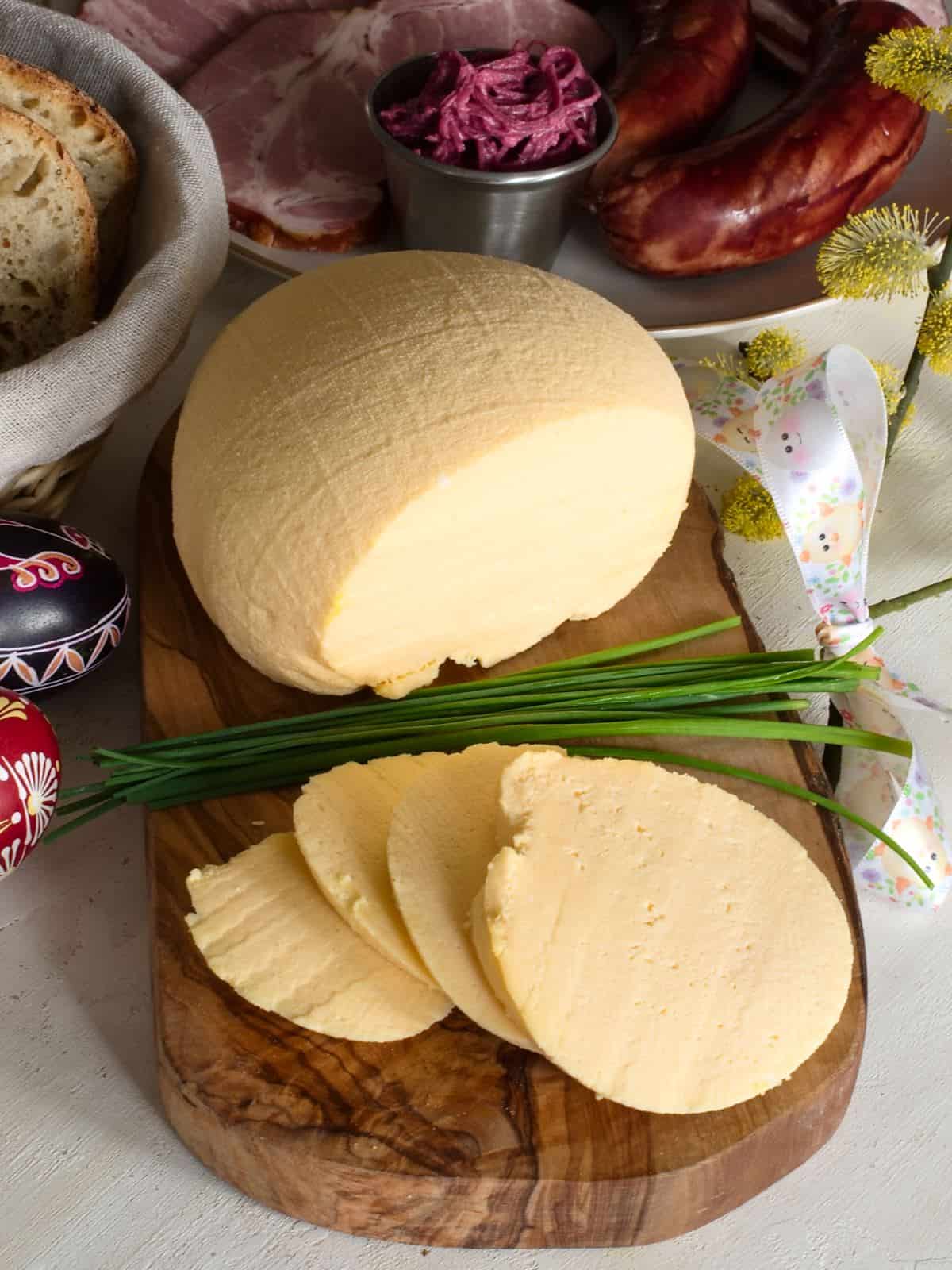
Hrutka, pronounced HROOT-kah, is a simple, soft cheese made from just eggs, milk, and a little salt. It is cooked slowly on the stovetop until the curds separate, then drained and shaped in a cheesecloth into a ball. The flavor is mild and delicate, somewhere between a firm custard and a fresh cheese. Its pale yellow color and round shape make it easy to recognize on any Slovak Easter table.
Hrutka is best known in the eastern part of today's Slovakia, and this egg cheese goes by several names. In addition to hrutka or hrudka, it is often called syrek or cirek, along with other regional variations based on these names.
→ Discover more Czech and Slovak Easter recipes.
➜ What does hrutka taste like
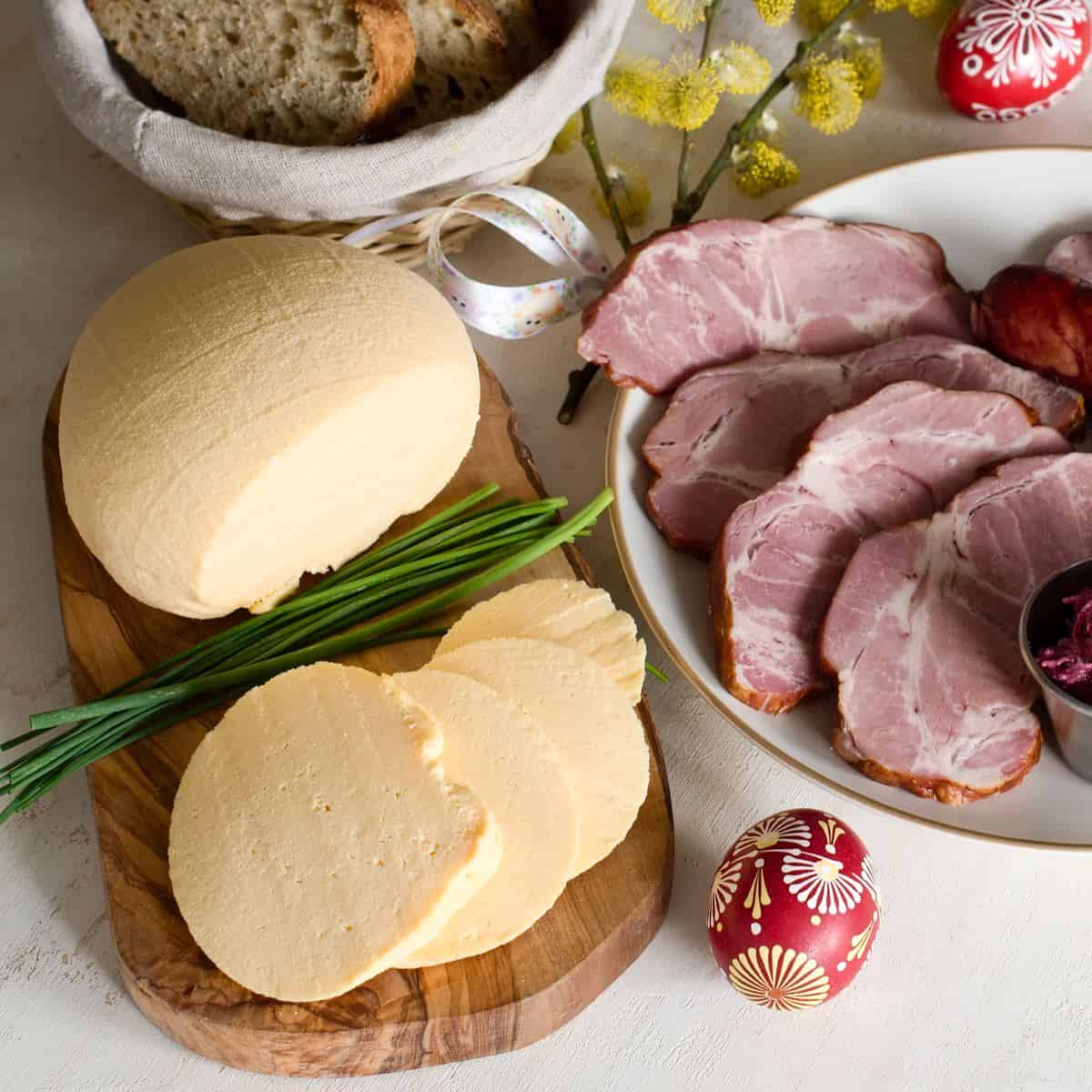
This was an interesting discovery for me. I spoke with a native Slovak and learned that the flavor can vary from family to family. Some make hrutka mild and neutral, while others season it with pepper, garlic, or fresh herbs. There is also a sweet version, gently flavored with sugar and sometimes mixed with raisins.
In the end, it always comes down to family tradition, and both savory and sweet versions are perfectly authentic. For this recipe, I kept it simple and neutral, using just three ingredients: eggs, whole milk, and a little salt.
TIP: I find the process of making hrutka quite unique. Many children see it as a fun Easter activity, perfect for a cozy afternoon spent with a grandmother or grandparent!
➜ Ingredients
✅ See the recipe below with step-by-step photos and many helpful tips. Scroll down for the full printable recipe in both US cups and metric measurements.
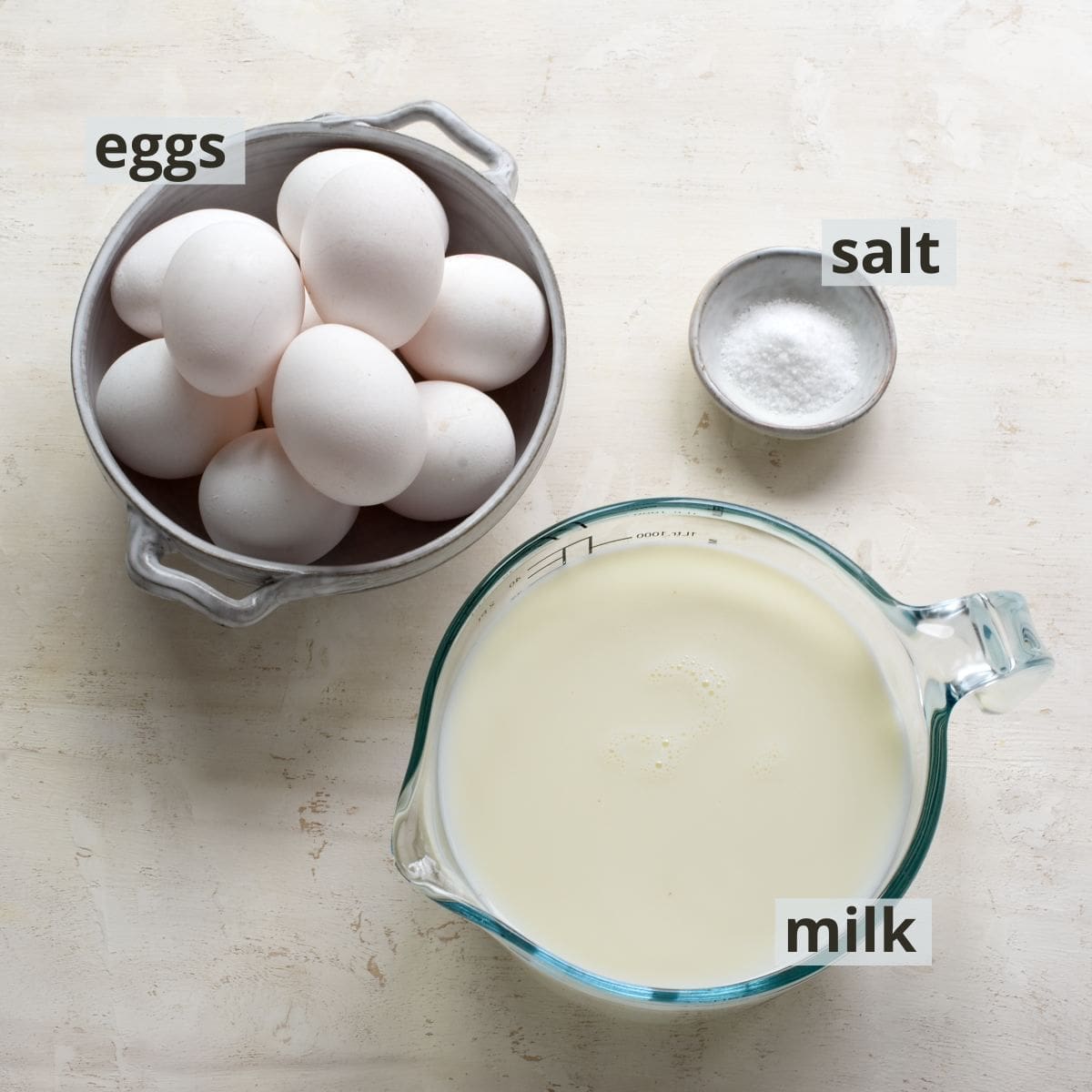
- Milk - whole milk for the best result.
- Eggs - the real hero of this recipe.
- Salt - just a little for a mild, nicely balanced taste.
And that's it!
KITCHEN EQUIPMENT: You will also need a clean cheesecloth or a large kitchen towel, and two pots to create a simple double boiler. A sieve will come in handy for draining. And here is my little secret tip: a zip tie! It makes tying the cheesecloth quick and easy and helps keep the cheese nicely in shape as it drains.
➜ How to make Slovak hrutka cheese
STEP 1: Prepare double boiler: Place a smaller pot inside a larger one. Pour water into the larger pot so it reaches about 1 ½ inches (4 cm) below the rims of both pots. The water should surround the inner pot but not overflow. Make sure the bottom of the smaller pot does not touch the bottom of the larger pot.
STEP 2: Mix eggs and milk: Pour the milk into the smaller pot. Crack the eggs one by one into a bowl, whisking well after each addition. Add the salt and whisk until the mixture is smooth and slightly frothy. Pour the egg mixture into the pot with the milk and stir to combine.
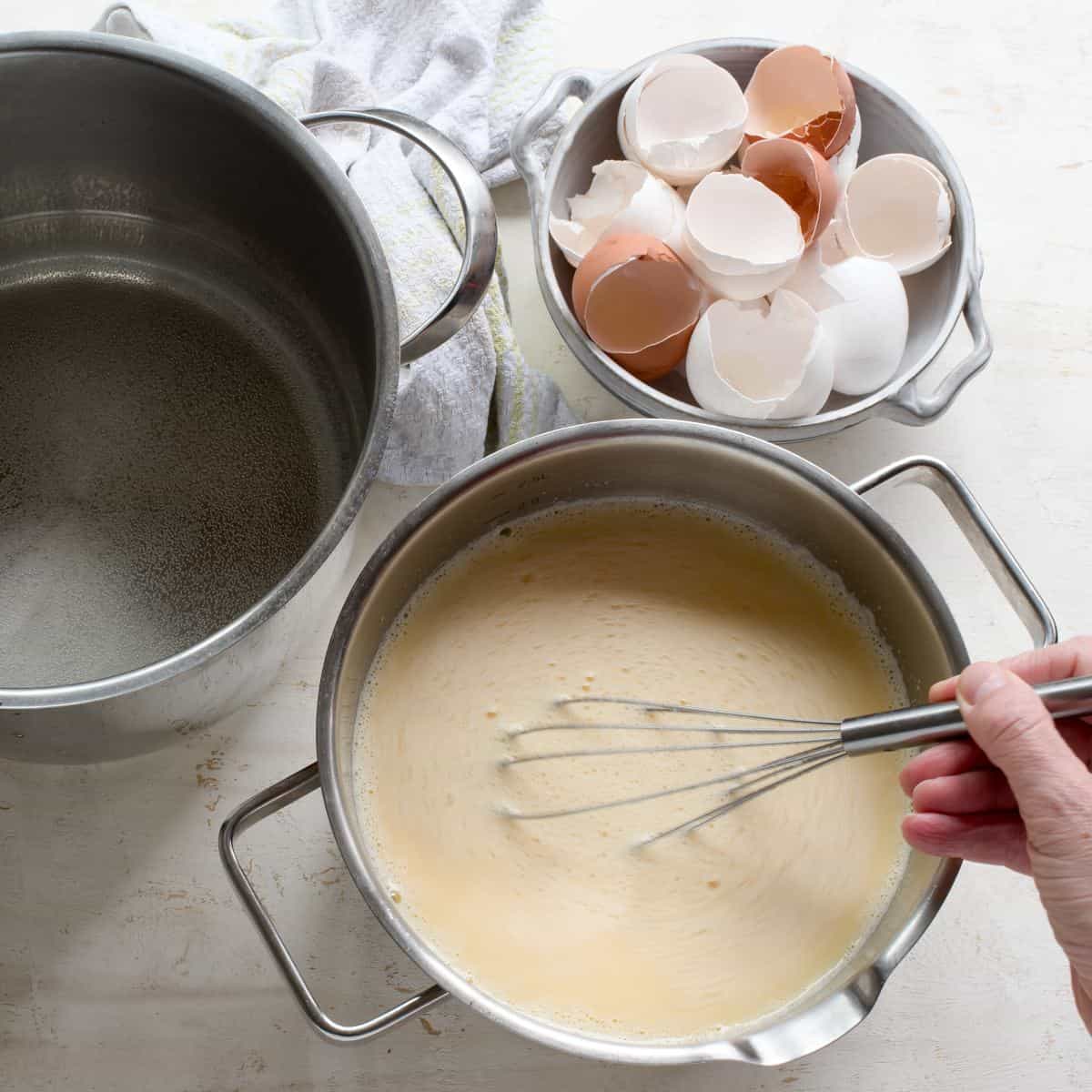
STEP 3: Cook gently: Place the double boiler on the stove over medium-high heat. Stir constantly and gently with a wooden spoon or spatula, making sure to scrape the bottom so nothing sticks. Once the mixture is heated, lower the heat to medium. After about 20 to 25 minutes, the mixture will begin to curdle and separate into soft yellow curds and a cloudy whey. Once the curds are clearly formed, remove from the heat.
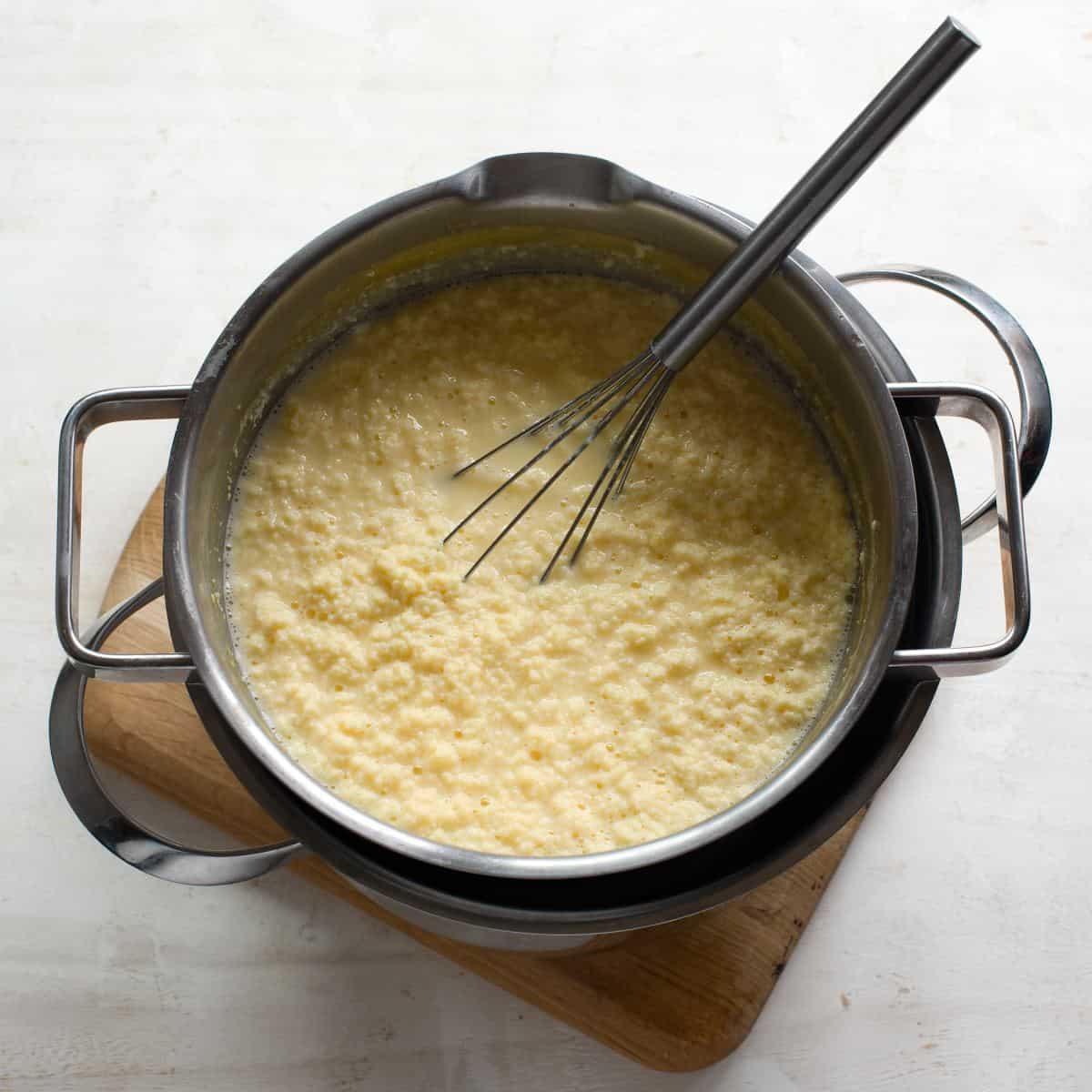
STEP 4: Prepare for draining: Place a sieve over a pot or bowl to catch the whey. Line the sieve with a clean cheesecloth or a thin kitchen towel soaked in cold water and wrung out. The damp cloth makes handling easier.
STEP 5: Drain curds: Carefully pour the hot mixture into the lined sieve. Gather the corners of the cloth and lift it up so the curds are fully enclosed.
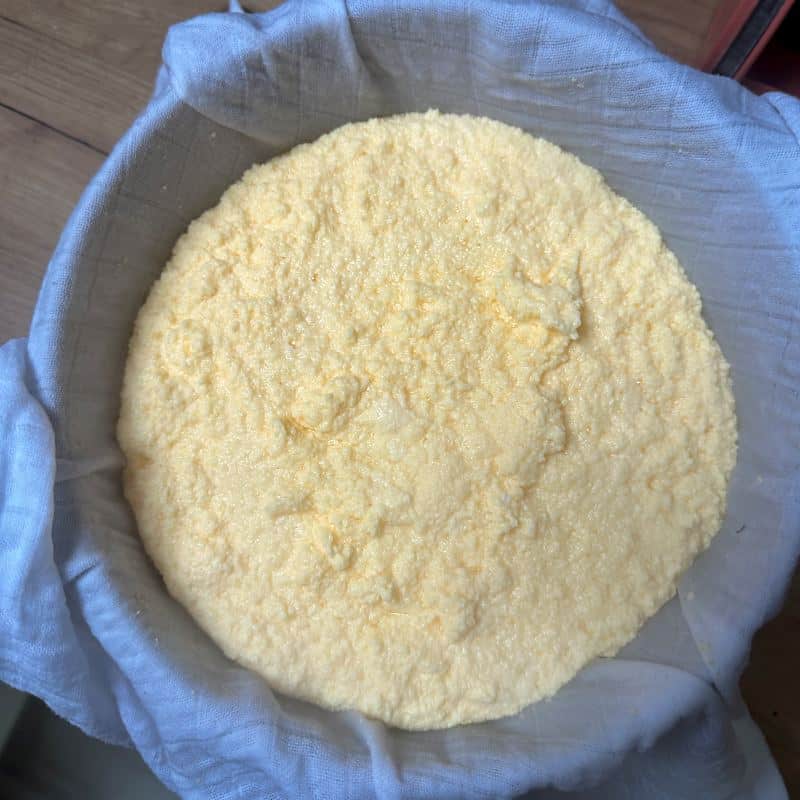
STEP 6: Shape cheese: Secure the cloth close to the cheese with a zip tie and gently tighten it while moving it downward to form a firm ball. Tie the ends of the cloth into a knot to create a loop for hanging.
STEP 7: Hang and drain: Hang the bundle over a pot or sink to catch the dripping whey. Let it drain in a cool place overnight. As it drains and cools, the cheese will firm up and become slightly elastic.
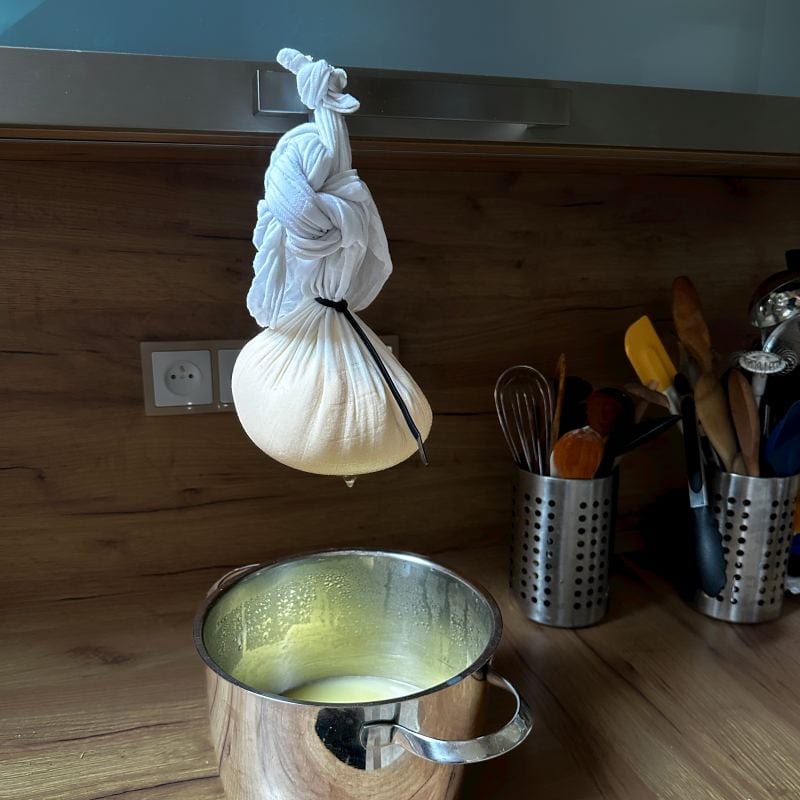
⭐ Do not waste the whey: Save the whey that drains off and use it in your Easter baking, such as rye or paska bread, or other pastries.
➜ How to serve hrutka
The next day, unwrap the egg chese and place it whole in your Easter basket for blessing. Hrutka is traditionally presented as a round, pale yellow cheese ball. At the Easter breakfast table, slice it into thin rounds and serve alongside smoked ham or sausage, sliced rye or paska bread, horseradish, and colored hard-boiled eggs. My tip is to add beetroot pickled eggs. They go beautifully with it.
Hrutka has a mild, slightly salty, eggy flavor that pairs perfectly with rich smoked meats. Leftover hrutka keeps well in the fridge for up to 3 to 4 days, wrapped in cheesecloth or plastic wrap.
➜ Helpful tips
- Easter basket tip: Hrutka is traditionally placed in the basket whole and uncut. Wrap it in a clean cloth or place it in a small bowl so it keeps its beautiful round shape until it is time to slice and share.
- Milk fat matters: Use full-fat whole milk for the best, richest curds. Low-fat milk will produce a thinner, less satisfying cheese.
- Variations: Some Slovak grandmothers add a pinch of sugar or a few drops of vanilla for a slightly sweet version. Others add fresh chives or dill for a savory twist. The classic plain version remains the most traditional.
Tried this recipe?
Leave a review down in the comments! ⭐⭐⭐⭐⭐
Other readers and I love hearing what you think. Stay in touch by following me on Facebook and Pinterest. For more Czech stuff, subscribe to my newsletter!
📖 Recipe
Hrutka - Slovak Egg Cheese
Tap or hover to scale
This recipe was developed in grams. For the most accurate results, tap the purple METRIC toggle and use a kitchen scale.
Ingredients
- 12 eggs
- 4 cups milk whole
- 1 teaspoon salt
Instructions
- Set up double boiler: Place a smaller pot inside a larger one. Pour water into the larger pot so it reaches about 1.½ inches (4 cm) below the rims of both pots. Make sure the bottom of the smaller pot does not touch the bottom of the larger pot to prevent the eggs from scorching.
- Mix ingredients: Pour 4 cups milk into the smaller pot. In a bowl, crack 12 eggs one by one, whisking well after each. Add 1 teaspoon salt and whisk until smooth and slightly frothy. Pour the egg mixture into the pot with the milk and stir to combine.
- Cook mixture: Place the double boiler on the stove over medium-high heat. Stir constantly and gently, scraping the bottom so nothing sticks. Once heated, lower the heat to medium. Cook for 20 to 25 minutes, until the mixture separates into soft curds.
- Prepare draining setup: Place a sieve over a pot or bowl. Line it with a clean cheesecloth or a thin kitchen towel soaked in cold water and wrung out.
- Drain curds: Carefully pour the hot mixture into the lined sieve. Gather the corners of the cloth and lift to enclose the curds.
- Shape cheese: Secure the cloth close to the cheese with a zip tie and gently tighten it to form a firm ball. Tie the ends of the cloth to create a loop.
- Drain overnight: Hang the bundle over a pot or sink to catch the liquid. Let it drain in a cool place overnight.
- Serve: Unwrap and slice into thin rounds. Serve chilled or at room temperature.
Notes
- Makes 1 hrutka cheese, app. 10-12 slices.
- Easter basket tip: The next day, unwrap the egg chese and place it whole in your Easter basket for blessing. Hrutka is traditionally placed in the basket whole and uncut. Wrap it in a clean cloth or place it in a small bowl so it keeps its beautiful round shape until it is time to slice and share.
- At the Easter breakfast table, slice it into thin rounds and serve alongside smoked ham or sausage, sliced rye or paska bread, horseradish, and colored hard-boiled eggs.
- Milk fat matters: Use full-fat whole milk for the best, richest curds. Low-fat milk will produce a thinner, less satisfying cheese.
- Variations: Some Slovak grandmas add a pinch of sugar or a few drops of vanilla for a slightly sweet version. Others add fresh chives or dill for a savory twist. The classic plain version remains the most traditional.


MaryJane says
we have kept this Easter tradition alive in my family. I love that my daughter is passing it on to her children. The only difference we do is bake it in the oven after hanging it over night. it puts a slight crust on it. not sure of the reason but it seems to stay together better as opposed to a little crumbling when not baked. Bake at 350*untill it has a slight brown color. We also eat it with the hot ( horseradish ) grated beets.
Petra Kupská says
Thank you so much for sharing this—I absolutely love hearing how each family keeps the tradition alive in their own way. It’s so special that your daughter is now passing hrutka on to the next generation—that’s exactly how these traditions stay meaningful. Wishing you and your family had a beautiful Easter!
Paula M Gedris says
This is exactly how my grandmother taught me to make Hrutka
years ago! One of my brothers also makes it ~ an Easter
tradition along with our Lithuanian cheese. Such a Spring recipe!
Carol says
I am so interested in trying this recipe! Do you have the water in double boiler at boiling stage when putting the cold ingredients over, or do you bring the water to a boil first and maybe have the milk/eggs at room temperature? I don't honestly know if this should be obvious to me or not, but I am hoping that you will ease my mind here.Thanks so much for this inspiring recipe!
Petra Kupská says
You’ll want to bring the water in the double boiler to a gentle simmer first, not a rolling boil. Once it’s simmering, place your mixture over it. Starting with cold or room-temperature ingredients is fine, but room temperature can help everything heat more evenly. The key is gentle, steady heat—if the water is boiling too hard, the eggs can cook too quickly and turn grainy instead of forming those soft, delicate curds you’re aiming for. Stir continuously and be patient; it can take a bit of time for the curds to form properly.
Good luck to you and let me know, how it turns out.Let me know how it turns out!
Eva says
U nás se dělá hrutka na sladko. Naučila jsem se to od mé Maďarské sousedky. Ta měla recept od své babičky. Mám to mnohem radši než na slano. Ale to záleží na chuti. Přeji ti Petruška a celé tvé rodině krásné Velikonoce. ❤️🐣🐰🌸
Petra Kupská says
Děkuji, Evi, za krásné přání, moc si toho vážím. I tobě a tvé rodině přeji vše nejlepší a doufám, že jste měli krásné Velikonoce. ❤️
Veronica says
I hate to leave a review, because I must’ve done something wrong. It just looks like scrambled eggs. They don’t hold together. Could you give an estimate on what the temperature is when you say “once heated”? I have them/it in cheesecloth in a cool space and will await your reply. Thanks!
Veronica
Petra Kupská says
Hi Veronica, sorry to hear you are having trouble — but what you are describing sounds completely normal! When you pour the mixture to strain it, it can look a lot like scrambled eggs. The key is to strain it while it is still hot, tie the cheesecloth nice and tightly, and let it hang so everything sets as it cools. If it feels too loose, try re-tying or pressing it a bit more. Curdling typically starts around 70 °C (160 °F). This video might also help: https://www.facebook.com/reel/890890200613108
Wish you good luck, and let me know how it turns out!
Lillian says
I’m Hungarian and we have made this Easter Cheese for years. We make the slightly sweet version and add a little cinnamon. My kids look forward to this every year.