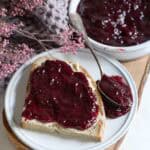
Homemade Plum Butter (Czech Povidla)
Povidla, the Czech plum butter, is a staple in Czech cooking. Since it can be hard to find in stores abroad, I make the most of plum season and prepare it at home from scratch. With my recipe, you can too.
Servings 6 8 oz jars
Calories 508kcal
Equipment
- large pot
- long-handled wooden spoon
- preserving jars with screw lids
- wide-neck preserving funnel
Ingredients
- 7 pounds Italian plums fresh, ripe and sweet
- 1 ¾ cups granulated sugar adjust to the sweetness of your plums
- ½ cup apple cider vinegar 5% acidity
- ⅓ cup Czech rum optional; or Austrian Stroh or spiced rum
- 1 star anise ground
- 5 cloves ground
- ½ teaspoon cinnamon ground
Instructions
- Wash and dry 7 pounds Italian plums. Cut them lengthwise, remove the pits, then cut into smaller pieces. Place in a large pot.
- Stir 1 ¾ cups granulated sugar and ½ cup apple cider vinegar into the plums. Cover the pot with a clean cloth and leave on the counter overnight.
- The next day, stir and bring the mixture to a gentle boil over high heat, uncovered.
- Reduce the heat and simmer gently, stirring from time to time. Skim off any foam. As the butter thickens, lower the heat further and stir more often so it does not scorch.
- After about 2 hours, stir in ⅓ cup Czech rum (optional).
- After 3 to 3 ½ hours of cooking, test for doneness: a spoonful dropped onto a cold plate should hold its shape, with no juice seeping around the edges.
- Grind and sift 1 star anise and 5 cloves, then and add ½ teaspoon cinnamon. Stir in the ground spices. Taste and adjust the sweetness with a little sugar if needed.
- Spoon the hot plum butter into clean, heated jars using a wide funnel. Wipe the rims, seal tightly with lids, and turn the jars upside down for about 1 hour.
Notes
- Yield: the basic recipe makes about 6 full 8-oz (250 ml) jars.
- Sugar: start with less than you think you need; the plums' sweetness concentrates as the butter cooks down, and too much sugar keeps povidla from setting thick.
- Stirring: the thicker the butter, the more often it needs stirring; near the end, do not leave the pot unattended.
- Storage: sealed jars keep in a cool, dark pantry until the next plum season; refrigerate after opening.
- Canning: traditionally not needed. For extra peace of mind, process the jars in simmering water for 10 minutes.
Nutrition
Calories: 508kcal | Carbohydrates: 120g | Protein: 4g | Fat: 2g | Saturated Fat: 0.1g | Polyunsaturated Fat: 0.3g | Monounsaturated Fat: 1g | Sodium: 2mg | Potassium: 852mg | Fiber: 8g | Sugar: 112g | Vitamin A: 1827IU | Vitamin C: 50mg | Calcium: 38mg | Iron: 1mg