

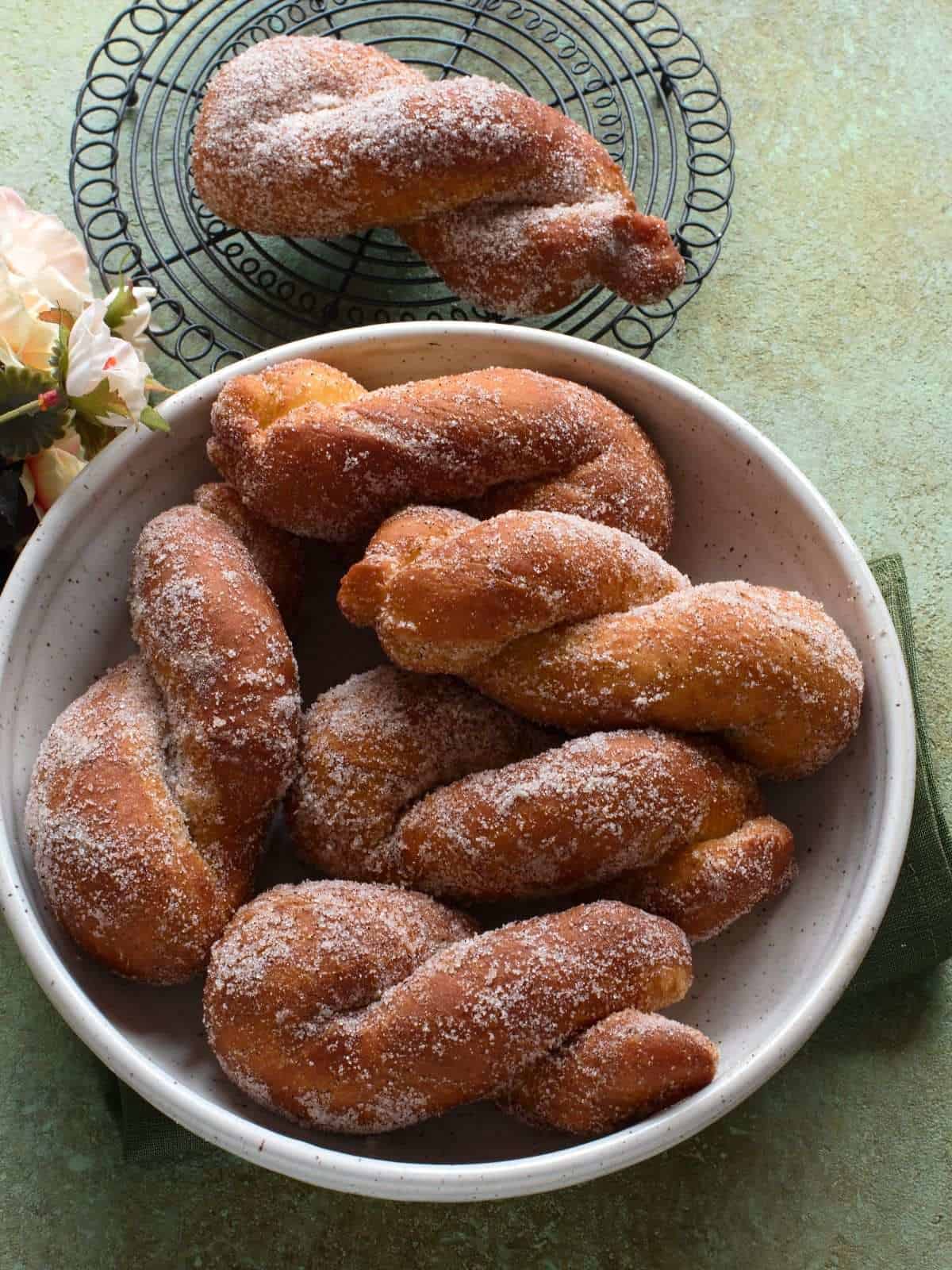
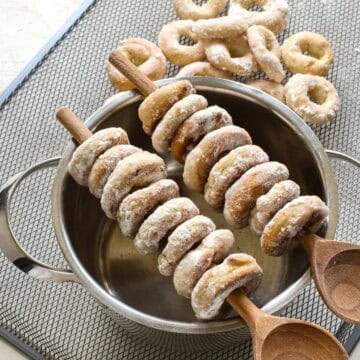
Czech Šišky are the kind of treat that smell like a grandma's kitchen. Sweet, rich dough, twisted or tied into simple shapes, then fried and coated in cinnamon sugar. In the past, they were a Czech favorite during the winter Masopust season. Let's make šišky today and bring that childhood nostalgia into your kitchen!
Jump to
➜ What are Šišky
I first came across fried Šišky while making koblihy. Similar dough, but a different shape and finishing. Some of my readers later told me that their mom, grandma, or auntie used to make šišky for them, which immediately caught my attention.
I did a bit of research and discovered something I truly love about regional recipe names. Šišky are actually made from almost the same dough as koblihy, regional twists aside. It is a soft yeast dough, shaped into twists or simple knots, then fried in oil or lard and usually finished with powdered sugar or cinnamon sugar.
The name šišky is used mostly in Moravia, the eastern part and a historical region of the Czech Republic, and also among Slovaks, our neighbors to the east.
In Czech homes, šišky are most often made during Masopust season, but many families prepare them any time they crave a warm homemade sweet.
➜ Pronunciation
I recorded a short audio clip so you can hear how we pronounce šišky and masopustní šišky in Czech. Listening to it once or twice makes it much easier to say it with confidence!
➜ Ingredients
✅ See the recipe below with step-by-step photos and many helpful tips. Scroll down for the full printable recipe in both US cups and metric measurements.
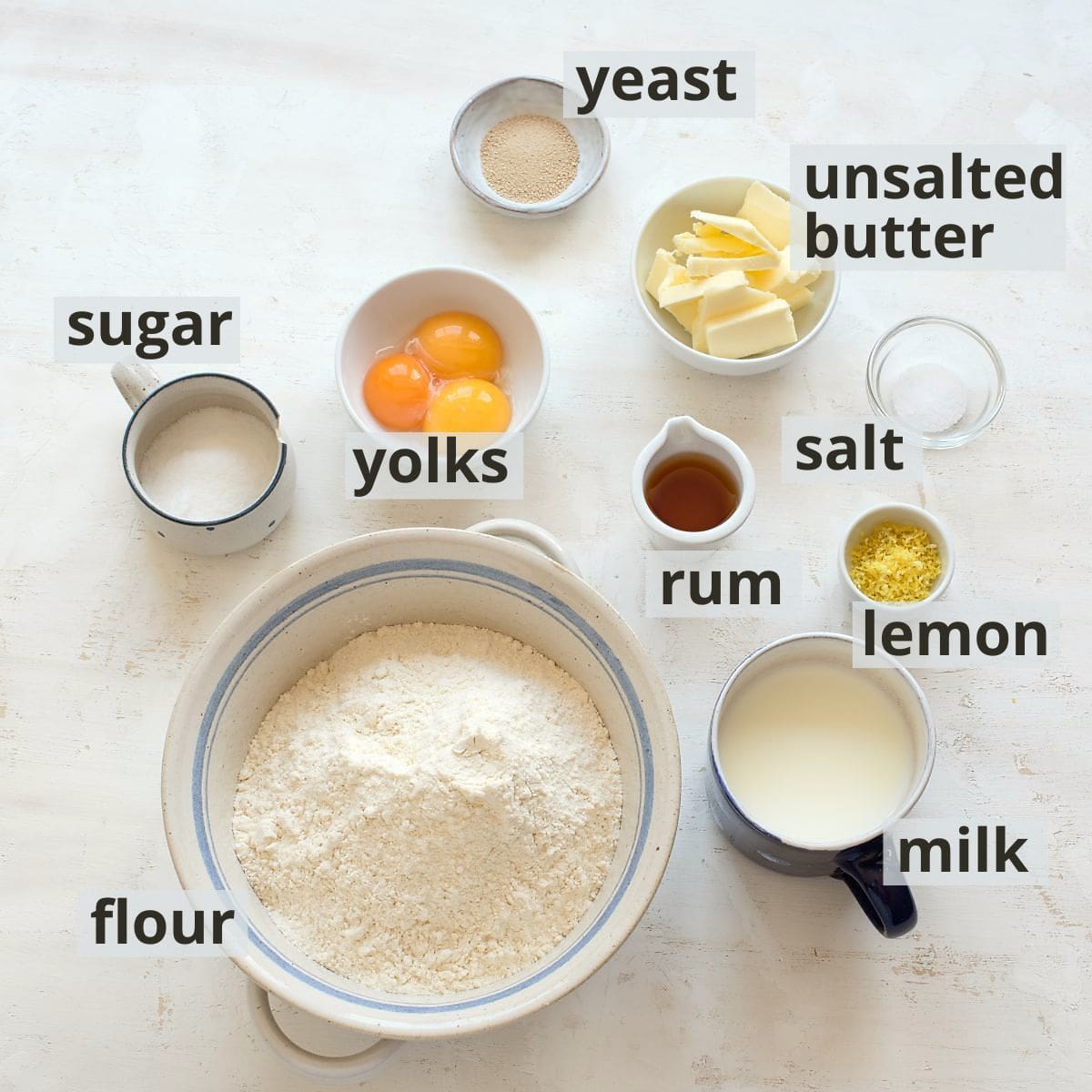
I list the šišky ingredients in the order they are used in the recipe.
- Milk - Warm milk helps activate the yeast and keeps the dough tender.
- Granulated sugar - Adds sweetness and feeds the yeast.
- Active dry yeast - Making a starter with active dry yeast ahead ensures the yeast is alive and the dough will rise properly.
- Unsalted butter
- Rum - Adds a subtle aroma and helps the dough absorb less fat during frying. I use Czech Tuzemák, such as Božkov. If you cannot find Czech rum where you live, try Austrian Stroh (ideally the 40% version). It is the closest match in flavor.
- Egg yolks - Give the dough color, softness, and structure. I like to use yolks only because they make the dough extra delicate and rich.
- All-purpose flour (hladká mouka) - Creates a soft but stable dough that fries evenly. Read the article about Czech kinds of flour.
- Lemon zest - Freshly grated yellow part of a well-washed lemon peel.
- Salt
- Neutral oil or lard, for frying - Traditional Czech recipes often use lard (sádlo), but frying oil works very well too. → Why lard? Šišky were traditionally fried in winter, when pig butcherings were common and households had plenty of lard on hand. My choice here in CZ is canola or sunflower oil. For more flavor, you can also use clarified butter, but you will need quite a lot, and it can be expensive.
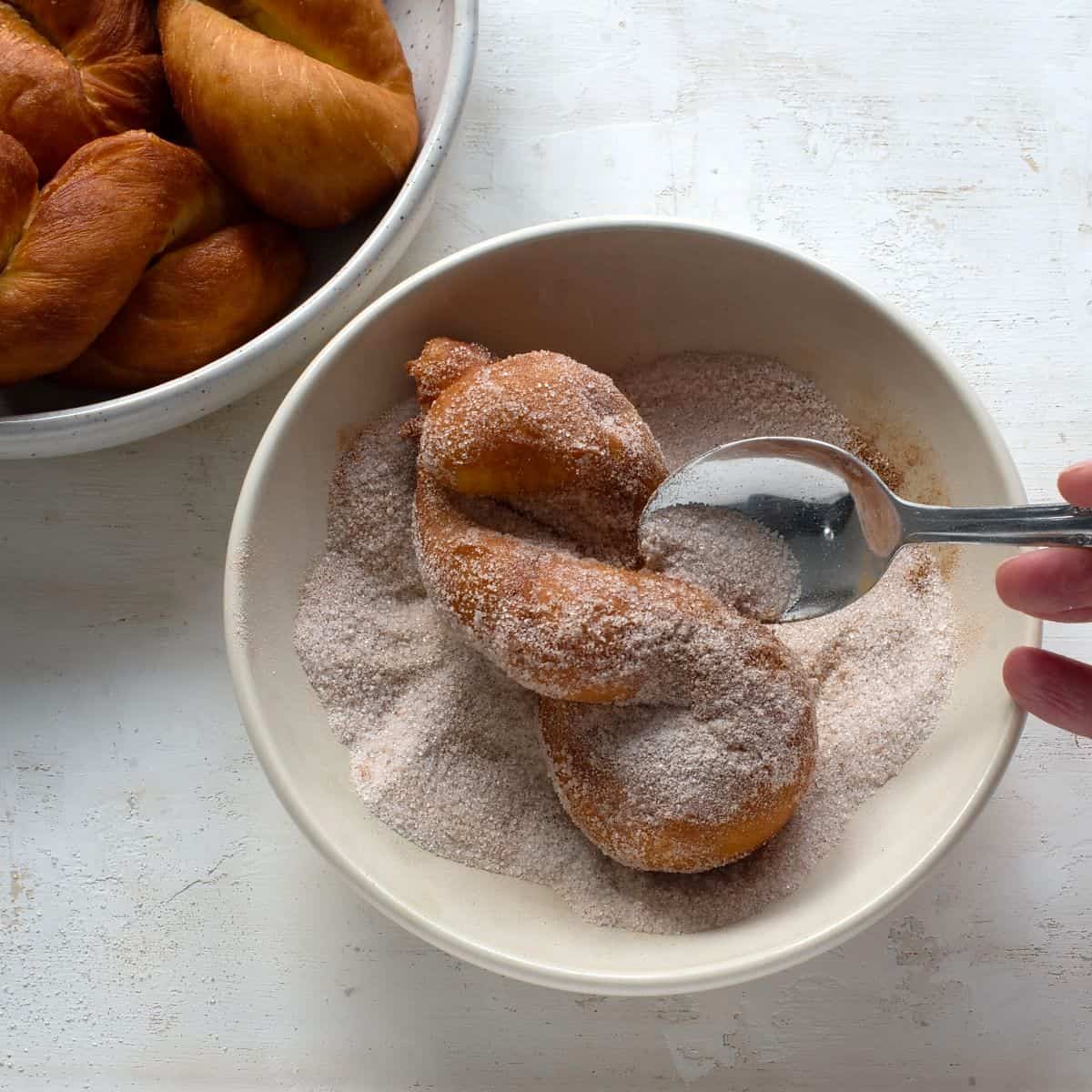
- Cinnamon sugar - Granulated sugar mixed with ground cinnamon, used to coat the fried šišky.
➜ Instructions with photos
STEP 1: Activate yeast - Heat the milk until warm but not hot, about 100 °F (38 °C). In ½ cup of the warm milk, stir in 1 teaspoon of granulated sugar and the active dry yeast (photo 1). Let rest in a warm place for about 10 minutes, until foamy (photo 2).

MY TIP: If your kitchen is drafty or cold, cover the container with plastic wrap and place it in the oven with the light on.
STEP 2: Mix the dough - Melt the butter and let it cool slightly. It can't be hot. Stir in the remaining milk and the rum, then whisk in the egg yolks.
In a large mixing bowl, add the flour, lemon zest, salt, and rest of the sugar and stir to combine. Make a well in the center. Pour in the activated yeast and the egg and milk mixture. Roughly mix everything with a fork (start from the middle), then knead until a smooth dough forms.
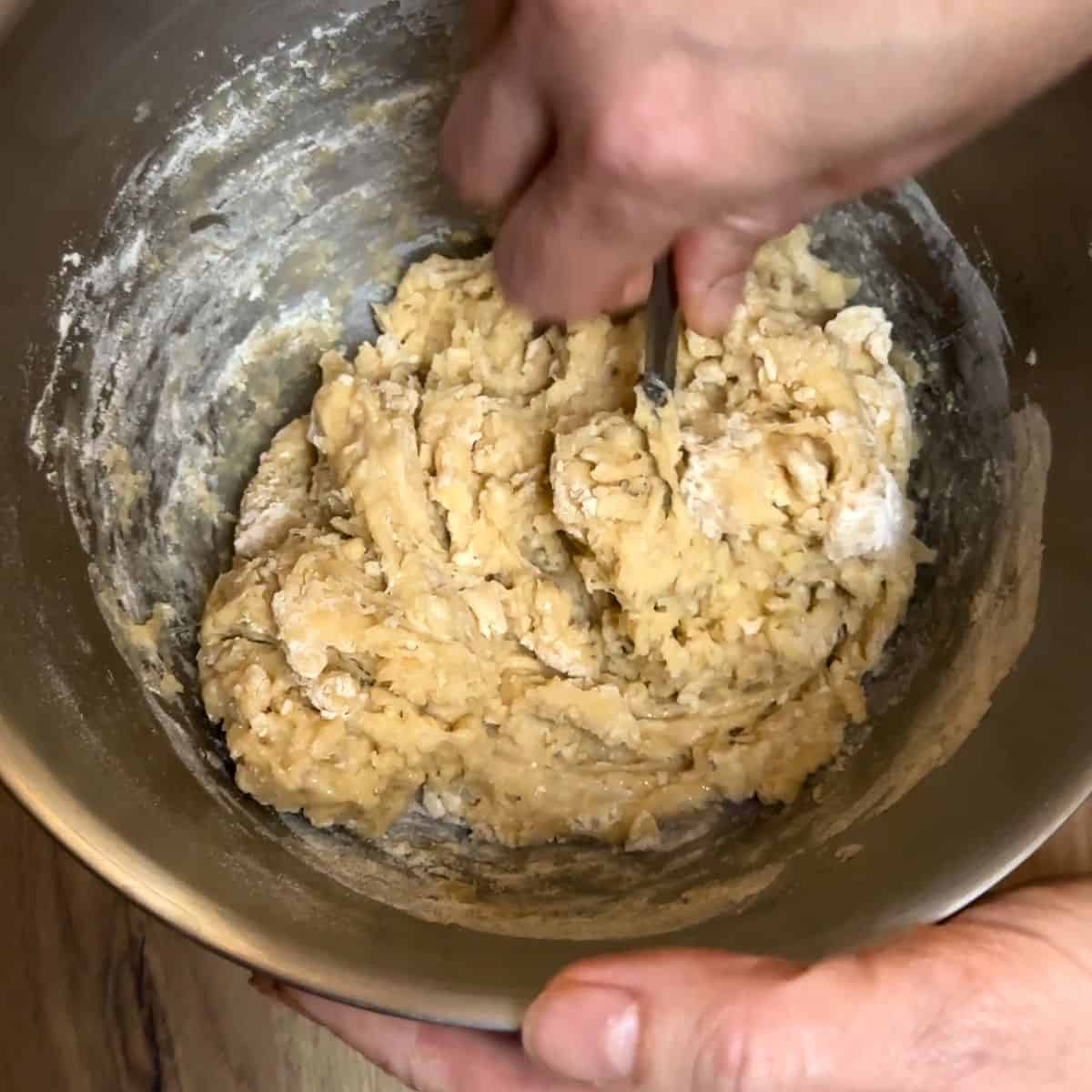
TIP: If using a stand mixer fitted with a dough hook, knead the dough on medium speed for 8 to 10 minutes. If kneading by hand, use the same time to ensure proper gluten development and a soft, elastic dough.
STEP 3: Let the dough rise - Cover the bowl with plastic wrap or a clean towel and let the dough rise in a warm place for about 1 to 2 hours, until roughly doubled in size.
After about 45 minutes, when the dough has visibly risen, knead it briefly to deflate it. This helps the dough rise better during the remaining time.


STEP 4: Make cinnamon sugar - While the dough is rising, mix granulated sugar with ground cinnamon in a bowl. Stir until evenly combined.
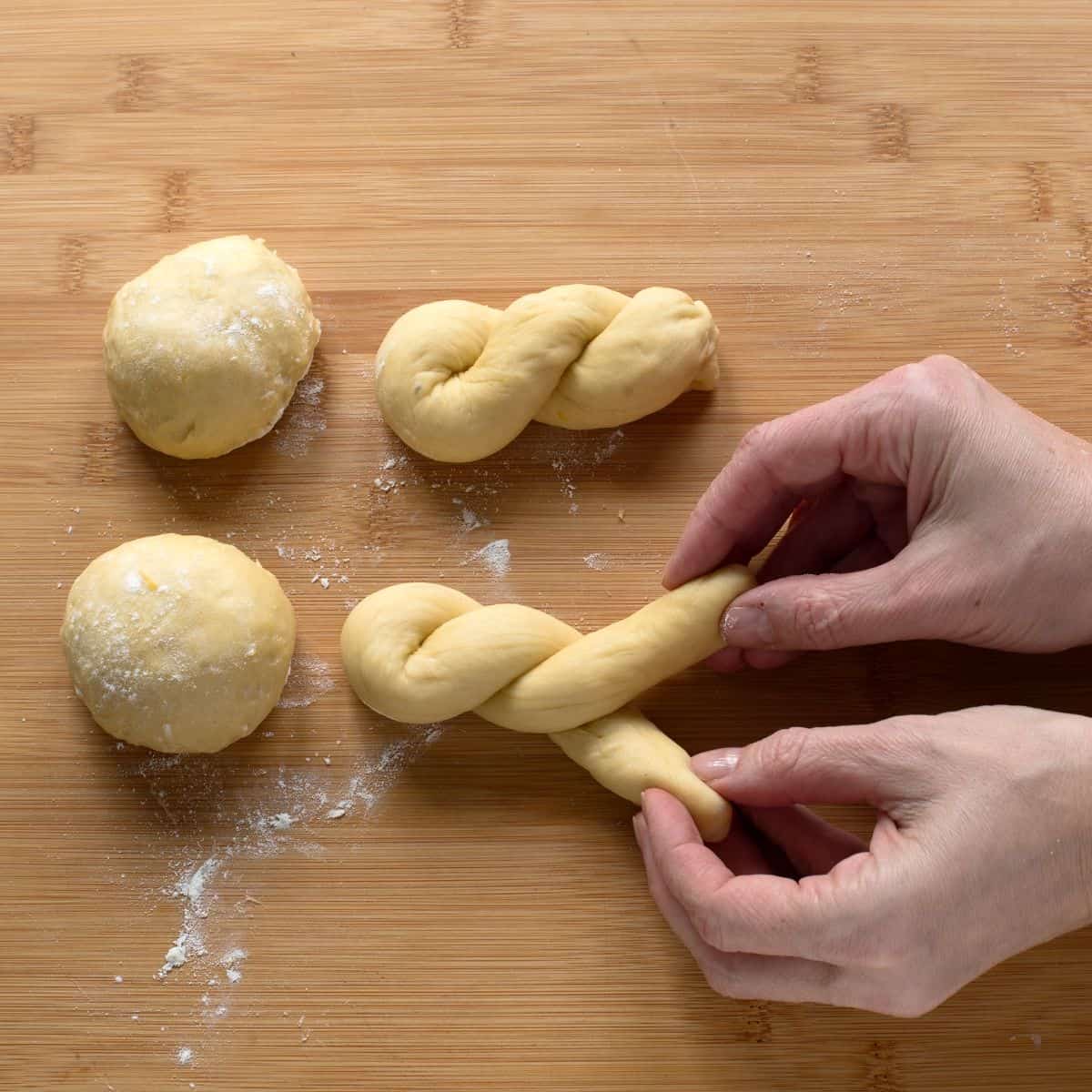
STEP 5: Shape the šišky - Dump the risen dough onto a lightly floured surface. Cut it into pieces weighing about 2½ ounces (70 g) each. Shape the pieces into small balls, cover them with a clean kitchen towel, and let them rest for 15 minutes.
Roll out the dough balls into strands about ½ inch thick. Twist each strand into a loose knot or simple twist.
STEP 6: Heat the fat - Heat oil or lard in a deep pan to about 350 °F (175 °C). The dough should sizzle gently when added.
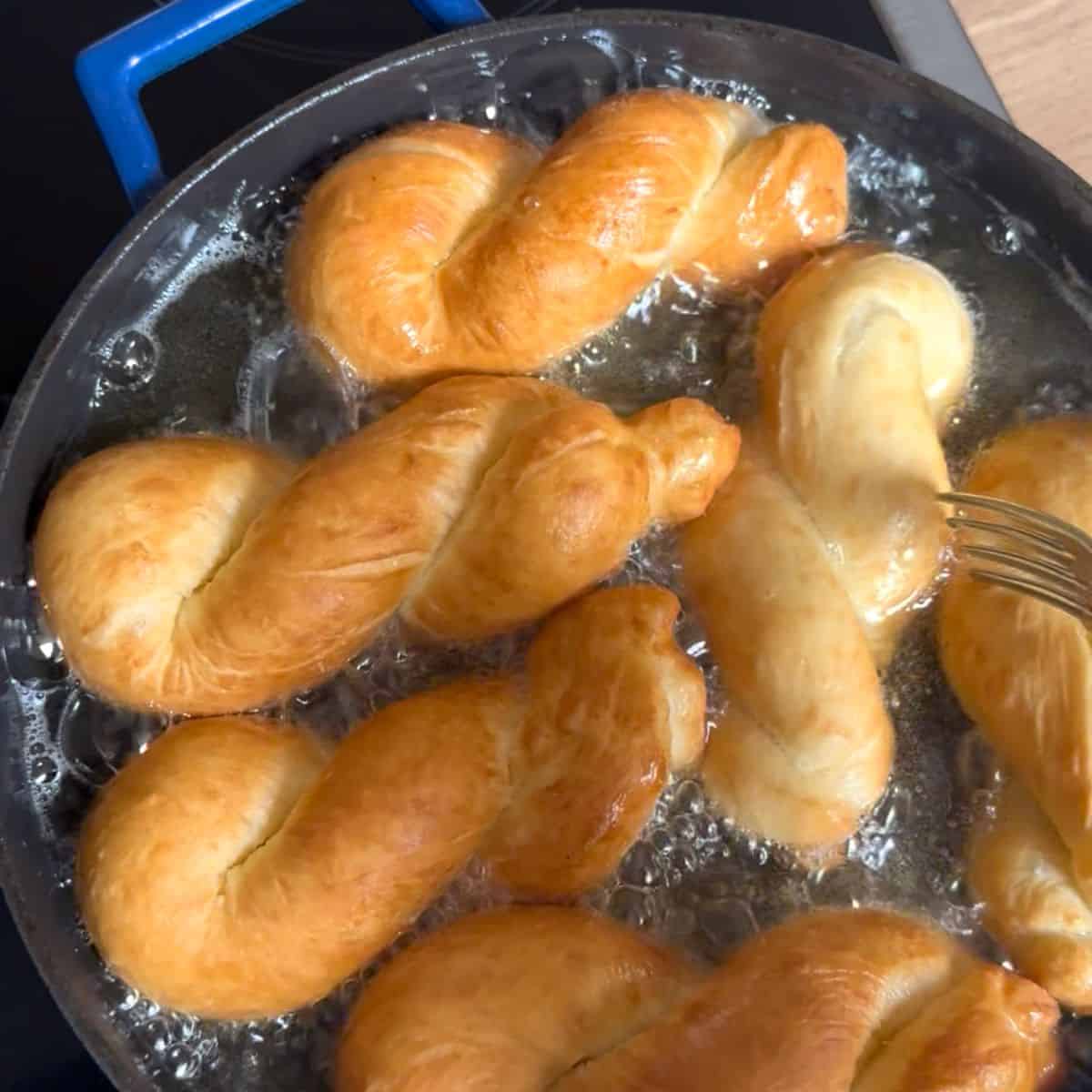
STEP 7: Fry the pastries - Fry the šišky in batches, turning them halfway so they brown evenly. Some pieces may flip on their own during frying. Don't overload the pan, as the pastries rise during frying.
Each side takes about 1½ to 2 minutes. Check the first piece for doneness by tearing it open at the thickest part. The inside should be fully cooked, soft, and not doughy.
STEP 8: Drain and finish - Remove the šišky from the oil and place them on paper towels. While still warm, sprinkle generously with powdered sugar or coat them in cinnamon sugar.
➜ Serving suggestions
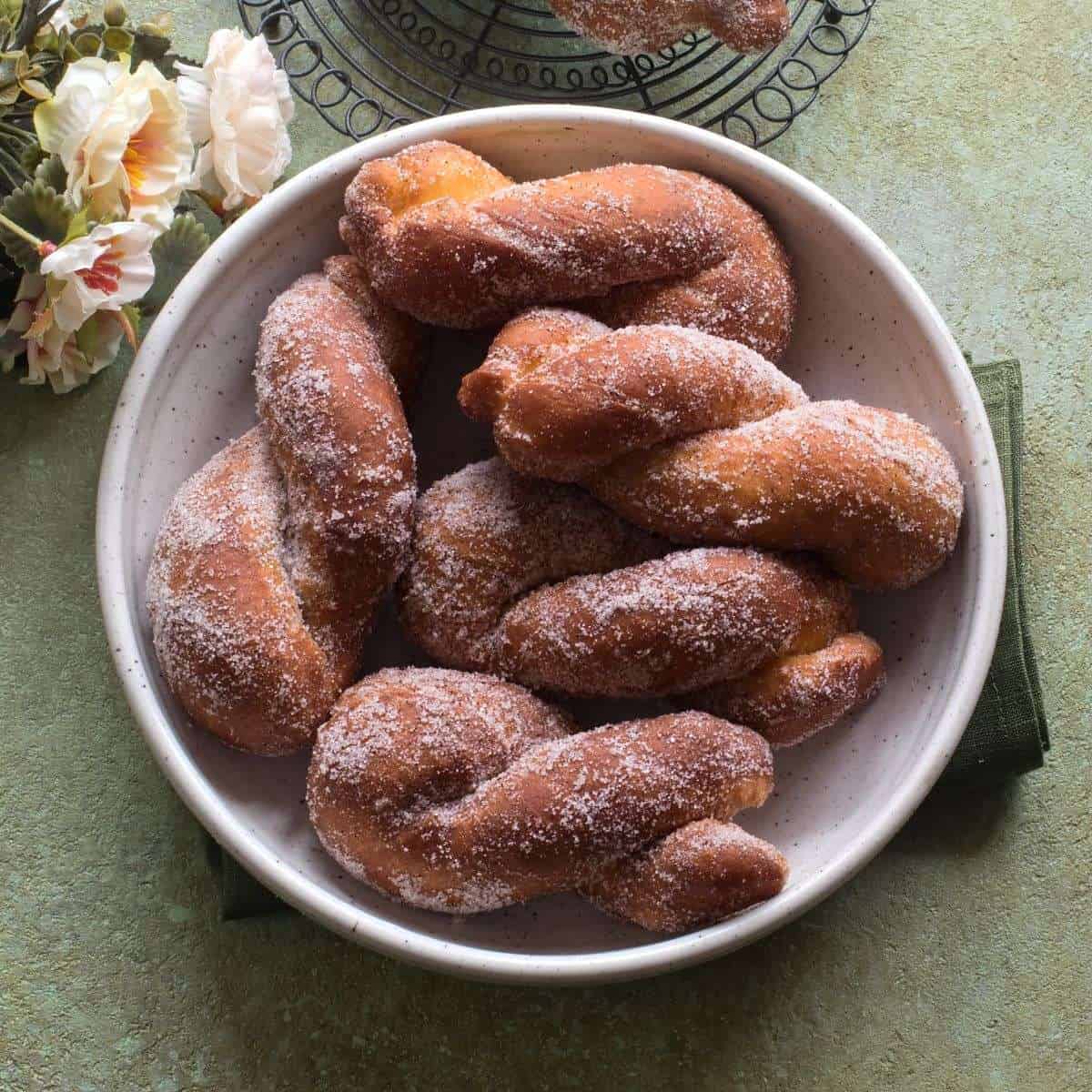
In the Czech Republic, šišky are served warm, often piled on a plate in the middle of the table. They are perfect with coffee, tea, or a glass of milk. Some families serve them with jam on the side, but many enjoy them plain with just sugar.
➜ Storage and reheating
As with most yeast dough pastries, šišky are best eaten the same day. Store any leftovers covered at room temperature for up to 2 days. I like to reheat one- or two-day-old šišky briefly in the oven to refresh them.
You can also freeze šišky - without the sugar coating. Place them in a freezer bag and store them in the freezer for up to 3 months.
➜ Helpful tips
- Keep the oil temperature steady and not too hot, so the šišky do not brown too quickly. Otherwise, they may remain raw inside.
- Do not overcrowd the pan, as this lowers the oil temperature. Keep in mind that the šišky will almost double in size during frying.
➜ Frequently asked questions
Yes, you can refrigerate the dough overnight after kneading. Cover it with plastic wrap to prevent it from drying out. Let the dough come to room temperature before shaping.
The oil was likely not hot enough. Low temperature causes the dough to absorb oil. Definitely use a thermometer if you have one.
Tried this recipe?
Leave a review down in the comments! ⭐⭐⭐⭐⭐
Other readers and I love hearing what you think. Stay in touch by following me on Facebook and Pinterest. For more Czech stuff, subscribe to my newsletter!
📖 Recipe
Czech Fried Šišky
Tap or hover to scale
This recipe was developed in grams. For the most accurate results, tap the purple METRIC toggle and use a kitchen scale.
Ingredients
Yeast dough:
- ¾ cup milk divided
- 3 Tablespoons granulated sugar divided
- 1 ½ teaspoon active dry yeast
- 3 cups all-purpose flour
- 2 teaspoons lemon zest freshly ground
- ½ teaspoon salt
- ½ stick unsalted butter
- 2 Tablespoon spiced rum Czech Tuzemák or Austrian Stroh 40
- 3 egg yolks
For frying:
- 4 cups frying oil canola or sunflower oil
For coating:
- 1 cup granulated sugar
- 1 teaspoon ground cinnamon
Instructions
- Activate yeast - Heat ¾ cup milk until warm but not hot (100 °F / 38 °C). In ½ cup of the warm milk, stir 1 teaspoon of granulated sugar and 1 ½ teaspoon active dry yeast. Let rest in a warm place for about 10 minutes, until foamy.
- Make the dough - Melt ½ stick unsalted butter and let it cool slightly. It can't be too hot, just melted. Stir in the remaining milk and 2 Tablespoon spiced rum, then mix in 3 egg yolks.
- In a large bowl, combine 3 cups all-purpose flour, ½ teaspoon salt, 2 teaspoons lemon zest, and the rest of 3 Tablespoons granulated sugar. Make a well in the center and pour in the activated yeast and the egg and milk mixture. Mix roughly with a fork until combined, then knead the dough for 8 to 10 minutes. You can use a stand mixer fitted with a dough hook on medium speed, or knead by hand using a wooden spoon, the old Czech way.
- Let the dough rise - Transfer the dough to a clean bowl, cover with plastic wrap, and let it rise in a warm place for 1 to 2 hours, until roughly doubled in size. After about 45 minutes, briefly knead the dough to deflate it, then let it continue rising, covered.
- Make cinnamon sugar - While the dough is rising, mix 1 cup granulated sugar and 1 teaspoon ground cinnamon in a bowl.
- Shape the šišky - Transfer the risen dough to a lightly floured surface. Cut into pieces about 2½ ounces (70 g) each. Shape into balls, cover, and let rest for 15 minutes. Roll each ball into a strand about ½ inch thick and twist into a loose knot or simple twist.
- Heat the frying oil - Heat 4 cups frying oil in a deep pan to about 350 °F (175 °C). - use a thermometer if you have one. The dough should sizzle gently when added.
- Fry the šišky - Fry in batches, turning halfway so they brown evenly. Do not overcrowd the pan. Fry for 1½ to 2 minutes per side. Test the first piece by tearing it open at the thickest part. The inside should be fully cooked and soft, not doughy.
- Drain and finish - Remove from the oil and place on paper towels. While still warm, sprinkle with powdered sugar or coat in cinnamon sugar.
Notes
- Makes 10-14 šišky, depending on their size.
- If your house is cold or drafty, place the bowl with the rising dough in the oven with the light on, or warm the oven for about 30 seconds first, then turn it off and close the door.
- Kneading the dough for 8 to 10 minutes ensures proper gluten development and results in a soft, elastic dough.
- The oil temperature for frying is critical. I use a thermometer to make sure the oil stays around 350 °F (175 °C). If you do not have a thermometer, test the oil with a small piece of dough. The oil should sizzle gently, not bubble wildly. If there is little or no sizzling, the temperature is too low and the dough will sink to the bottom and absorb more fat.
- STORAGE: As with most yeast dough pastries, šišky are best eaten the same day. Store any leftovers covered at room temperature for up to 2 days. I like to reheat one- or two-day-old šišky briefly in the oven to refresh them.
- FREEZING: You can also freeze šišky - without the sugar coating. Place them in a freezer bag and store them in the freezer for up to 3 months.



Pat Myers says
OMG!! I haven’t had these since I was a little girl (about 75 years ago!). I was a member of Sokol Tyrs, in Cleveland, and a senior member (her name was Mana Sima) made these for a fund raiser. They were delicious! They had golden raisins in them, and they were rolled in granulated sugar. Thank you for the recipe and the memory!
Petra Kupská says
Oh, this truly made me smile! Thank you so much for sharing your memory, what a special connection to your childhood and Sokol Tyrs in Cleveland. Golden raisins and a sugar coating sound absolutely delightful, and I am honored that this recipe could help bring back that sweet nostalgia after 75 years!
You are welcome and happy coooking! Petra
laly says
Hello, thank you very much for your recipe. Is there only one batch fermentation? Once the pieces are formed, are they not left to rise again? Thank you.
Janinka says
My Babi used to make these—one of my favorite childhood treats!
Petra Kupská says
Oh, how lovely! I am happy that this recipe reminds you of hers, that truly means the world to me.
Nancy Worsinger says
My grandmother made these from the leftover scraps of dough when she was making koblihy. She called them "koblizka". This was a buried memory from 65v years ago - hadn't thought of it until I saw this recipe! Thank you!
Petra Kupská says
You are welcome, I am glad my recipe could remind you of them. 😊