

Let's make Koblihy, golden Czech donuts filled with jam. Fair warning, once you make them, they vanish fast!
Jump to
➜ What are koblihy
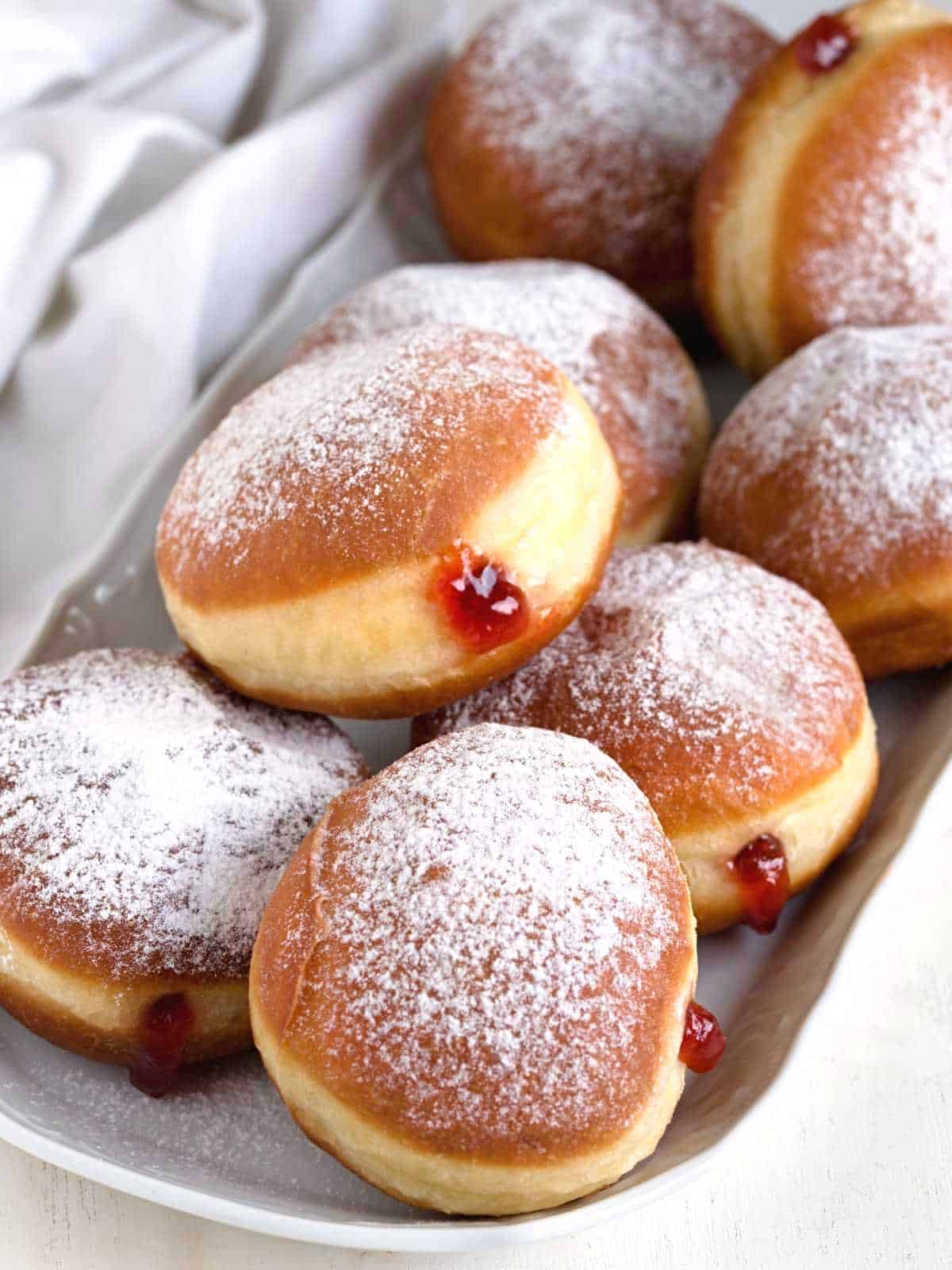
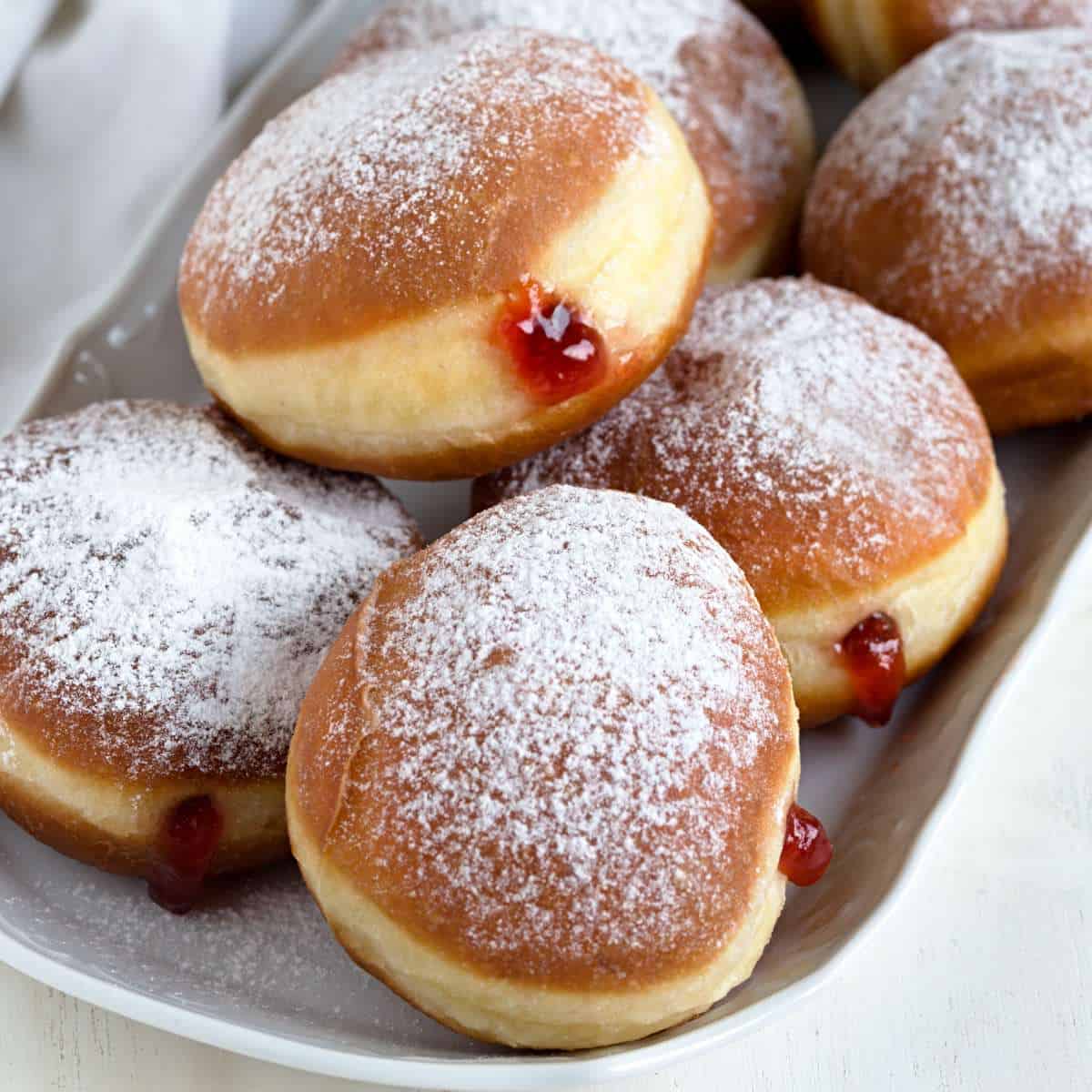
Koblihy (plural) or kobliha (singular) are traditional Czech deep-fried donuts filled with jam, most often strawberry or apricot. Before serving, they are generously dusted with powdered sugar.
In the past, koblihy were closely connected with the winter carnival season known as Masopust or Fašank. Today, they are available year-round in every good Czech bakery.
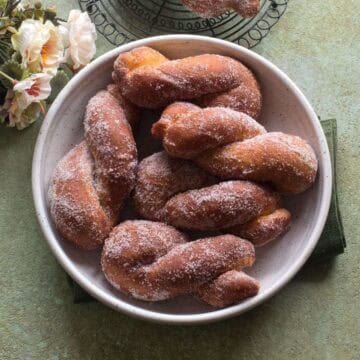
Depending on the region, you may also hear koblihy called šišky (shishky), especially in Moravia and neighboring Slovakia. In these areas, they are sometimes made without filling, shaped into twists, and simply coated in cinnamon sugar. Similar pastries exist across Central Europe as well. In Austria they are known as Krapfen, in Germany as Berliner, and in Poland as Pączki. Each country, and often each family, has its own small variations.
Making homemade koblihy from scratch is easier than you might think. They are made with yeast dough, so a little planning is needed. The whole process takes about two hours, but most of that time is simply waiting for the dough to rise.
➜ Czech pronunciation
Listen to how we Czechs pronounce the word koblihy:
MY TIP: Try also double-filled Moravian kolaches (another Czech yummy specialty!)
➜ Ingredient notes
✅ See the recipe below with step-by-step photos and many helpful tips. Scroll down for the full printable recipe in both US cups and metric measurements.
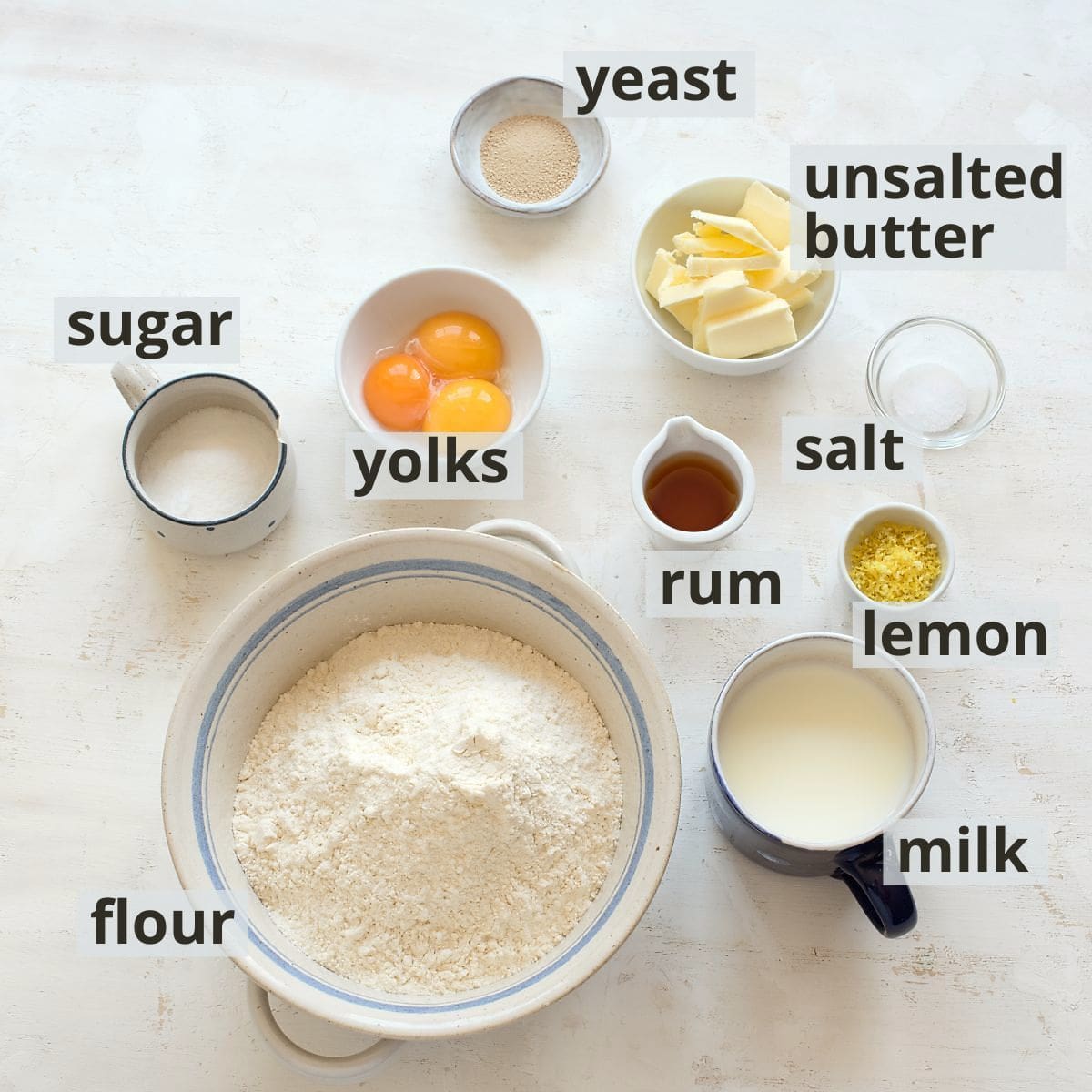
For the dough:
- All-purpose flour - I use Czech hladká mouka. Read more about flours in the Czech Republic.
- Active dry yeast
- Milk - warmed to 100-110 °F (38-40 °C)
- Granulated sugar - Koblihy are lightly sweetened so the filling remains the star.
- Unsalted butter - Butter is a cornerstone of traditional Central European baking. It enriches the dough and gives koblihy their tender, rich crumb.
- Egg yolks - Yolks add richness, softness, and a beautiful golden color to the dough.
- Lemon zest - freshly grated, just the yellow part
- Spiced rum - Rum helps create a lighter, puffier dough and reduces how much fat the donuts absorb during frying. In the Czech Republic, tuzemák (e. g. Božkov rum) is commonly used. In the United States, spiced Kirkland Signature rum from Costco or Austrian Stroh 60 are good alternatives.
- Salt
For frying and finishing:
- Oil for frying - About 1 quart (1 liter). Sunflower or canola oil are a practical and reliable choice for frying koblihy. Clarified butter is another option, although it is quite expensive for deep frying. In the Czech Republic, lard was traditionally preferred, especially during Masopust, when these donuts were made in many homes, but it can be harder to find outside the country today. If interested, read about the best oil to fry donuts.
- Jam for filling - Strawberry or apricot are classic, but many families use plum jam, prune butter, or even dulce de leche. The jam should be smooth, not too thick and not too runny.
- Powdered sugar - for dusting
Kitchen equipment: I fried the koblihy in a 10-inch (25 cm) cast iron skillet with lower rims. You will also need a metal slotted spoon for removing the koblihy from the oil and a cooling rack lined with paper towels.
➜ Instructions with photos
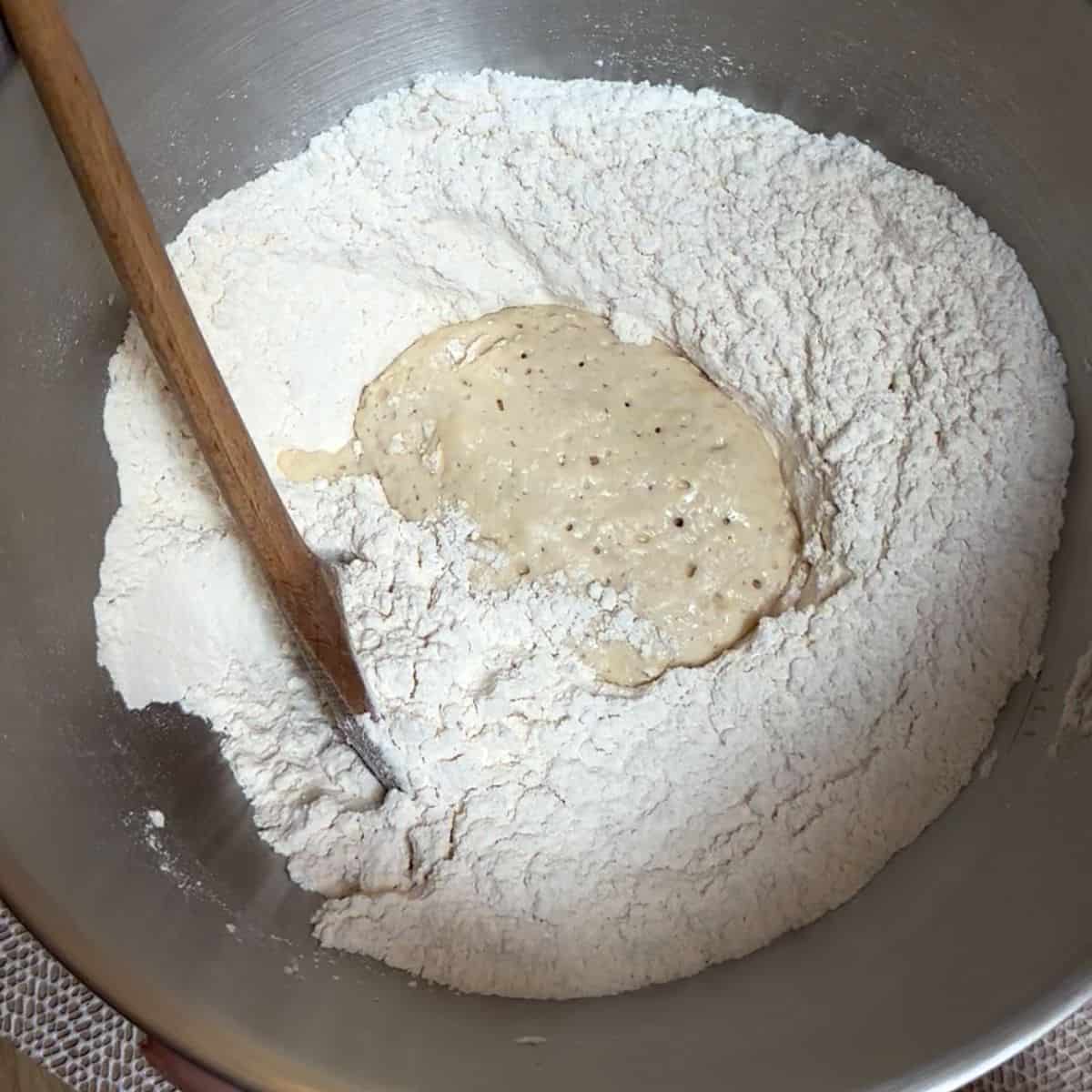
STEP 1: Add the flour and salt to a large mixing bowl and stir to combine. Using a spoon, make a shallow well in the center.
STEP 2: Warm the milk to 100 °F (37 °C). Pour about ½ cup of the warm milk into the well. Add ½ teaspoon of the sugar and all the yeast. Using a fork, lightly mix the liquid with a little flour to form a semi-liquid puddle.
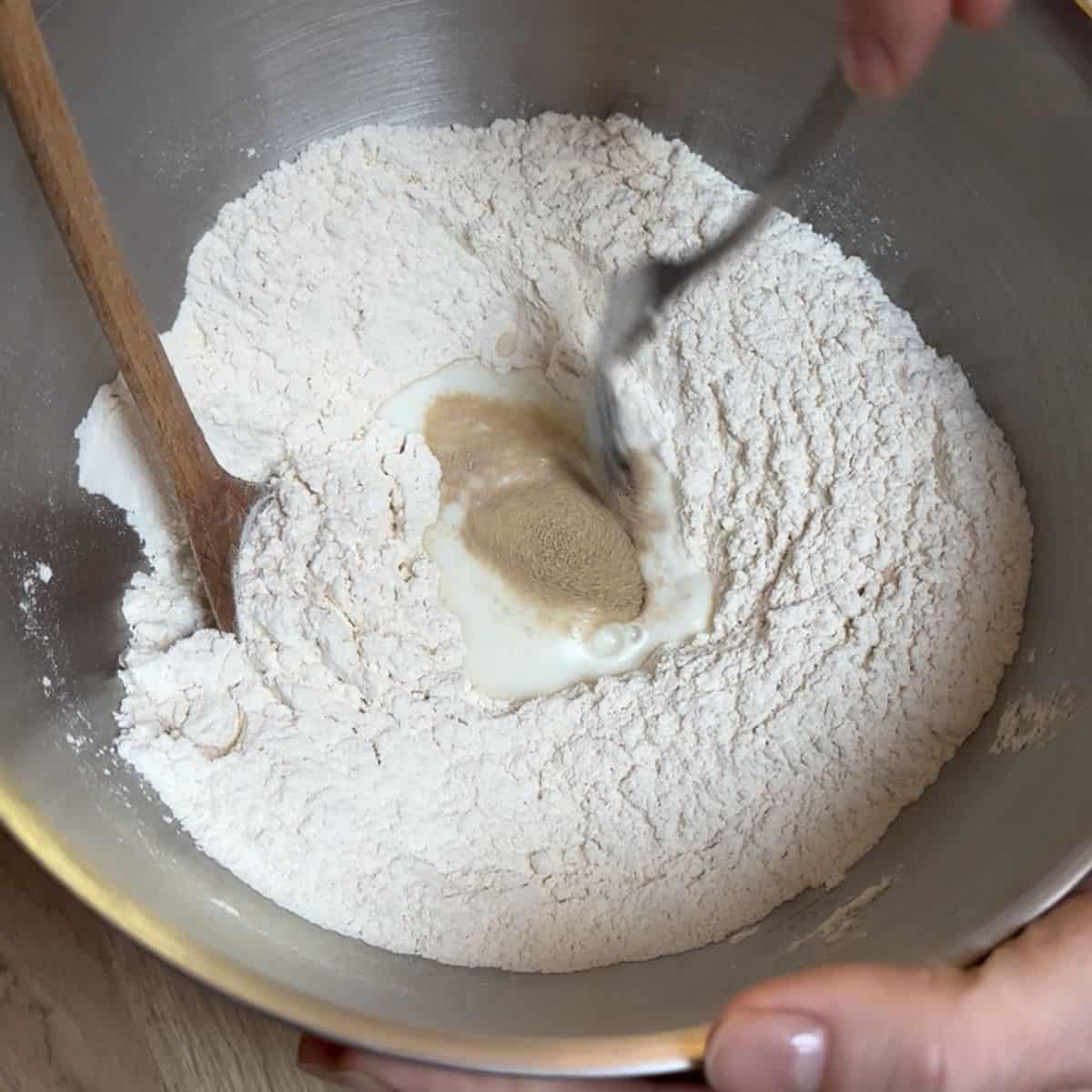
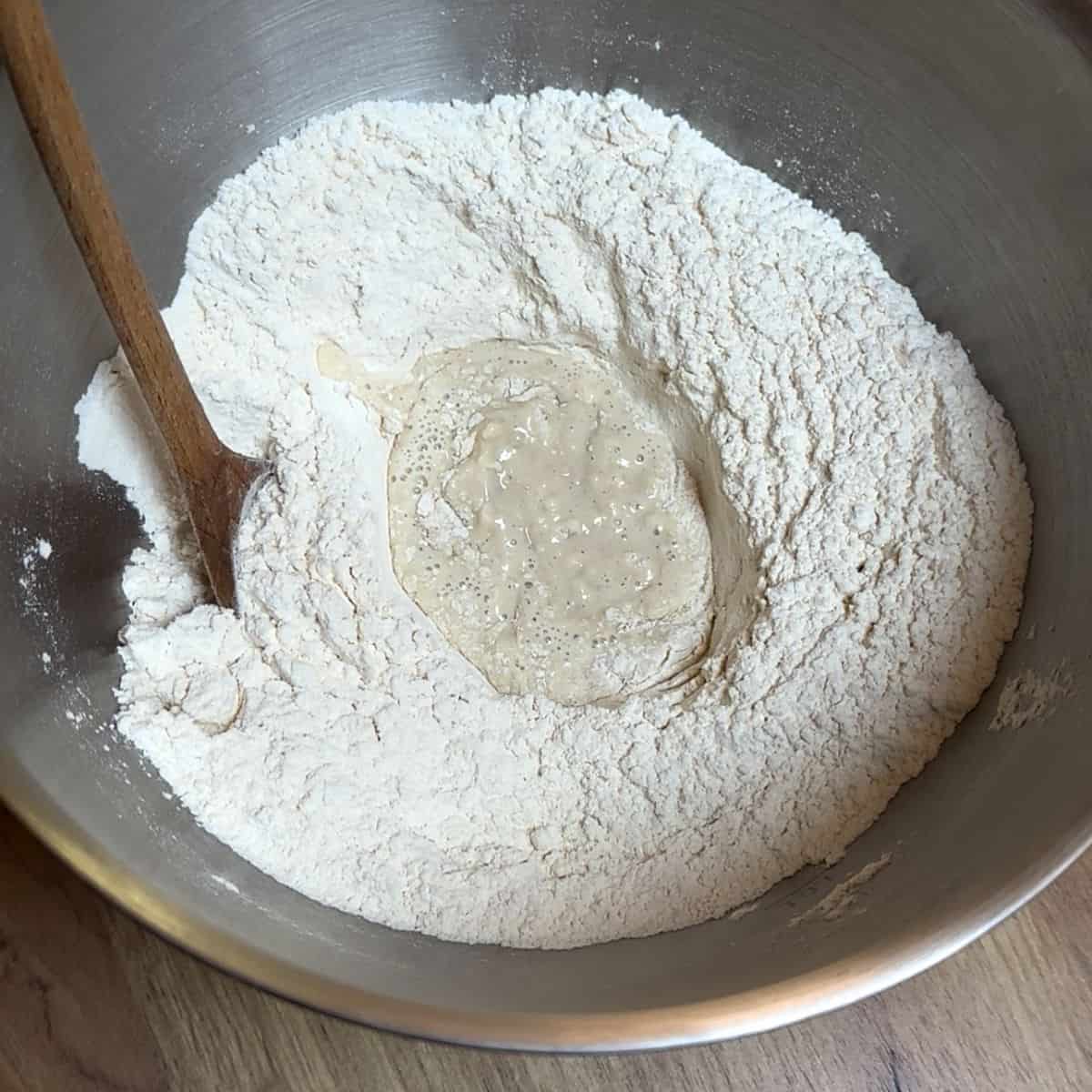
STEP 3: Let sit in a warm place for about 15 minutes, until the yeast becomes foamy and starts bubbling on the surface.
Note: If no bubbles form after 15 minutes, the yeast is likely no longer active. Start with fresh yeast and repeat the process.
STEP 4: Meanwhile, gently rewarm the remaining milk and add the butter, allowing it to melt slowly. Keep the heat low to medium so the mixture does not become hot. Remove from the heat and whisk in the rum, lemon zest, and the remaining sugar. Then whisk in the egg yolks.
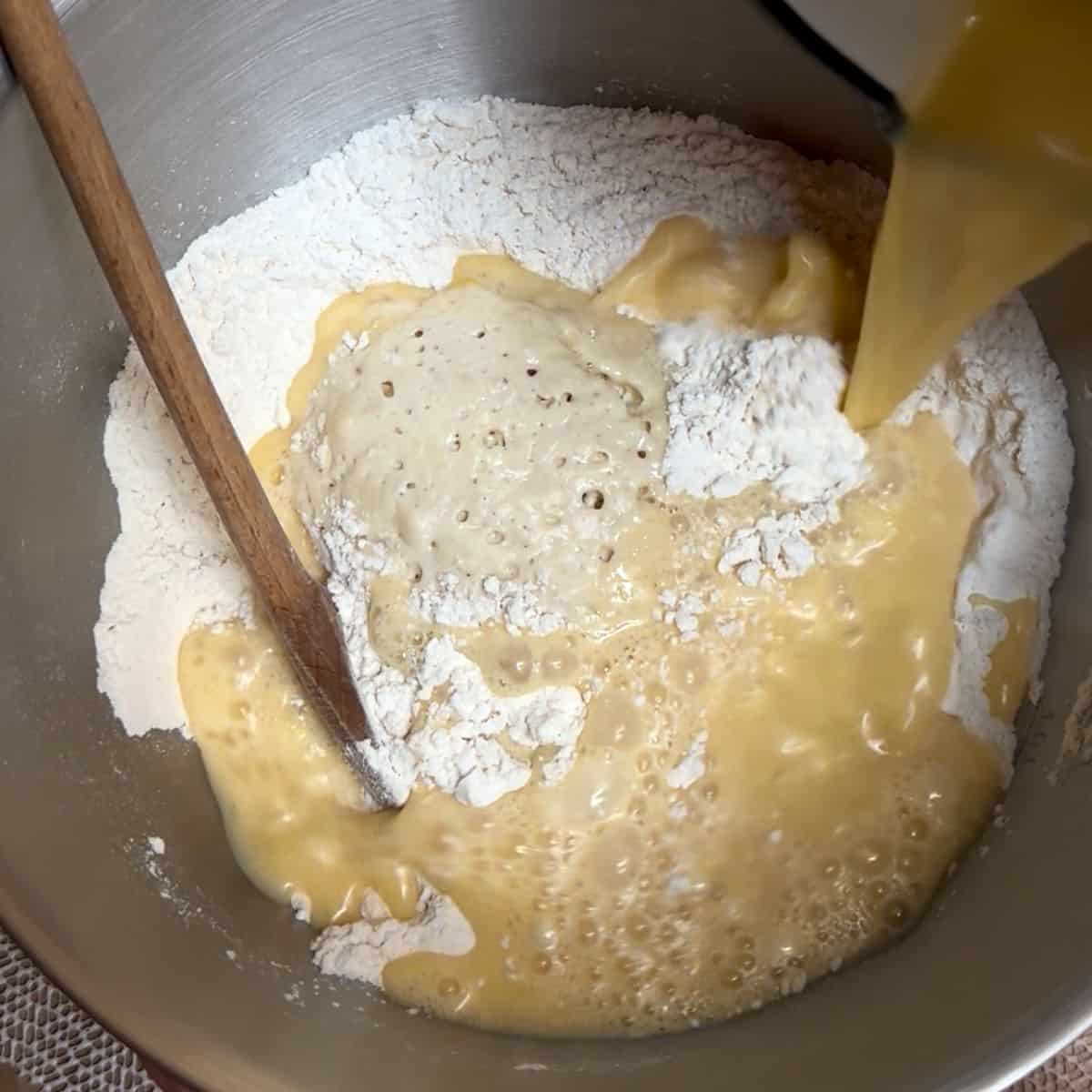
STEP 5: Pour the warm, but not hot, mixture into the bowl with the flour and activated yeast. Mix with a fork or wooden spoon just until a rough dough forms.
Note: If the mixture is too hot, the yolks may start to cook.
STEP 6: Attach the bowl to a stand mixer fitted with a dough hook. Knead on medium speed for 8 minutes, until the dough is smooth and elastic.
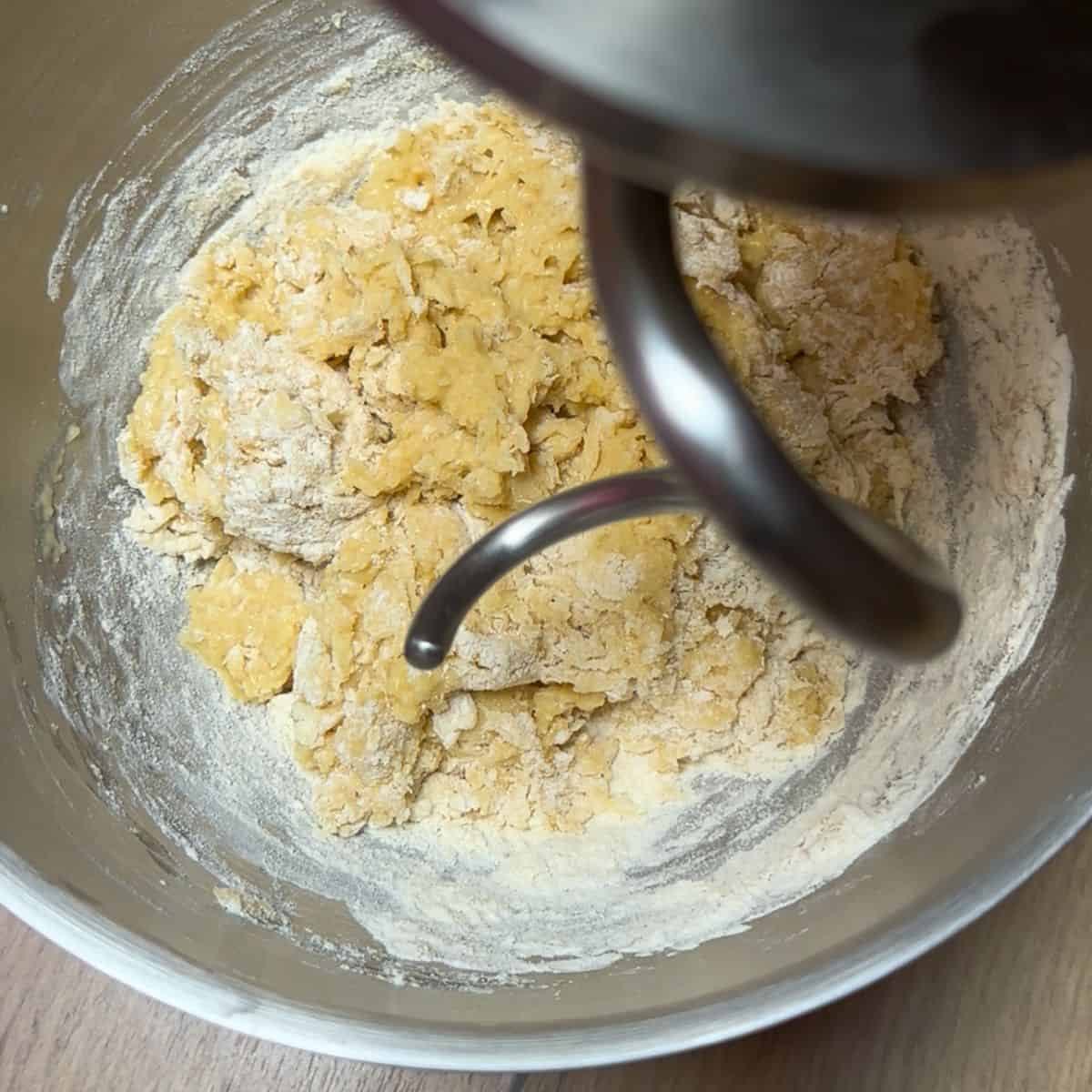
STEP 7: Transfer the dough to a clean bowl that is at least twice the size of the dough. Cover with plastic wrap and let rise in a warm place for 40 minutes.
STEP 8: Check the dough. Gently lift it with your fingers a few times to release some of the air and lightly flatten it. Do not punch it down. Cover again and let rise for another 20 minutes.


STEP 9: Turn the dough out onto a slightly floured work surface. Roll the dough into a disk about ½ inch (1.5 cm) thick. Cut out circles about 3 inches (7.5 cm) in diameter using a cookie cutter, glass, or mug. Cover with a clean kitchen towel and let rest for 20 minutes.
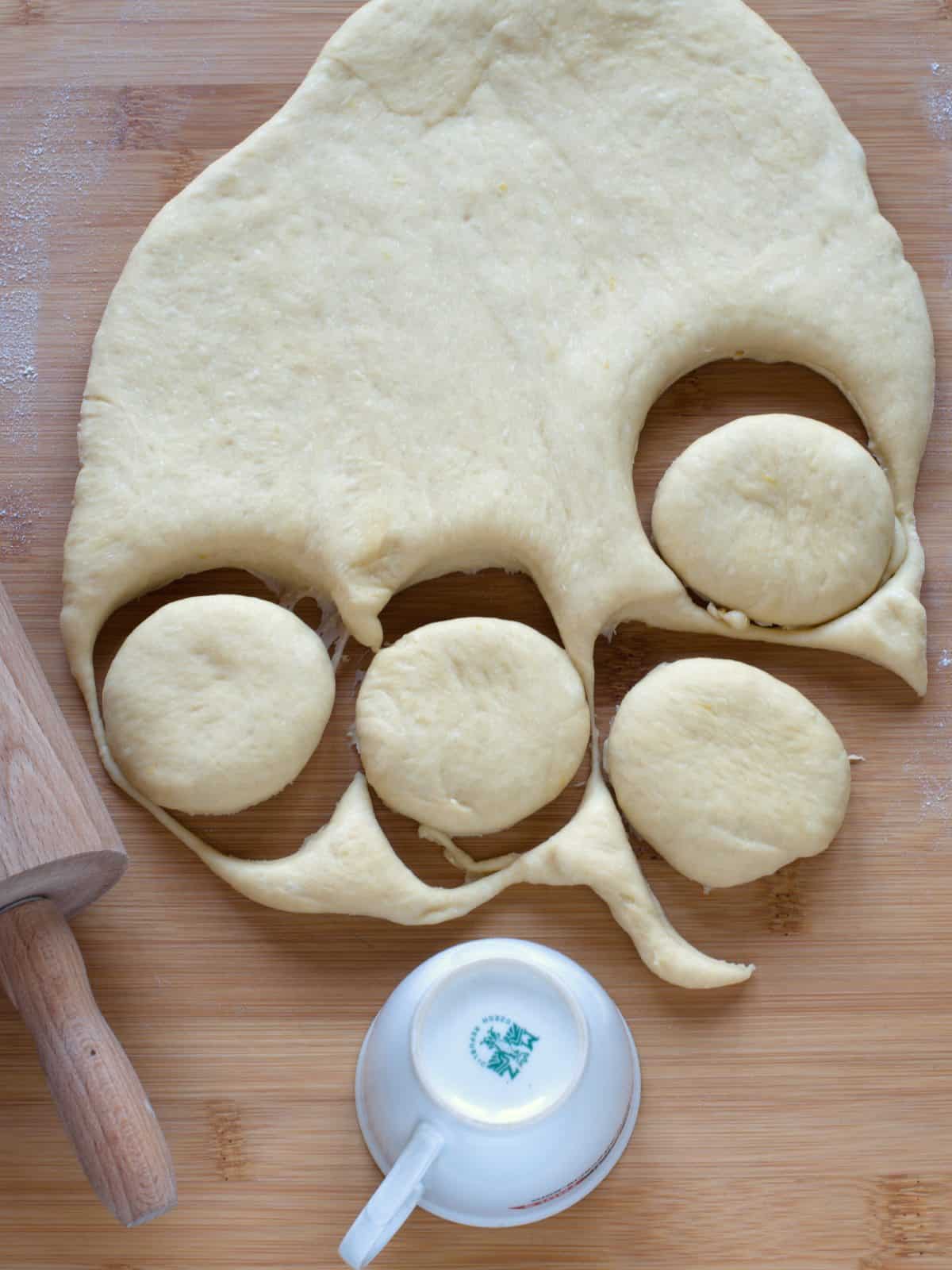
STEP 10: Gather the scraps and press them together. Shape into a ball, lightly spritz with water, place in a bowl, and cover with plastic wrap. Let rest in a warm place. You will re-roll and cut this dough later.
STEP 11: Heat the oil to 350 °F (180 °C). Use a thermometer and avoid overheating the oil.
MY RECOMMENDATION: Always fry one test kobliha first. If it browns too quickly, the oil is too hot. If it sinks and stays pale, the oil is not hot enough.
STEP 12: Carefully place the rested dough circles into the hot oil. Fry for about 1½ minutes on one side, flip, and fry for another 1½ minutes on the other side, until golden.
NOTE: When fried in properly heated oil, koblihy develop a beautiful pale ring around the center. My favorite part!
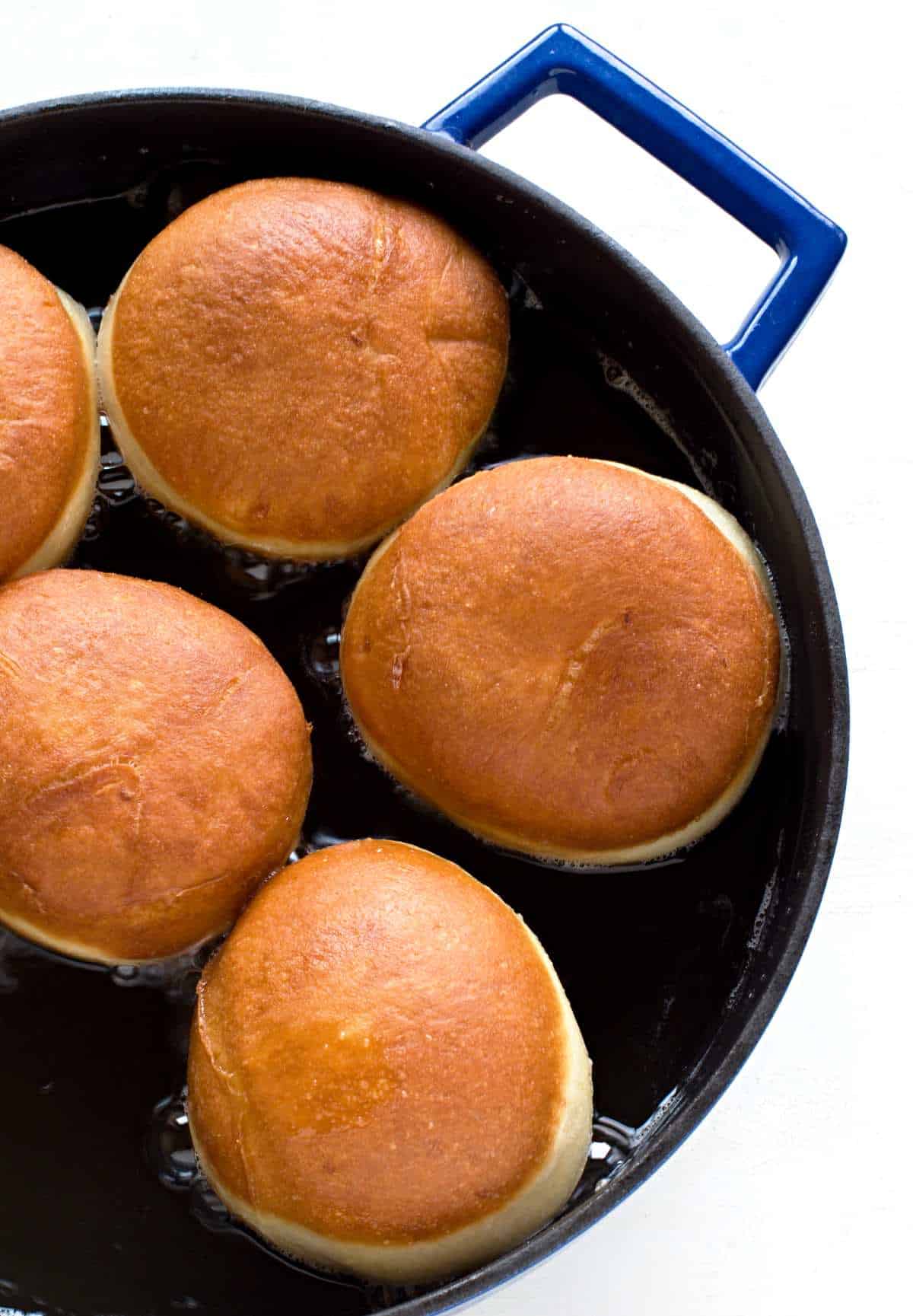
STEP 13: Remove the koblihy with a metal slotted spoon and transfer them to a cooling rack lined with paper towels.
STEP 14: Re-roll the remaining dough, let it rest briefly, cut out circles, and fry them in the same way.
STEP 15: Once slightly cooled, fill the koblihy with jam using a piping bag or pastry injector.
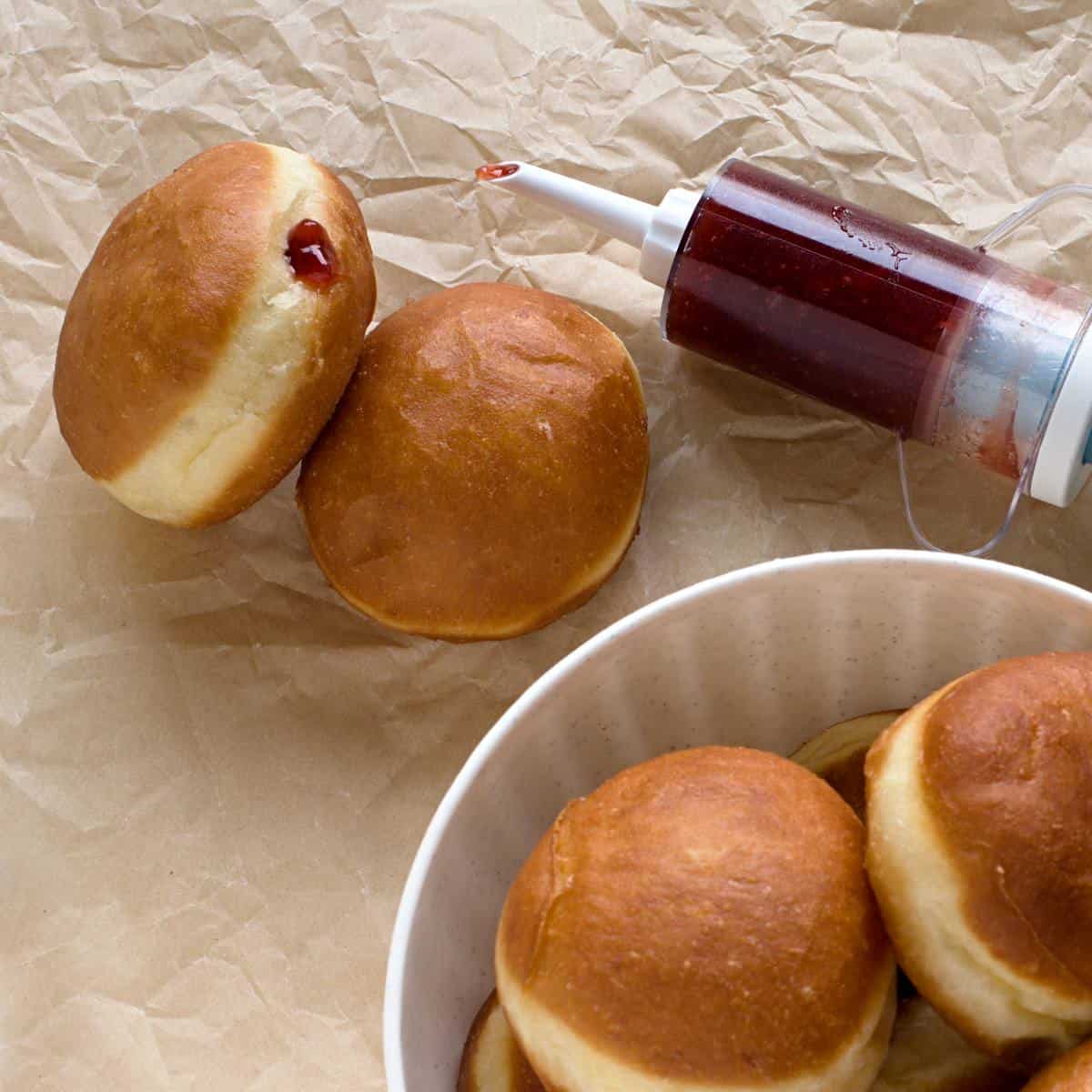
STEP 16: Dust with powdered sugar before serving.
➜ Filling koblihy before or after frying?
Both methods exists, and many readers shared their family traditions. Some grandmas filled the dough before frying by sandwiching jam between two rounds of dough, sealing the edges, and cutting again with a cutter.
Today, filling koblihy after frying is more common and much easier, especially for home cooks. Both ways are traditional, and both are delicious.
By the way, my dad always filled koblihy before frying. He cut out thinner circles, placed a spoonful of solid jam on one, covered it with another, pressed the edges together, and then used a larger glass or mug to shape each kobliha into a neat round with a quick circular motion. However, some koblihy opened during frying and the jam leaked out. For this reason, I personally prefer filling koblihy after frying.
➜ Storage
Koblihy taste best fresh, ideally on the day they are fried. They keep for about two days at room temperature. Cover them with a glass or plastic lid to prevent drying out. Over time, the powdered sugar will disappear as it is absorbed, and the donuts will gradually become firmer - this is pretty normal.
Freezing: Koblihy freeze well and can be stored for up to 2 to 3 months. Let them cool completely, do not dust them with sugar. Then wrap each kobliha individually in plastic wrap or place them in freezer bags with as much air removed as possible. To thaw, let them sit at room temperature or in the refrigerator. For best results, warm them briefly in the oven or microwave. They will not be exactly like fresh, but the taste and texture come back nicely.
➜ Koblihy FAQs
Czech koblihy are made from a rich yeast dough. It contains milk, butter, egg yolks, and a small amount of sugar, which gives the donuts their soft, fluffy texture and light crumb.
Heat the oil to 350 °F (180 °C) and keep the temperature steady. Many begginers often overheat the oil, which causes koblihy to turn dark brown too quickly while remaining raw inside. Frying them for 1½ minutes on each side at the correct temperature ensures they are evenly golden, puffy, and fully cooked.
Always use metal kitchen tools. A metal fork works best for flipping, and a metal slotted spoon is ideal for removing the koblihy from the oil. Plastic or wooden tools are not suitable for hot oil.
Tried this recipe?
Leave a review down in the comments! ⭐⭐⭐⭐⭐
Other readers and I love hearing what you think. Stay in touch by following me on Facebook and Pinterest. For more Czech stuff, subscribe to my newsletter!
📖 Recipe

Koblihy - Czech jam-filled donuts
Tap or hover to scale
This recipe was developed in grams. For the most accurate results, tap the purple METRIC toggle and use a kitchen scale.
Ingredients
Koblihy yeast dough:
- 3 cups all-purpose flour
- ½ teaspoon salt
- ¾ cup milk warmed to 100°F
- 3 Tablespoons granulated sugar
- 1 ½ teaspoons active dry yeast
- ½ stick unsalted butter softened at room temperature
- 2 Tablespoons spiced rum e. g. Kirkland from Costco or Austriah Stroh 40
- 3 egg yolks at room temperature
- 2 teaspoons lemon zest freshly grated
Misc.:
- 1 ¼ cups jam strawberry or apricot
- 4 cups canola (or sunflower oil)
- 2 Tablespoons powdered sugar for sprinkling on fried Koblihy
Instructions
- Measure all ingredients. Cut the butter into smaller pieces. Separate the egg yolks from the whites. Grate the yellow part of the lemon zest.
- Add 3 cups all-purpose flour and ½ teaspoon salt to a large mixing bowl and stir to combine. Using a spoon, make a shallow well in the center.
- Warm ¾ cup milk to 100-110 °F (40 °C). Pour about ½ cup of the warm milk into the well. Add ½ teaspoon of the sugar and 1 ½ teaspoons active dry yeast. Using a fork, lightly mix the liquid with a little flour to form a semi-liquid puddle.
- Let sit in a warm place for about 15 minutes, until the yeast becomes foamy and bubbles appear on the surface. If no bubbles form, the yeast is not active. Start again with fresh yeast.
- Meanwhile, gently rewarm the remaining milk. Add ½ stick unsalted butter and let it melt slowly. Keep the heat low to medium so the mixture does not become hot. Remove from the heat and whisk in 2 Tablespoons spiced rum, 2 teaspoons lemon zest, and the rest of 3 Tablespoons granulated sugar, then whisk in 3 egg yolks.
- Pour the warm, but not hot, mixture into the bowl with the flour and activated yeast. Mix with a fork or wooden spoon just until a rough dough forms.
- Knead the dough in a stand mixer fitted with a dough hook on medium speed for 8 minutes, until smooth, elastic, and barely sticking.
- Transfer the dough to a large clean bowl. Cover with plastic wrap and let rise in a warm, draft-free place for about 40 minutes.
- Gently lift the dough a few times with your fingers to release excess air and flatten it slightly. Do not punch it down. Cover again and let rise for another 20 minutes.
- Turn the dough out onto a lightly floured work surface. Roll to about ½ inch (1.5 cm) thickness. Cut out circles about 3 inches (7.5 cm) in diameter. Cover with a clean kitchen towel and let rest for 20 minutes.
- Gather the scraps, gently press together, shape into a ball, lightly spritz with water, cover, and let rest.
- Heat 4 cups canola to 350 °F (180 °C). Use a thermometer and keep the temperature steady.
- Fry the rested dough circles for about 1½ minutes on one side, flip, and fry for another 1½ minutes on the other side, so they are golden on the surface.
- Remove with a metal slotted spoon and transfer to a cooling rack lined with paper towels.
- Re-roll the remaining rested dough, cut out the circles, and fry them the same way.
- Once slightly cooled, fill the koblihy with jam from the side using a piping bag or pastry injector.
- Dust generously with powdered sugar before serving.
Notes
- This recipe yields about 16 pieces of koblihy, depending on the size of your cutter.
- Do not shorten the kneading time. Kneading for the full 8 minutes is essential for developing gluten and achieving a soft, elastic dough.
- When frying, always test one kobliha first to check both the oil temperature and frying time. If it browns too quickly, the oil is too hot. If it sinks and stays pale, the oil is not hot enough.
- Fry the koblihy for about 1½ minutes on each side. Cut the first test piece in half to make sure there is no raw dough left inside.
- STORAGE: Koblihy taste best fresh, ideally on the day they are fried. They can be stored at room temperature for up to 2 days, loosely covered with a glass or plastic lid. After sitting overnight, the surface may become slightly moist and the powdered sugar will disappear as it is absorbed. Over time, koblihy gradually become firmer, which is normal for fried yeast dough.
- FREEZING: Koblihy can be frozen for up to 2-3 months. Let them cool completely, then wrap each one individually, without powdered sugar, and remove as much air as possible. Thaw at room temperature and warm briefly before serving.


Lucie says
When do I mix the yeast starter to the rest of the dough please?
pauilina says
the author forgot to put that... its in step 3
paulina says
please correct the recipe to clarify when to add yeast
julie says
So happy to find this! My Grandma made these for us, it was our favorite pastry. One minor variation, she filled them before frying, using poppyseed or apricot filling, along with a special one in each batch that had a cotton ball, to the great delight of the kids pranking one of the adults into eating it.
Thank you!
Jirina says
neni tech kvasnic hodne?
Petra Kupská says
2 lžičky na 3 hrnky mouky (cca 400 g) plus mínus odpovídá. Měla jsem v receptu původně 2 1/4 lžičky, ale po aktuálním víkendovém smažení koblih jsem množství upravila. Pokud používáte čerstvé nebo instantní droždí, nemusíte předem zadělávat drožďový kvásek, stačí droždí zamíchat s ostatními surovinami.
Hodně štěstí při pečení!
Maya says
I haven’t tried this specific recipe, but I recognize it: these are exactly the same as the doughnuts we make each year for Hanukkah! I love them. They’re a childhood tradition for me. 🥹
Hana says
Beautiful donuts, the rum (tuzemak) and lemon zest reminds me of home.
Marge Havlicek Arbaugh says
I cannot make this due to my hubby being deathly allergic to what ever is in spiced rums. He is fine with plain rum though.
Beth Cherveny says
I grew up with something very similar. I don't know the spelling, but the pronunciation was "book thay". Does that sound familiar, or how does it compare?
Petra Kupská says
You can absolutely make these using plain rum instead, or simply leave it out altogether. Safety always comes first—I hope you’ll still be able to enjoy them 😊
Joseph says
never ever NEVER use Canola oil. your folks never did cause there was none. no canola tree no canola fruit no canola nut. a GMO weed created by Monsanto makers of roundup recipe great however. me Lithuanian Italian