

If fall leaves you with a basket of apples and no idea what to do with them all, this cake is my answer. Czechs call it nepečený jablečný dort, a no-bake apple jelly cake, and it is one of my favorite ways to use up the apples when our garden trees give us more than we can eat.
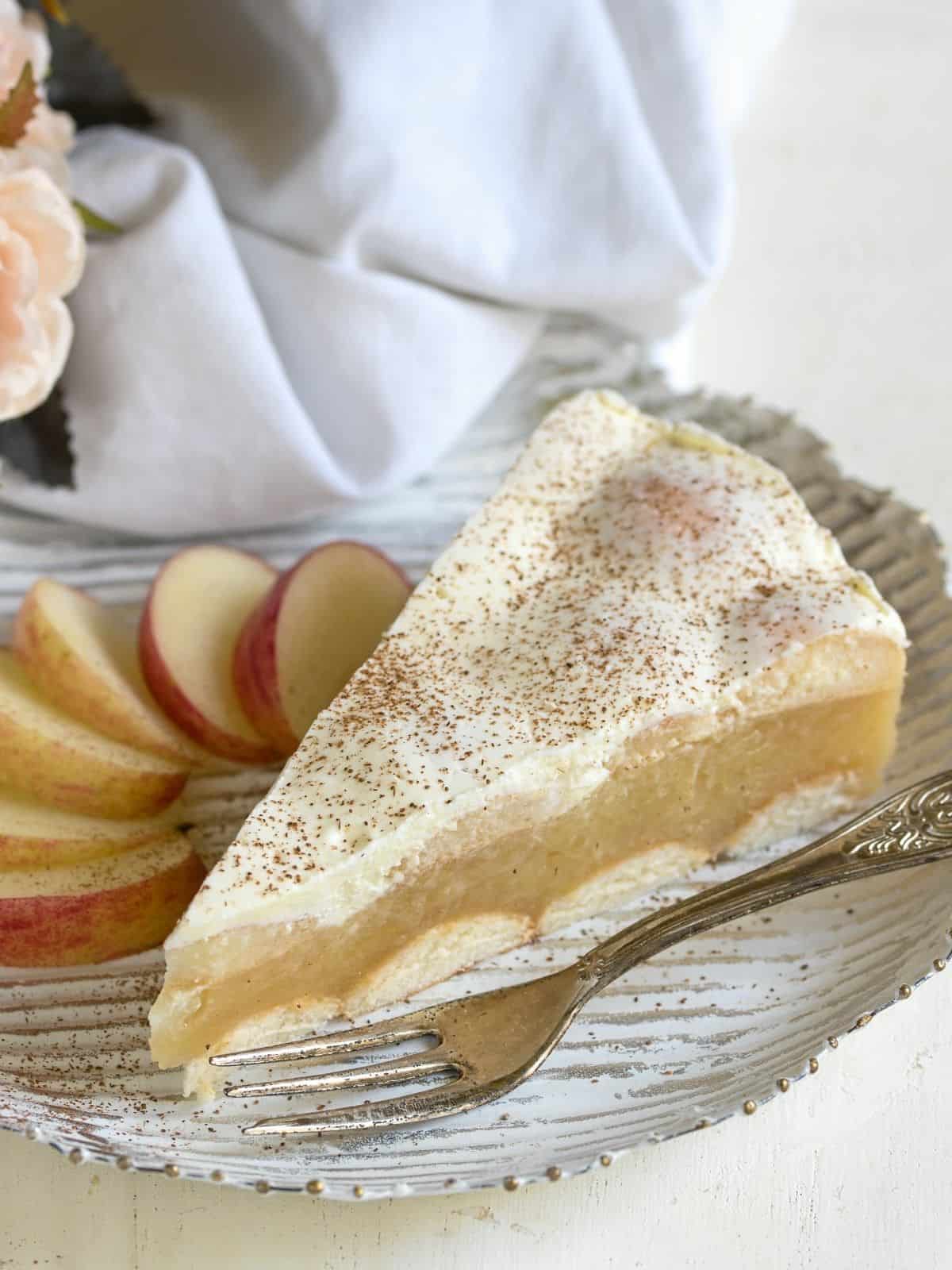
What is an apple jelly cake? It is a light, no-bake Czech dessert built from three layers: sponge biscuits (Czech piškoty, close to American Nilla wafers), a soft filling cooked from fresh apples and thickened with vanilla pudding powder, and lightly sweetened sour cream on top. The biscuits start out crisp, but overnight they soak up the apple filling and turn soft and cake-like. There is no gelatin in the cake, and no jar of apple jelly either. The filling sets in the fridge into a sliceable, jelly-like layer, which is where the cake gets its name.
This is a true beginner recipe: if you can stir a pot of pudding, you can build this cake. Allow about an hour of hands-on time, then the fridge does the rest, so start a day ahead; the cake needs to rest overnight. Serve it cold. I have made this cake for years, and I have learned exactly what makes the difference between a cake that sets just right and one that does not.
Jump to
➜ My best tips for this recipe
- Use full-fat sour cream for the top layer. Light sour cream turns thin and runny on the cake. Full-fat stays firm on top and tastes better.
- Vanilla pudding powder does the setting. Cooked apples thickened with pudding powder (or cornstarch) firm up in the fridge into a layer that slices cleanly. It is the traditional Czech way, easier than gelatin and reliable every time.
- Do not skip the overnight rest. The apple filling needs those cold hours to stiffen. Cut the cake too soon and it will not hold together.
"I made this recipe last weekend and it was a big hit with my family. Your step by step instructions and pictures are great."
Lorraine Vítámvás
If you still have apples to use up, the delicious Czech apple slice (jablečné řezy) deserves a turn next, and a classic apple strudel (jablečný štrúdl) never disappoints. For a warm, cozy supper made of apples and old rolls, Czech grandmothers swear by apple bread pudding (žemlovka).
➜ The story behind this apple cake
I did not grow up with this cake, but I learned it from my friend Pavla, one of the best home bakers I know. She brought it to a get-together years ago, and I asked for the recipe before the plates were cleared. It has been part of my autumn routine ever since, though "baking" is hardly the word for a cake that never sees the oven.
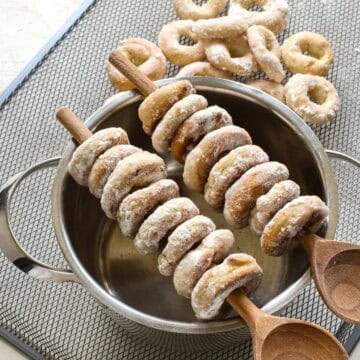
The recipe could only come from a country where apples thrive the way they do in the Czech Republic. When the harvest lands all at once, Czech cooks turn it into apple compote (jablečný kompot), dried apples (křížaly), a quick batch of fried apple rings, and cakes like this one.
Among all those apple dishes, this cake stands out for its lightness because there are no rich butter creams or heaps of sugar, just fruit, biscuits, and tangy sour cream. Maybe that is why it is the one dessert everyone at the table, from grandchildren to grandparents, actually finishes. You will find more sweets like it among my Czech dessert recipes.
Czech pronunciation
Curious how to ask for this cake in Czech? The name is nepečený jablečný dort, which sounds roughly like NEH-peh-cheh-nee YAH-blech-nee DORT. Click and listen to my recording below.
➜ Ingredients
✅ See the recipe below with step-by-step photos and many helpful tips. Scroll down for the full printable recipe in both US cups and metric measurements.
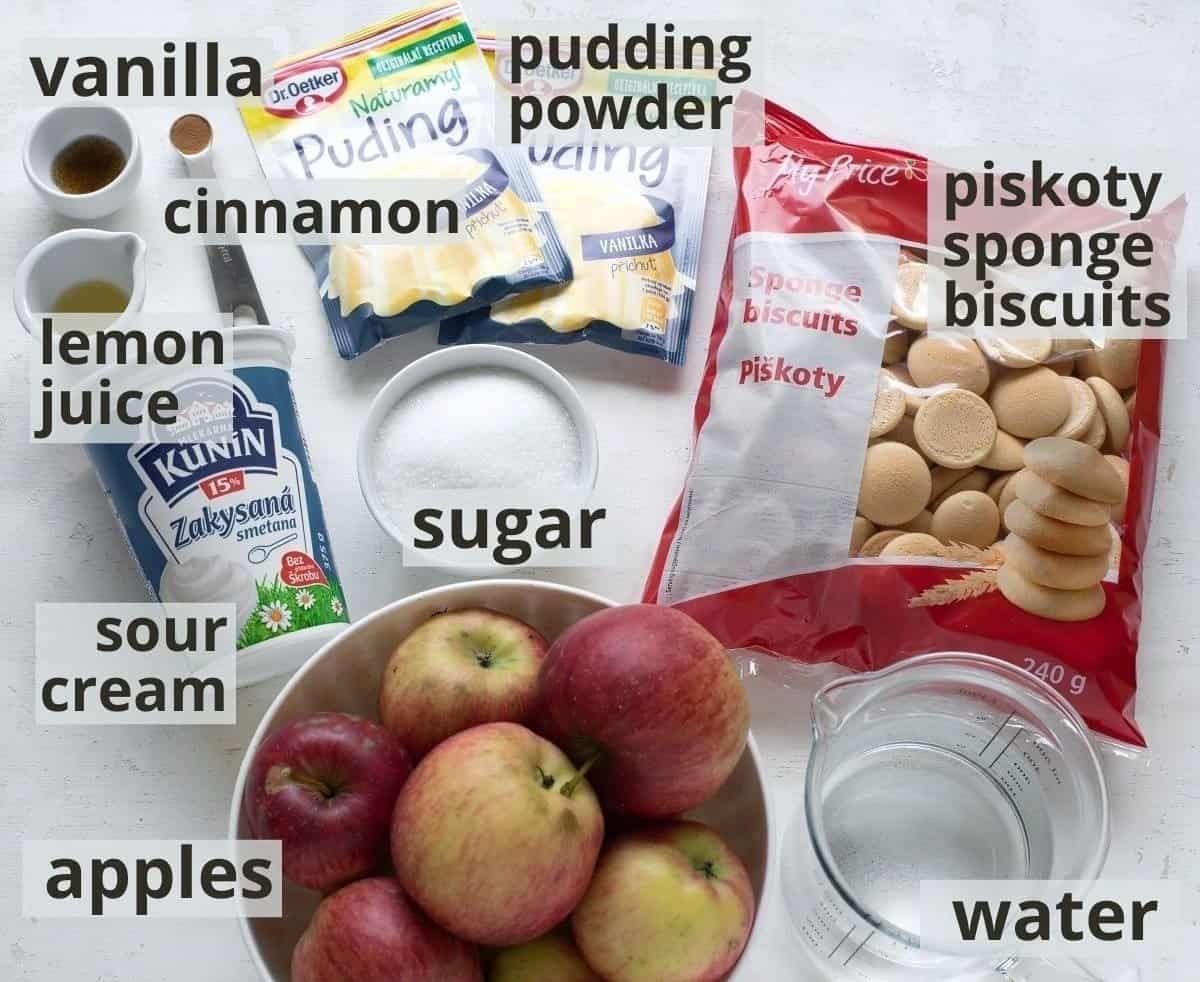
- Apples, practically any variety works, and a slightly tart apple, such as Granny Smith or Jonagold, keeps the filling tasting fresh. I use whatever our own tree gives us. Homegrown or farmers market apples are wonderful. Store-bought apples work just as well.
- Sponge biscuits, the little round piškoty every Czech pantry knows - thin, crisp, vanilla-flavored, no filling. You can make piškoty at home, look for Czech or Polish ones at a European deli, or reach for Nilla wafers, the closest American match. Ladyfingers work in a pinch, so break them to fit the pan.
- Vanilla pudding powder, the Czech shortcut that sets the apple filling. A Dr. Oetker sachet is essentially cornstarch with vanilla flavor, and it is available on Amazon. Plain cornstarch with a splash of vanilla extract does the same job (exact amounts are in the recipe card).
- Granulated sugar, just enough to sweeten the filling and the topping, because the cake is not meant to be very sweet.
- Ground cinnamon, the apples' natural partner. A little goes into the filling and a pinch dusts the finished cake.
- Lemon juice, freshly squeezed. Tt brightens the cooked apples so the filling does not taste flat.
- Vanilla extract, optional. Real vanilla deepens the flavor. I originally made this cake with vanilla bean paste, which is what you see in the photos, and either works. Czech bakers often use vanilla sugar instead (from Dr. Oetker, sold as Vanille Zucker, also online).
- Water, for cooking the apples and dissolving the pudding powder.
- Sour cream, mixed with a spoon of sugar it becomes the cool, tangy finish of the cake. Choose full-fat sour cream with 15 to 20 percent fat. Light sour cream is too thin and tends to run off the cake.
Equipment
- Springform pan, 9 to 10 inches (22-26 cm) (affiliate link), the cake sets right in it and the ring lifts away for clean sides.
- Potato masher (affiliate link), for crushing the cooked apples while leaving small chunks; a fork does the job too.
➜ How to make this no-bake apple cake
STEP 1: Prepare the pan. Take a 9- to 10-inch springform pan. Place a sheet of parchment paper over the bottom, close the ring over it, and trim the excess paper with scissors. Lightly butter the top of the parchment paper. The butter helps the piškoty biscuits stick to the paper, so they stay in place as you start layering the cake.
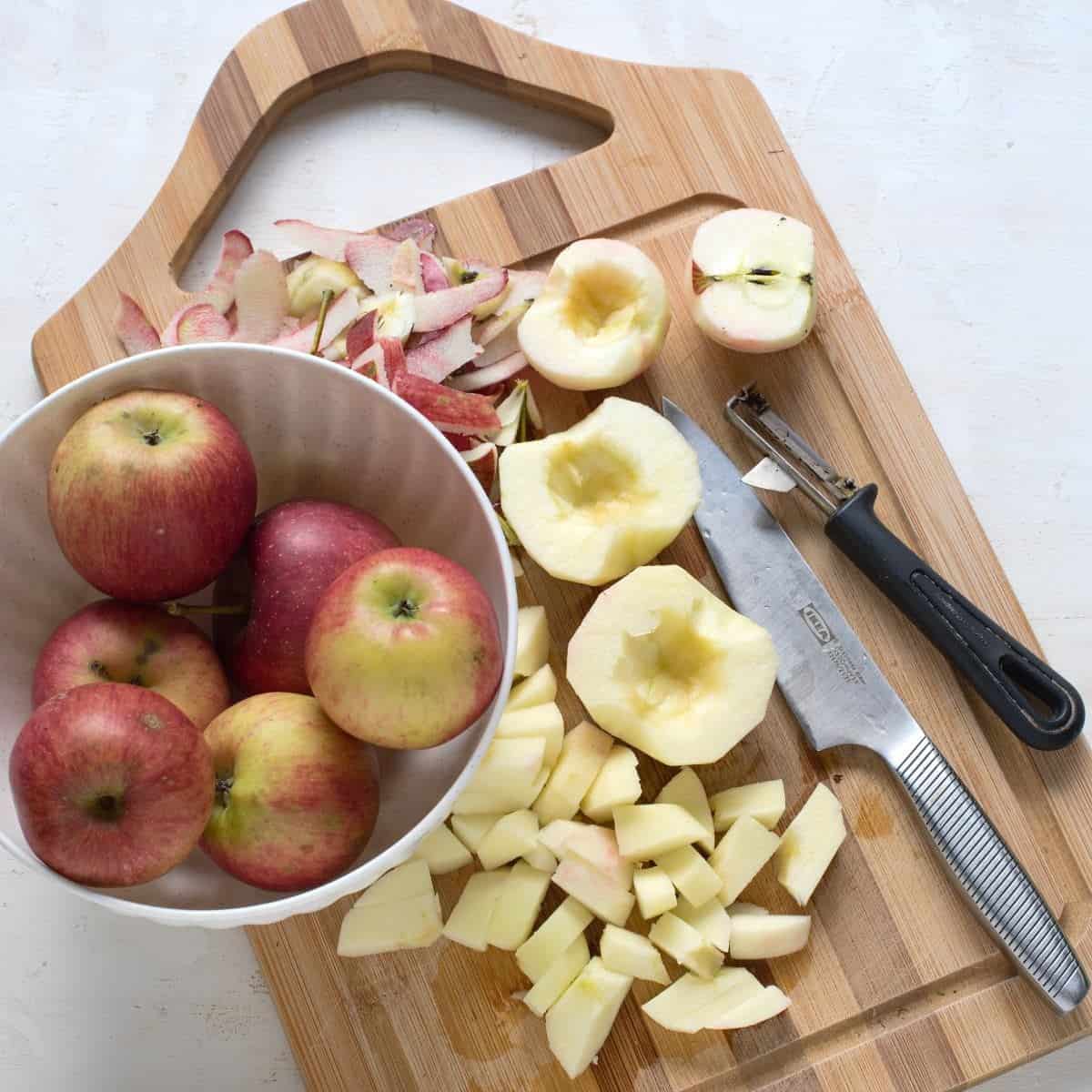
STEP 2: Prepare the apples. Wash the apples, peel them, and remove the cores. Cut the apples into cubes about ½ to 1 inch (1-2.5 cm) in size.
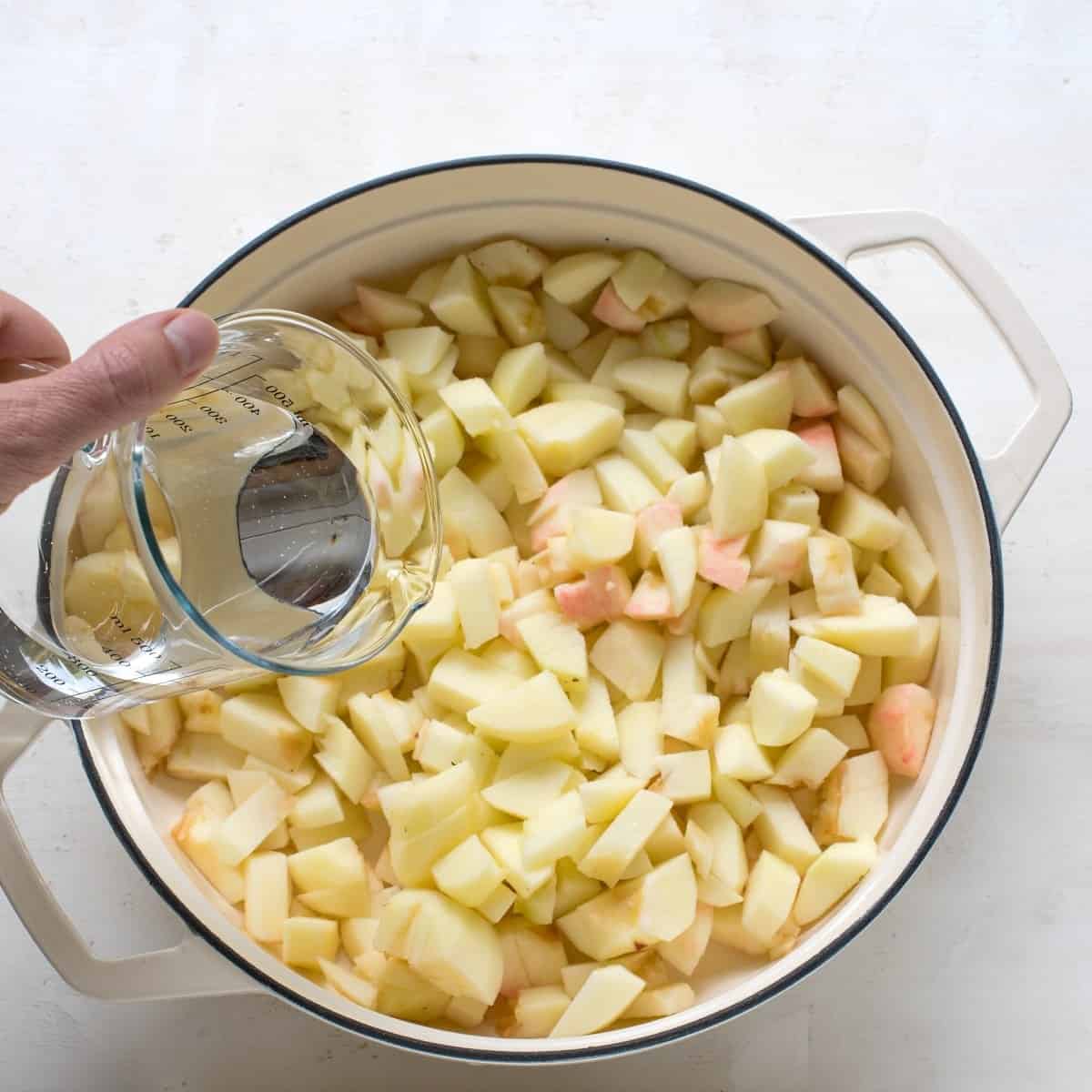
STEP 3: Cook the apples. Put the cubed apples in a pot and pour in half of the water. Cover with a lid and bring to a boil. Then turn the heat down to low and let the apples simmer under the lid for 15 minutes.
STEP 4: Season the filling. Add the cinnamon, sugar, vanilla, and lemon juice to the cooked apples. Stir well.
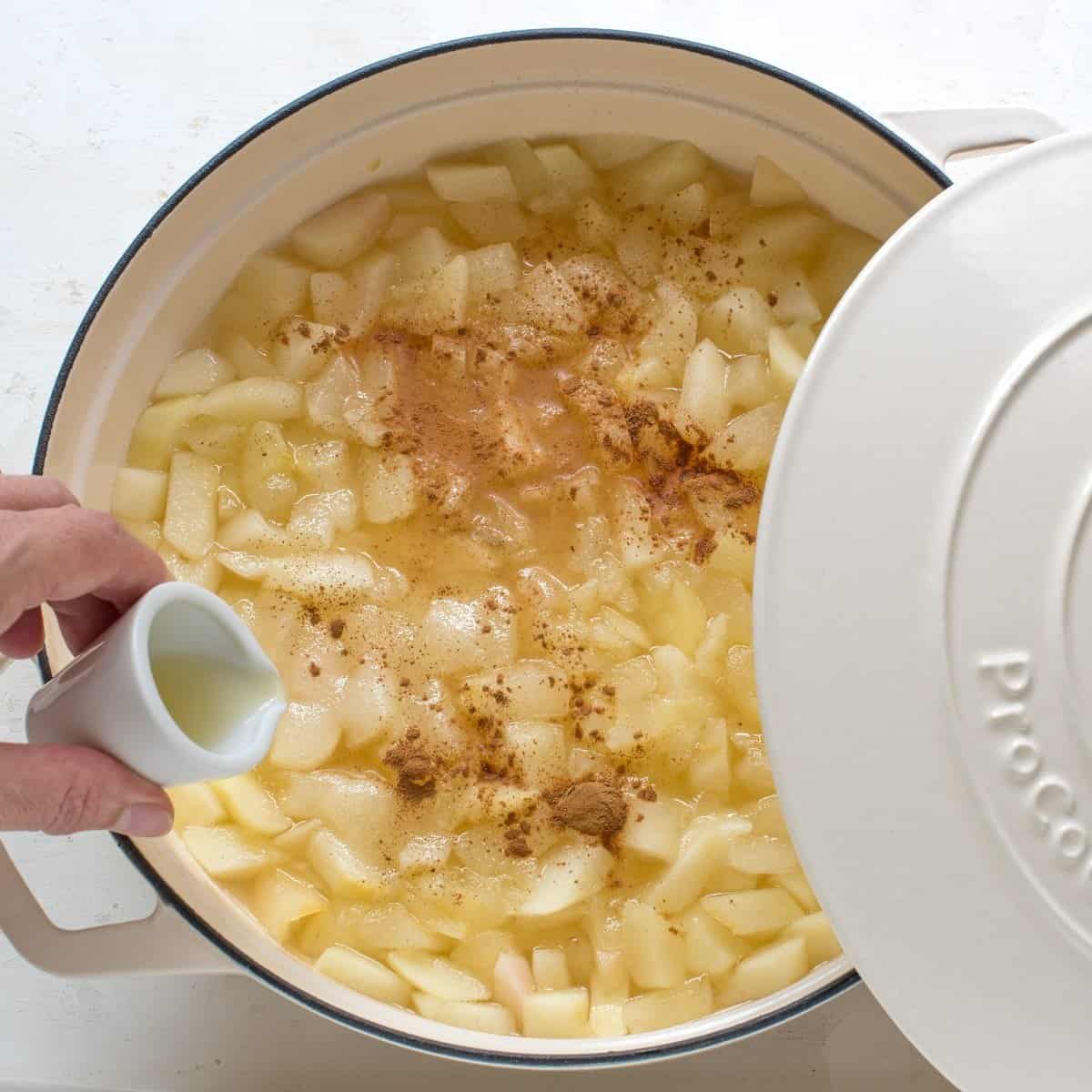
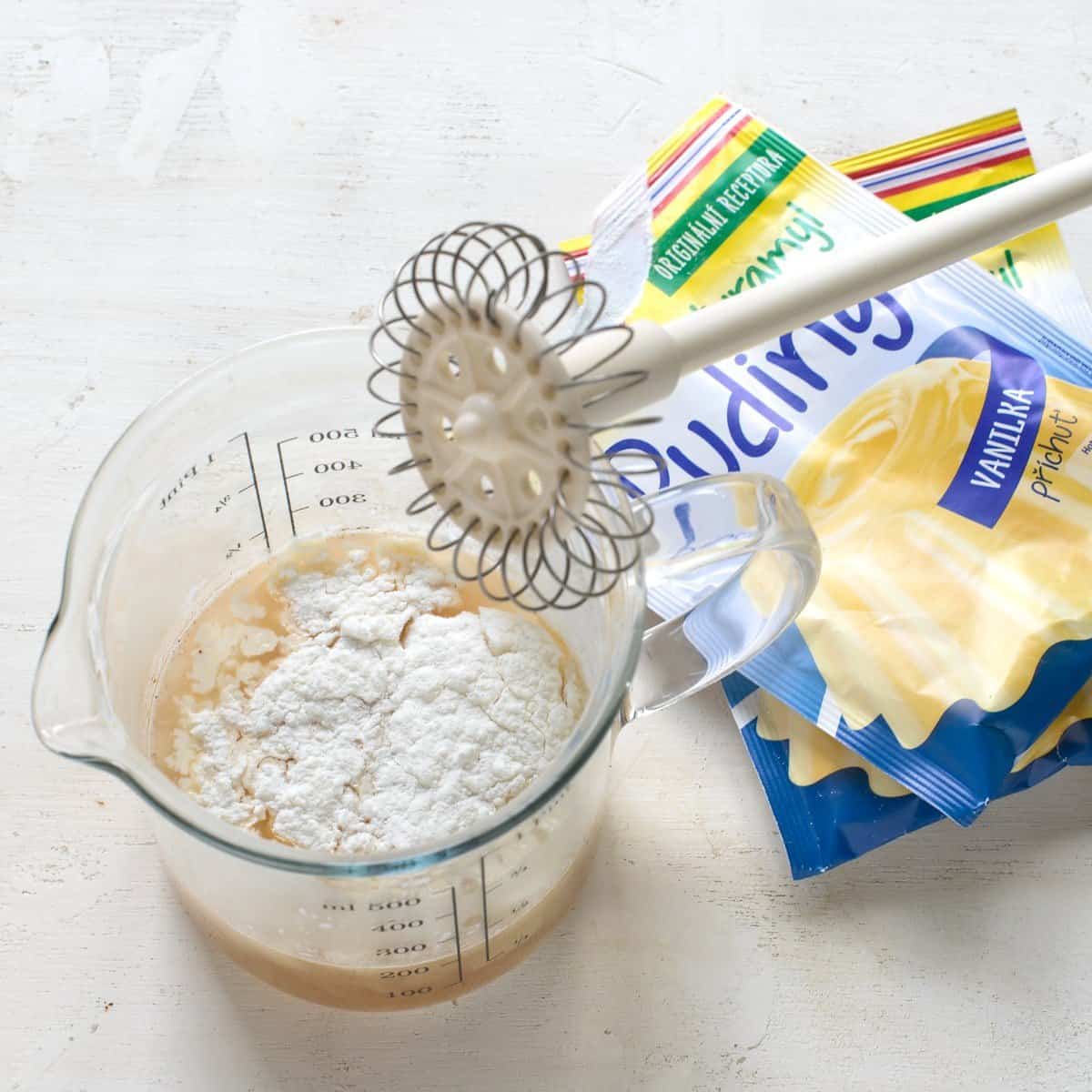
STEP 5: Mix the pudding powder. Pour the rest of the water into a bowl and add a ladleful of the hot cooking juices from the apples. Whisk in the pudding powder until the mixture is smooth, with no lumps left.
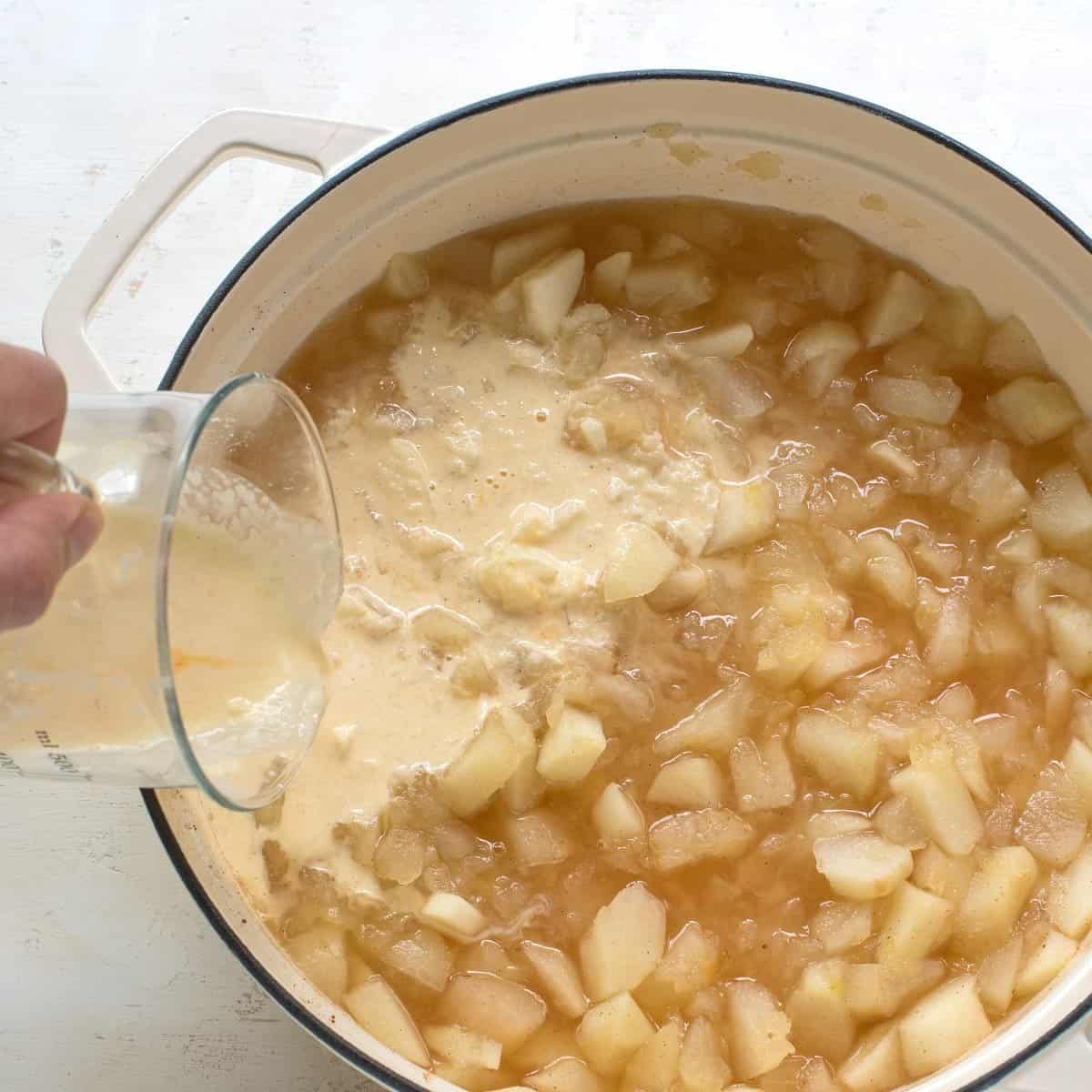
STEP 6: Thicken the filling. Slowly pour the pudding mixture into the pot with the apples, stirring as you go. Bring to a boil over medium heat and cook for about 1 minute, until the filling thickens. Take the pot off the heat.
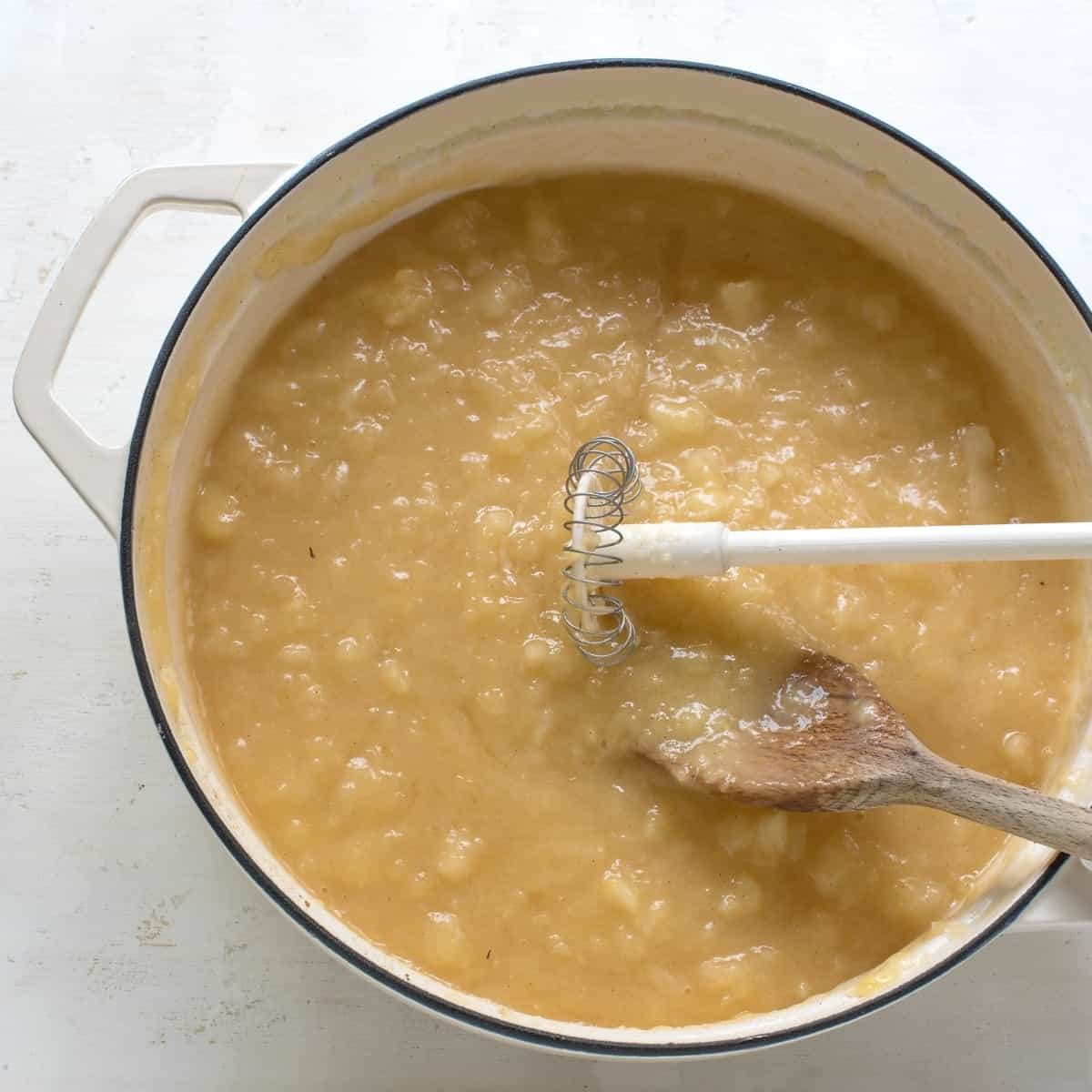
STEP 7: Crush the apples. Crush the apple pieces lightly with a potato masher. Do not blend the filling; you should still see small chunks of apple in it.
STEP 8: Lay the first biscuit layer. Cover the bottom of the pan with a layer of biscuits, placing them close together.

STEP 9: Spread the apple filling. Ladle the warm apple filling over the biscuits and smooth the surface.
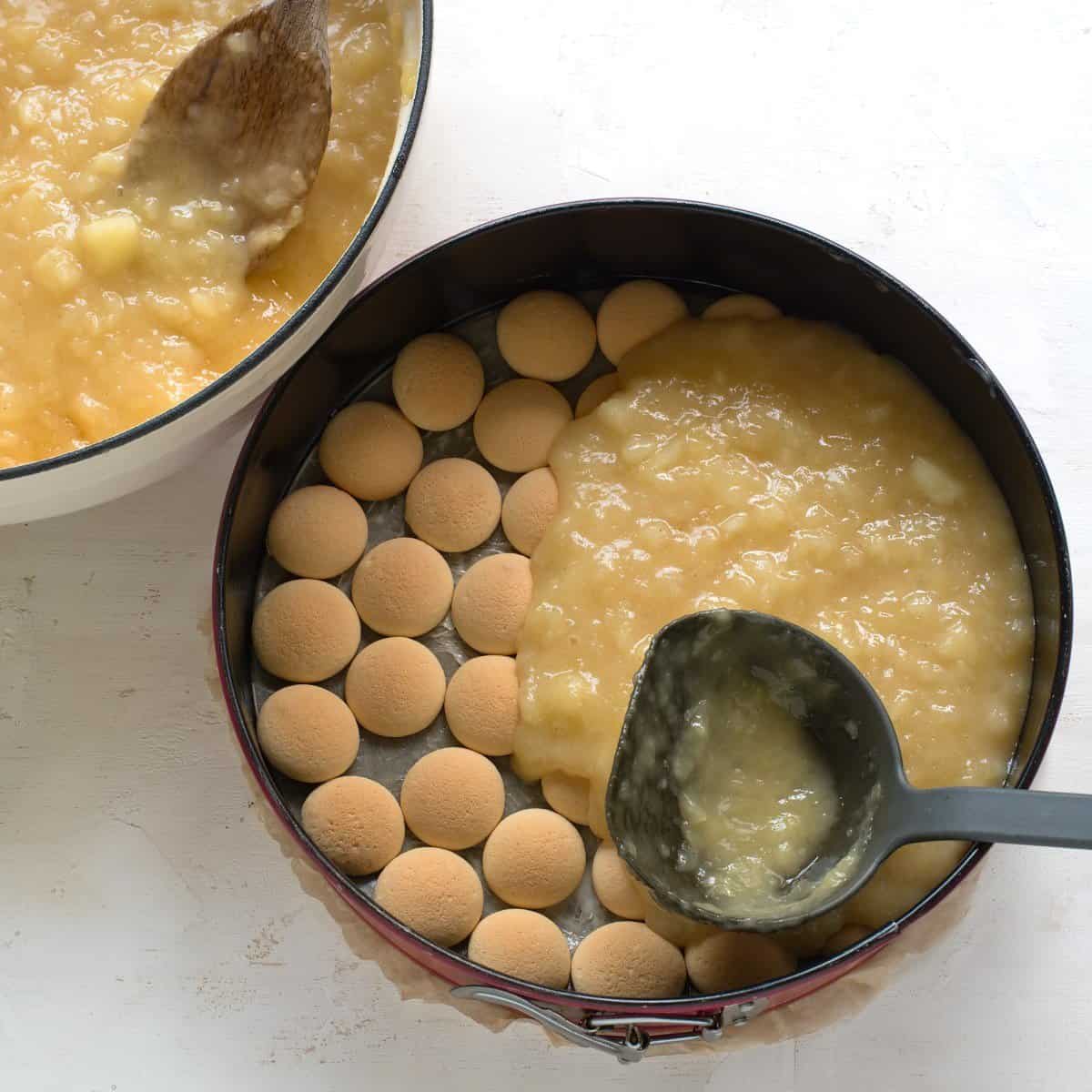
STEP 10: Add the second biscuit layer. Place another layer of biscuits on top of the filling.
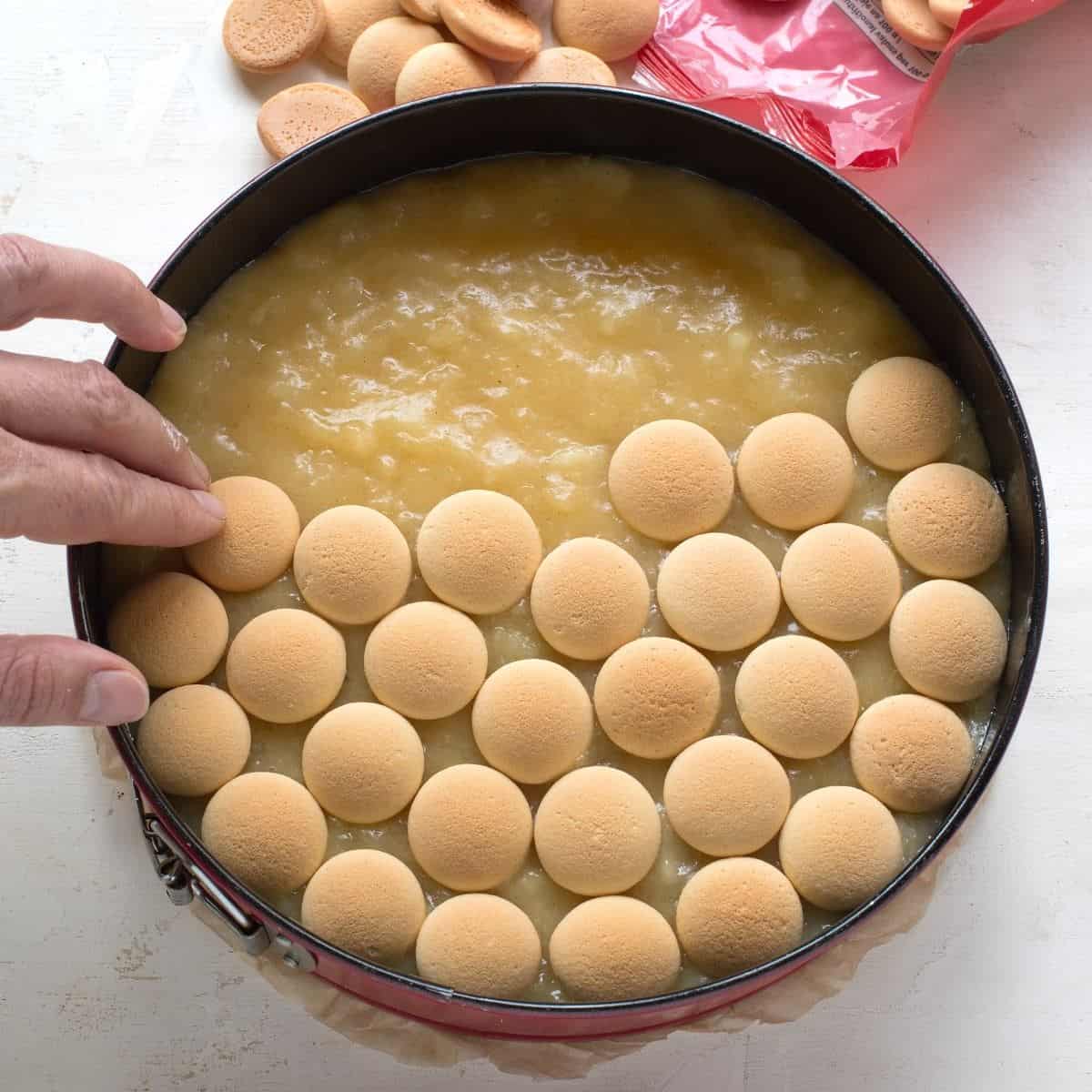
STEP 11: Let the filling cool. Set the cake aside and let it cool at room temperature for about an hour, until the filling no longer feels warm. A warm filling would thin the sour cream topping.
STEP 12: Spread the sour cream topping. In a bowl, mix the sour cream with the sugar. Pour it over the biscuits and spread it evenly - a rubber spatula helps you get every last bit out of the bowl.

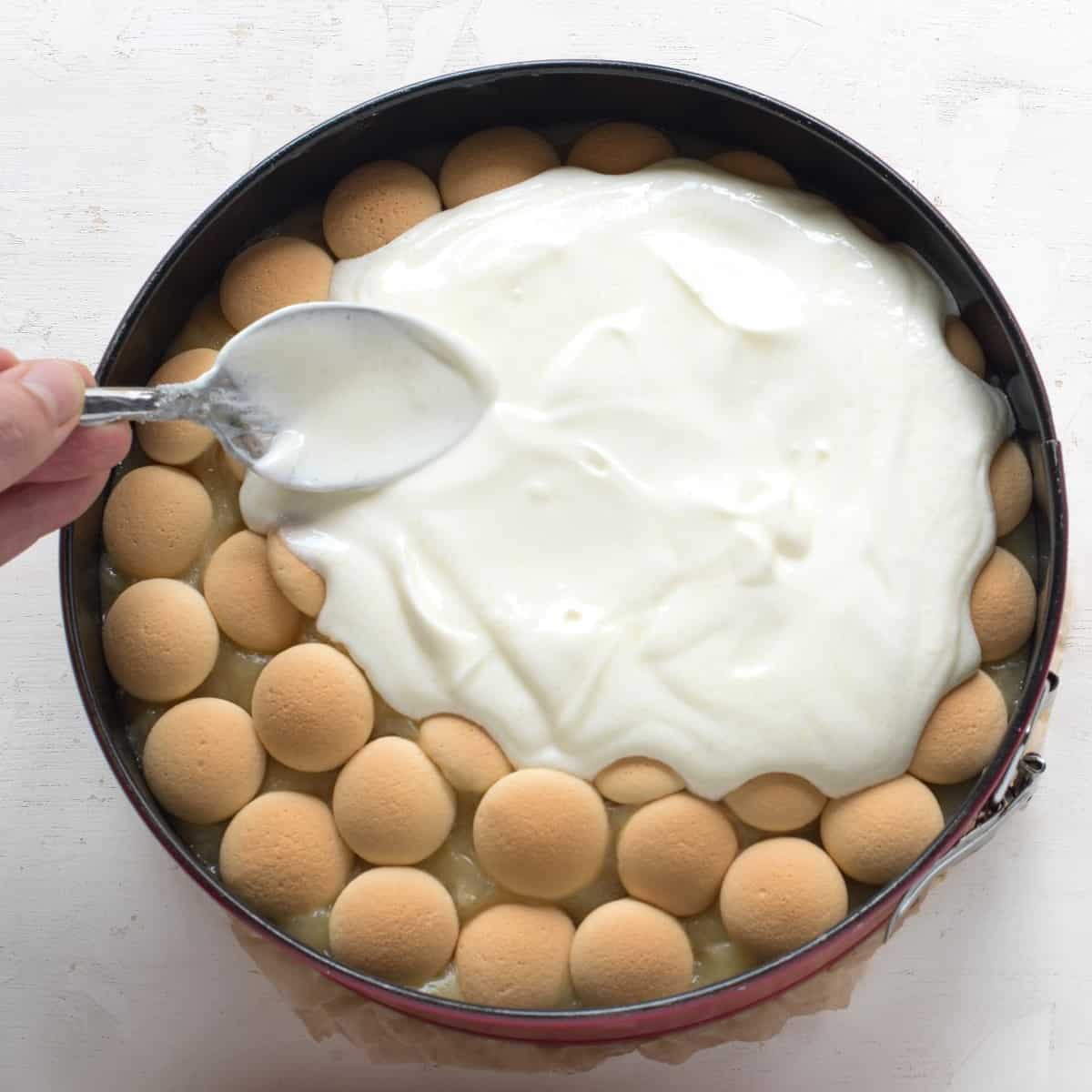
STEP 13: Chill the cake overnight. Put the cake in the fridge and leave it there overnight. By morning, the filling is set and the cake is ready to cut.
➜ Variations
- Whipped cream topping. Some Czech families finish the cake with whipped heavy cream instead of sour cream. It is richer and a touch sweeter. In our house, the tangy sour cream wins.
- Pineapple juice filling. Cook the apples in pineapple juice instead of water for a fruitier filling, and cut back on the sugar; the juice brings its own sweetness.
➜ Serving suggestions
Bring the cake to the table straight from the fridge, it tastes best thoroughly cold. Cut it with a sharp knife and lift the wedges onto dessert plates. Right before serving, dust the white topping with a little ground cinnamon, so the cake instantly looks festive with no extra work. Czechs enjoy a slice like this in the afternoon, with a cup of coffee or black tea alongside. Dobrou chuť!

➜ How to store this apple jelly cake
Keep the cake in the fridge, loosely covered, and it will stay fresh for 5 to 7 days. I do not recommend freezing this cake.
➜ FAQ
No. American apple jelly is a clear spread made from apple juice, sugar, and pectin. The layer in this cake is different: fresh apples cooked soft and thickened with pudding powder, so it is thick, spoonable, and much less sweet. If you have fresh apples on hand, this recipe shows you what to do with them.
No, none at all. The filling thickens with vanilla pudding powder (or cornstarch) on the stove and firms up as the cake chills.
Most often the cake simply needs more time; the filling sets during the full overnight rest in the fridge. If you need to serve it sooner, put the cake in the freezer for about 30 minutes and it will cut cleanly. Also check that your sour cream was full-fat; the light kind stays runny.
Tried this recipe?
Leave a review down in the comments! ⭐⭐⭐⭐⭐
Other readers and I love hearing what you think. Stay in touch by following me on Facebook and Pinterest. For more Czech stuff, subscribe to my newsletter!
📖 Recipe
No Bake Apple Jelly Cake
Tap or hover to scale
This recipe was developed in grams. For the most accurate results, tap the purple METRIC toggle and use a kitchen scale.
Ingredients
Apple filling:
- 2 pounds apples peeled, cored, and cut into ½-1 inch (1-2.5 cm) cubes
- 2 cups water divided
- 4 Tablespoons granulated sugar
- 2 Tablespoons lemon juice freshly pressed
- ½ teaspoon vanilla extract or vanilla bean paste
- ¼ teaspoon ground cinnamon plus more to dust the cake
- 2 sachets Dr. Oetker vanilla pudding powder or plain cornstarch - see Notes
- 7 ounces sponge biscuits Czech piškoty, or Nilla wafers
Sour cream topping:
- 1 ½ cups sour cream full-fat, 15-20% fat
- 2 Tablespoons granulated sugar
Instructions
- Prepare the springform pan: Place a sheet of parchment paper over the bottom, close the ring over it, and trim the excess paper with scissors. Lightly butter the top of the parchment paper. The butter helps the piškoty biscuits stick to the paper, so they stay in place as you start layering the cake.
- Put 2 pounds apples in a pot with half of the 2 cups water. Cover, bring to a boil, then reduce the heat and simmer for 15 minutes.
- Stir 4 Tablespoons granulated sugar, 2 Tablespoons lemon juice, ½ teaspoon vanilla extract, and ¼ teaspoon ground cinnamon into the cooked apples. Add a ladleful of the hot cooking juices to the remaining water to make a lukewarm mixture. Whisk in 2 sachets Dr. Oetker vanilla pudding powder until smooth and free of lumps.
- Slowly pour the pudding mixture into the apples while stirring. Bring to a boil over medium heat and cook for about 1 minute, until thickened. Remove from the heat and crush the apples lightly with a potato masher, leaving small chunks visible.
- Layer the cake: cover the bottom of the pan with half of the biscuits placed close together, spread the apple filling over them and smooth the surface, then cover with a second layer of biscuits.
- Let the cake cool at room temperature for about 1 hour, until the filling no longer feels warm. Then mix 7 ounces sponge biscuits with 2 Tablespoons granulated sugar and spread it evenly over the biscuits.
- Refrigerate the cake overnight.
Notes
- Pan & yield: I use a 9-inch (22 cm) springform pan; the cake makes about 12 pieces.
- No pudding powder? Use the same weight of plain cornstarch, 80 g (about ⅔ cup), plus ½ teaspoon vanilla extract.
- Not firm enough? Put the cake in the freezer for 30 minutes before cutting; the slices will come out clean.
- Serving: Cut the chilled cake into wedges and dust lightly with ground cinnamon.
- Store: Covered in the fridge for 5 to 7 days. I do not recommend freezing this cake.


Lorraine Vítámvás says
Hi Petra,
I made this recipe last weekend and it was a bit hit with my family.
Your step by step instructions and pictures are great.
Keep the recipes coming! 🙂
Petra Kupská says
Thank you so much for your nice comment! I am happy you liked the cake. In our house, this cake always disappears rapidly from the table! 🙂
Beverly Svab says
Thank you for your recipes, love them all
Petra Kupská says
Thank you very much for your nice words; I appreciate them!
Marketa says
hello Petra
thank you for lovely recipes.
In the UK puding sells as Blancmange.
Petra Kupská | Cook Like Czechs says
Hi Marketa!
I am glad you’re enjoying the recipes.
Anet says
I used to make this cake with my grandma near Znojmo. I am happy to finally find the recipe! Thanks.
Petra Kupská | Cook Like Czechs says
I am really glad this recipe could bring a bit of that back for you! ❤️
Michele says
Apple season is fast approaching here in VT and looking forward to making this! Will have to check if I still have springform pans in the house.
I edit recipes to make it easier for me to make and I'm confused with the biscuits, I don't know if it my TBI, my brain is reading 3 times using 1/2 the biscuts. Thank you in advance!
And per your recent email, yes I love hiking in our green mountains but limited by my heart.
Petra Kupská says
It is not your reading at all, Michele, the biscuits simply go in twice, not three times. Half of them line the bottom of the pan, the other half go on top of the apple filling, and the very top layer is only the sour cream. I hope apple season brings you a lovely first bake of this cake, and do enjoy those Green Mountains at whatever pace feels right.
Victoria says
ahoj Petra ! are the sponge biscuits the same as ones used in tiramisu ? dekuji 🤗
Petra Kupská says
Ahoj, good question! Tiramisu uses ladyfingers, which are larger and softer, while this cake calls for the small, crisp sponge biscuits we Czechs call piškoty, with Nilla wafers as the closest American match. Ladyfingers do work in a pinch though, just break them to fit the pan.