

If your family ever had an apple tree, or a whole crooked row of them, you may already know the taste of křížaly (dried apple rings), a snack Czechs have been making for generations. One bite brings back the smell of autumn in a Czech garden: baskets overflowing with apples and quiet evenings spent putting them away for winter.
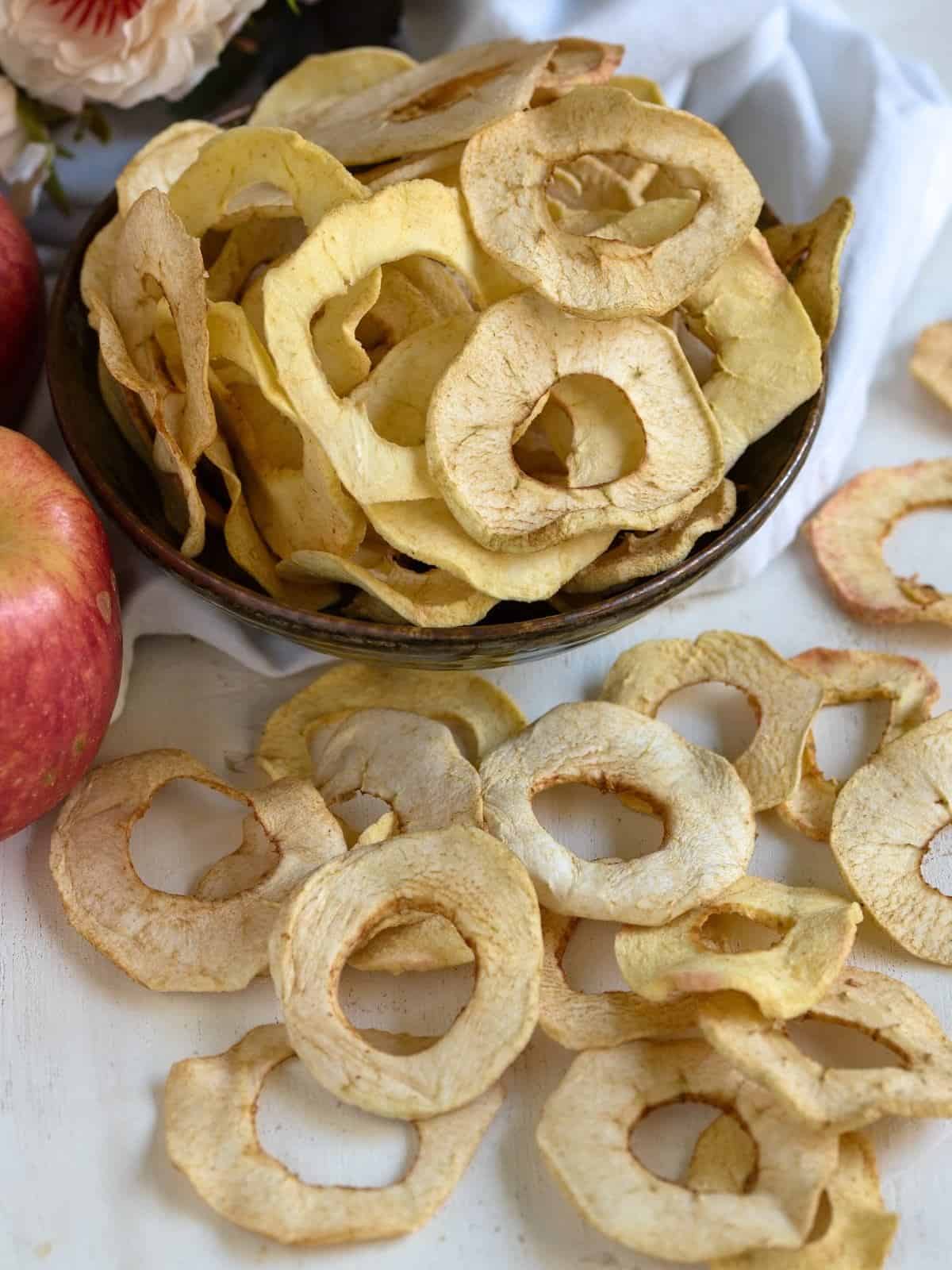
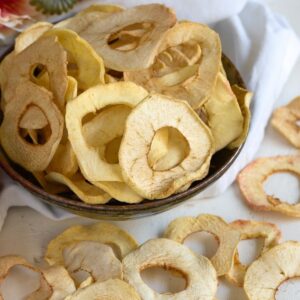
What are křížaly? Křížaly are homemade dried apples the Czech way - peeled apples cut into thin rings and dried slowly until they turn chewy or crisp. They need no added sugar and no spices, because drying concentrates the fruit's own sweetness.
This is a true beginner recipe. The one step that asks for a little care is coring the apples and slicing them evenly, and a simple apple corer plus a sharp knife make short work of both. Set aside about 30 minutes to prepare a full load for a standard dehydrator, about 10 apples, and the machine then does the rest. Czechs eat dried apples by the handful as a healthy snack and cook with them too. I dry a batch every fall from the apples in our garden, and a few habits I have learned over the years will help you succeed on the first try.
Jump to
➜ My tips for making křížaly
- Cut the rings to an even thickness. Rings of the same thickness dry at the same speed, so you do not end up with one leathery slice and one still-wet slice on the same tray.
- Decide the texture with the drying time. Fully dried rings keep for a year without molding. A shorter drying leaves them soft and juicy, with the flavor concentrated. Those are for eating soon, not for storing.
- Peel the apples and remove the cores. The peel turns tough in drying and the core stays hard. Both are worth the few extra minutes.
Drying is only one answer to a generous apple year. When the harvest keeps coming, I roll an old-fashioned apple strudel (jablečný štrúdl), simmer a quick apple compote for weeknight desserts, and bake a cinnamon apple crumb cake when friends stop by for coffee.
➜ The story behind křížaly
For centuries, apple trees were a familiar sight in Czech gardens, and autumn often brought more fruit than a family could eat. Drying was the simplest way to preserve apples - no sugar, no canning, just warmth and time.
One detail may surprise you. Czechs almost never dried apples in the sun because our autumns are simply too damp. Instead, families used the falling heat of the bread oven, and whole villages built wooden drying houses called sušárny. Inside were rows of removable drying trays, wooden frames with slatted or woven bottoms stacked above a small furnace. Wallachia (Valašsko) in eastern Moravia became especially famous for its dried fruit, which was even regularly supplied to the imperial court in Vienna!
If your ancestors left the Czech lands in the 1800s, they may have carried this tradition with them. American farm families dried apples in much the same way during the same period, spreading slices on sheets and tin roofs in the sun or building "dry houses" with stoves and racks that would have looked familiar to a Moravian farmer.
Dried apples had their festive moments, too. On St. Nicholas Day (Czech Mikuláš), children often found křížaly tucked into their parcels alongside nuts and other treats. On Christmas Eve, many households simmered dried fruit into muzika, a sweet, spiced fruit sauce scented with cloves and cinnamon.
My in-laws lived in an old cottage surrounded by an orchard of ancient, crooked apple trees, and every autumn those trees buried the family in fruit. In the evenings, with the television quietly murmuring in the corner, Grandma and Grandpa peeled apples, sliced them into rings, and laid them on the warm kachlová kamna (tiled wood-burning stove) to dry. Whenever we came to visit, they would reach for a white linen bag, pour křížaly into a bowl, and set it on the table the way other households set out candy. Those křížaly disappeared long before anyone had to think about storing them.
Czech pronunciation
Before we head into the kitchen, one small thing: the name. Křížaly is pronounced KRZHEE-zhah-lih. I recorded the word for you, so click and listen.
➜ Ingredients
✅ See the recipe below with step-by-step photos and many helpful tips. Scroll down for the full printable recipe in both US cups and metric measurements.
- Apples, any firm variety works, and mixing varieties is fine; the fruit does not need to be perfect.
- Lemon juice, optional; a short dip in lemon water keeps the rings from turning brown. The browning is harmless and purely cosmetic.
- Ground cinnamon, optional; dust the peeled slices very lightly before drying if you like a hint of spice.
Equipment
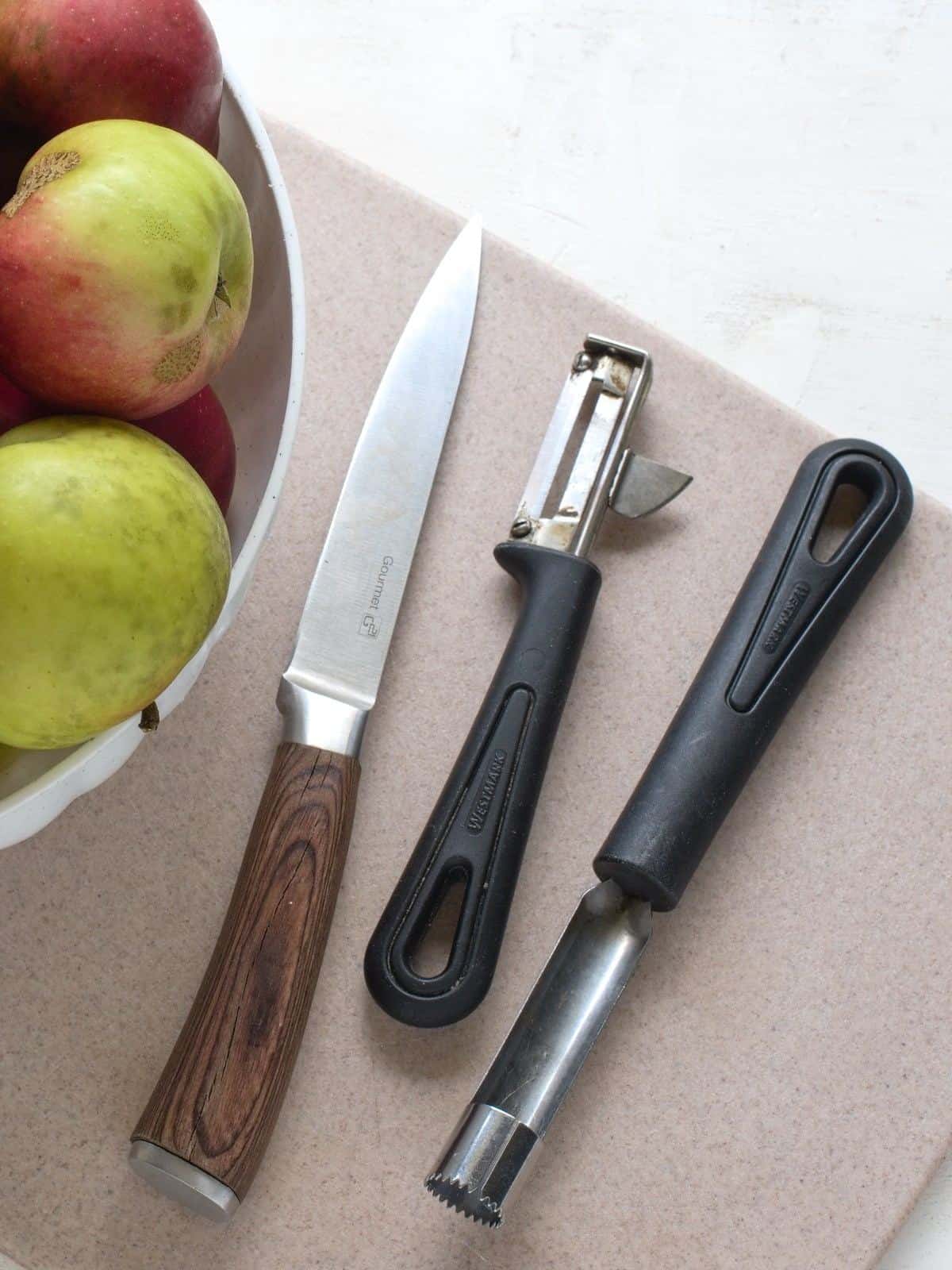
- Food dehydrator (affiliate link), dries evenly at a steady low temperature.
- Vegetable peeler (affiliate link), a swivel-blade peeler makes quick work of the skins.
- Apple corer (affiliate link), removes the core in one press.
- Mandoline slicer (affiliate link), optional, for rings of perfectly even thickness.
➜ How to make dried apples
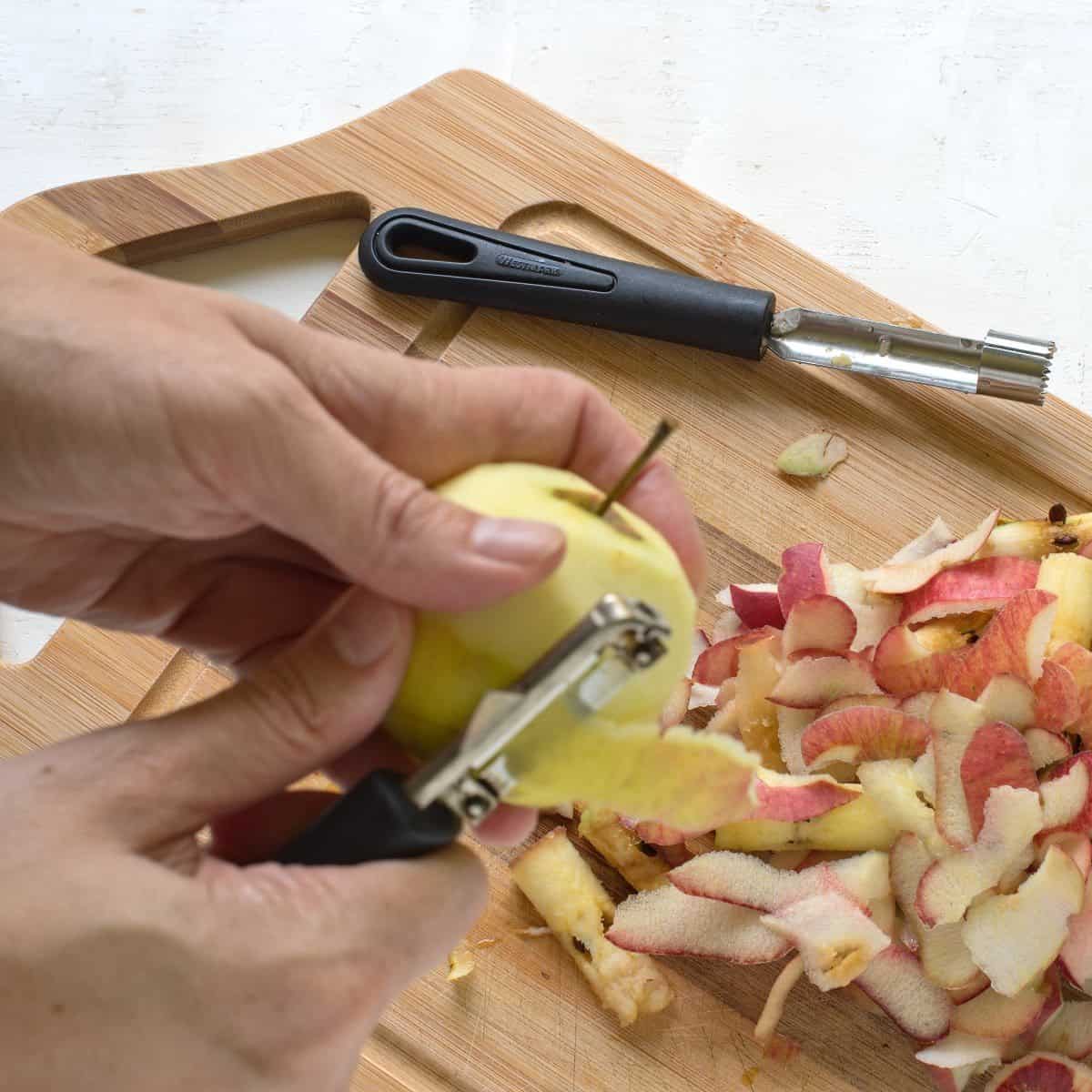
STEP 1: Peel the apples. Remove the skins with a peeler, and trim away any bruised or damaged patches as you go.
STEP 2: Remove the cores. Set each apple stem side down on the cutting board, place the apple corer on the blossom end, and press straight down.
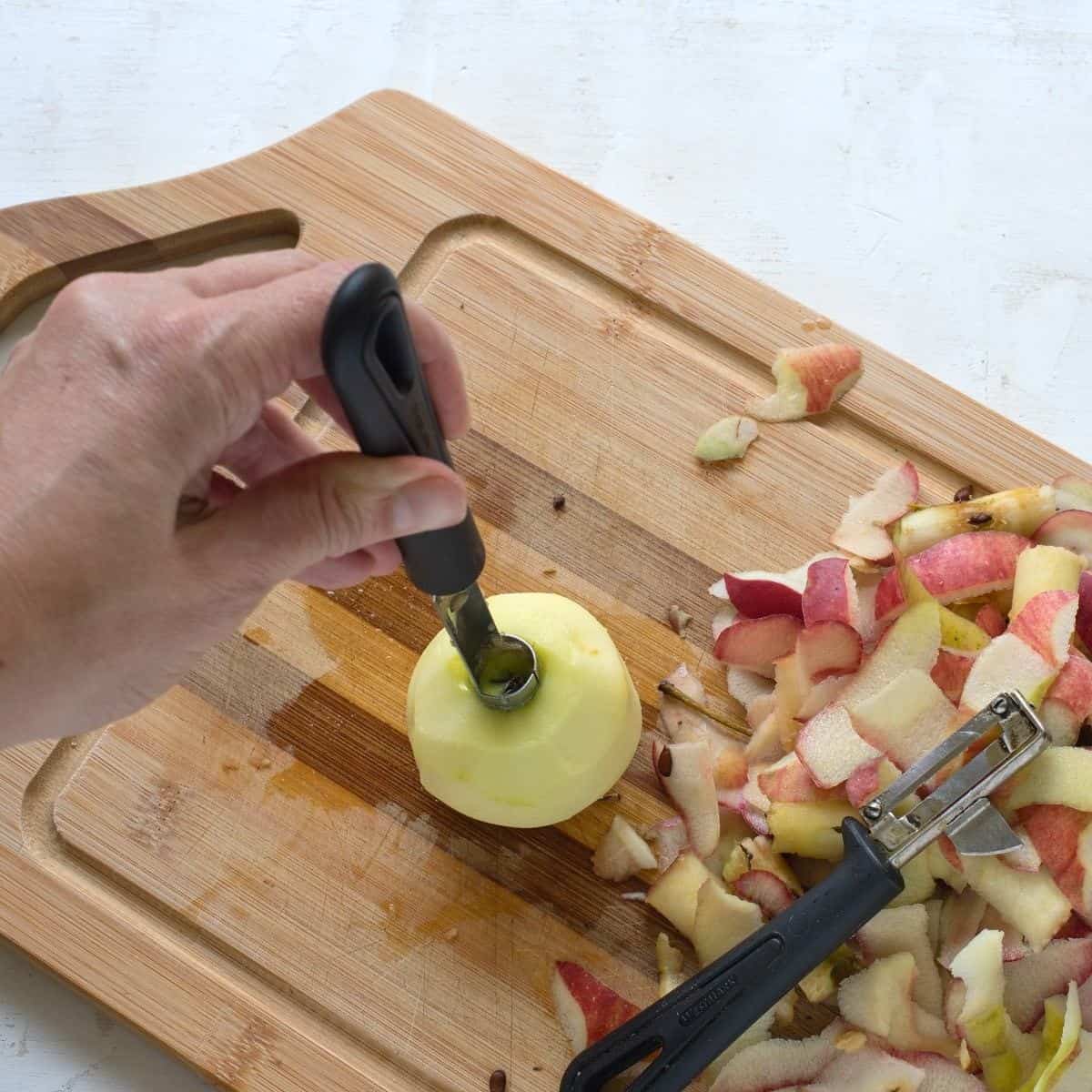
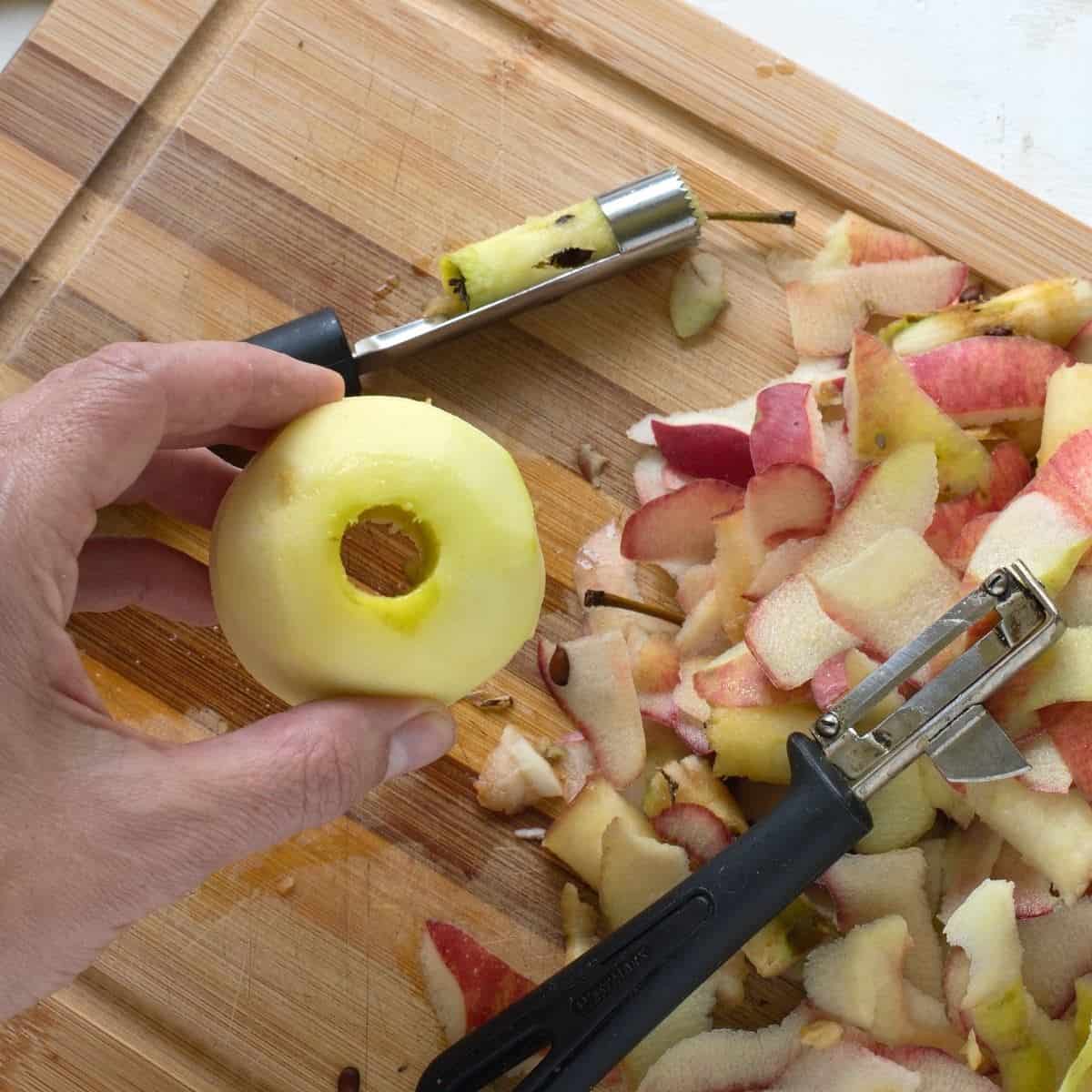
No corer? Cut the apples into quarters and slice out the cores; your křížaly will be small slices instead of rings, and they will dry just as well.
STEP 3: Slice the apples into even rings. Cut rings about ⅛ to ⅙ inch (3-4 mm) thick, with a sharp knife or a mandoline. Keep the thickness even.
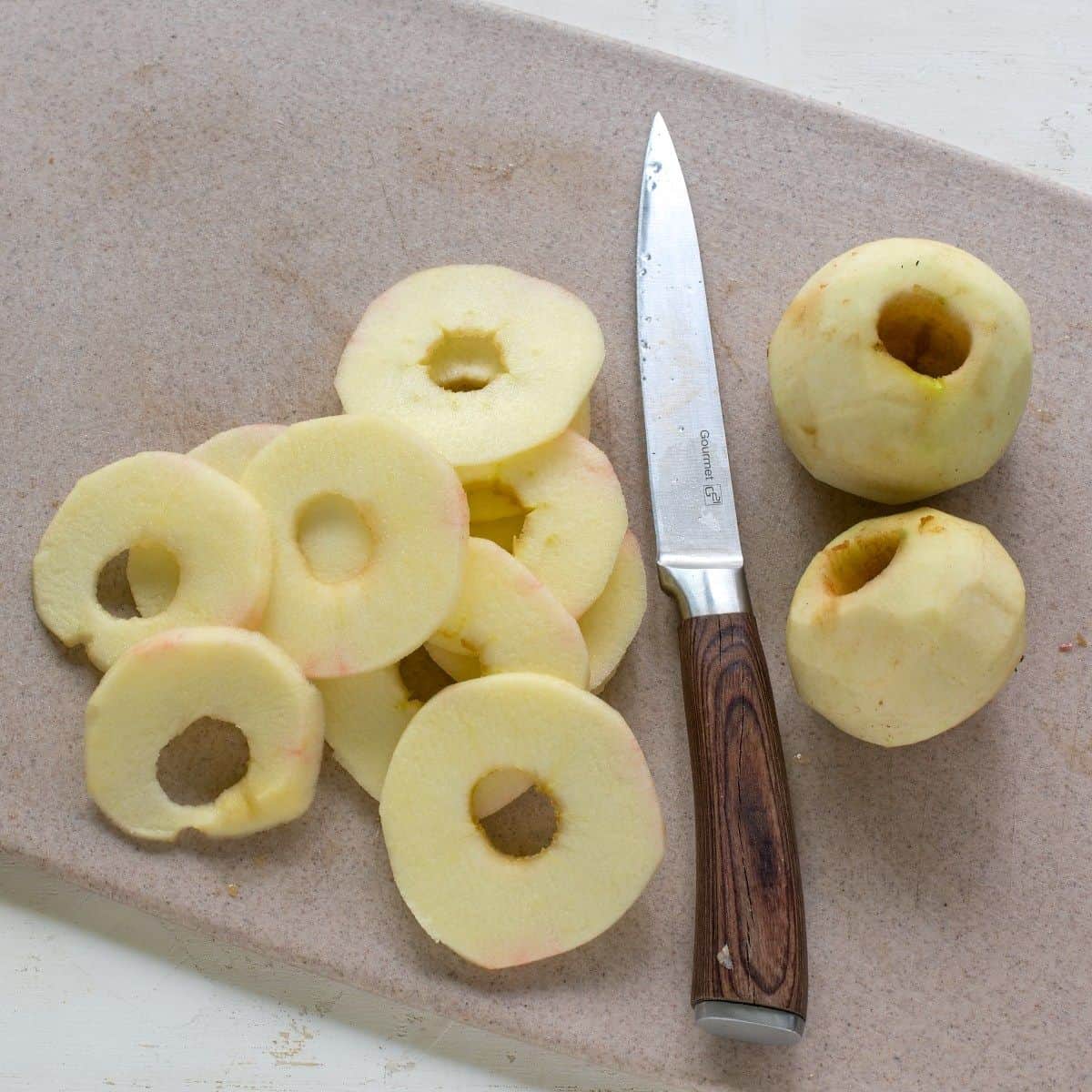
STEP 4: Dip the rings in lemon water (optional). Stir the lemon juice into a bowl of cold water, dip the rings briefly, and let the excess drip off.
STEP 5: Load the dehydrator trays. Arrange the rings in a single layer, close together but not touching. If using cinnamon, dust the rings very lightly now.
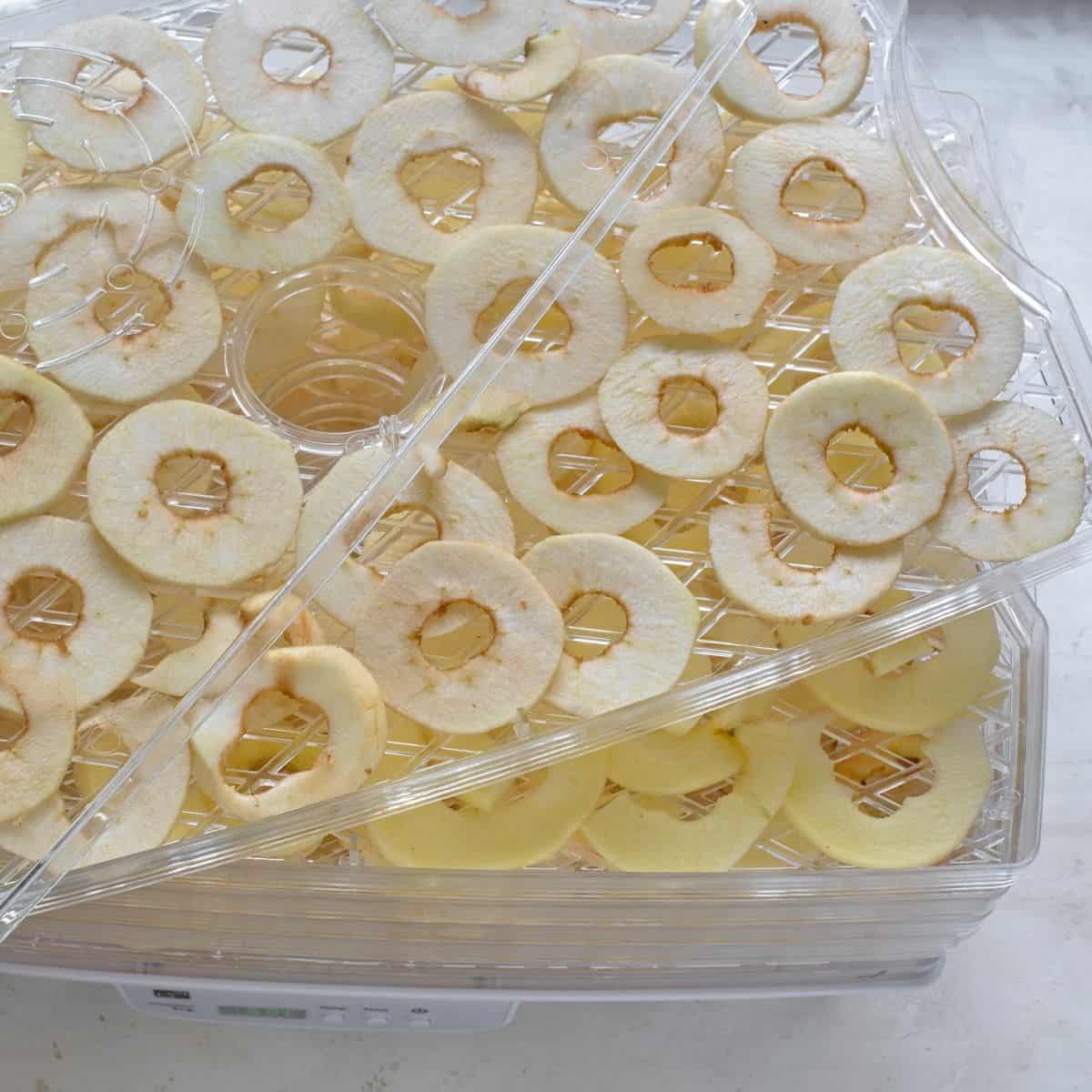
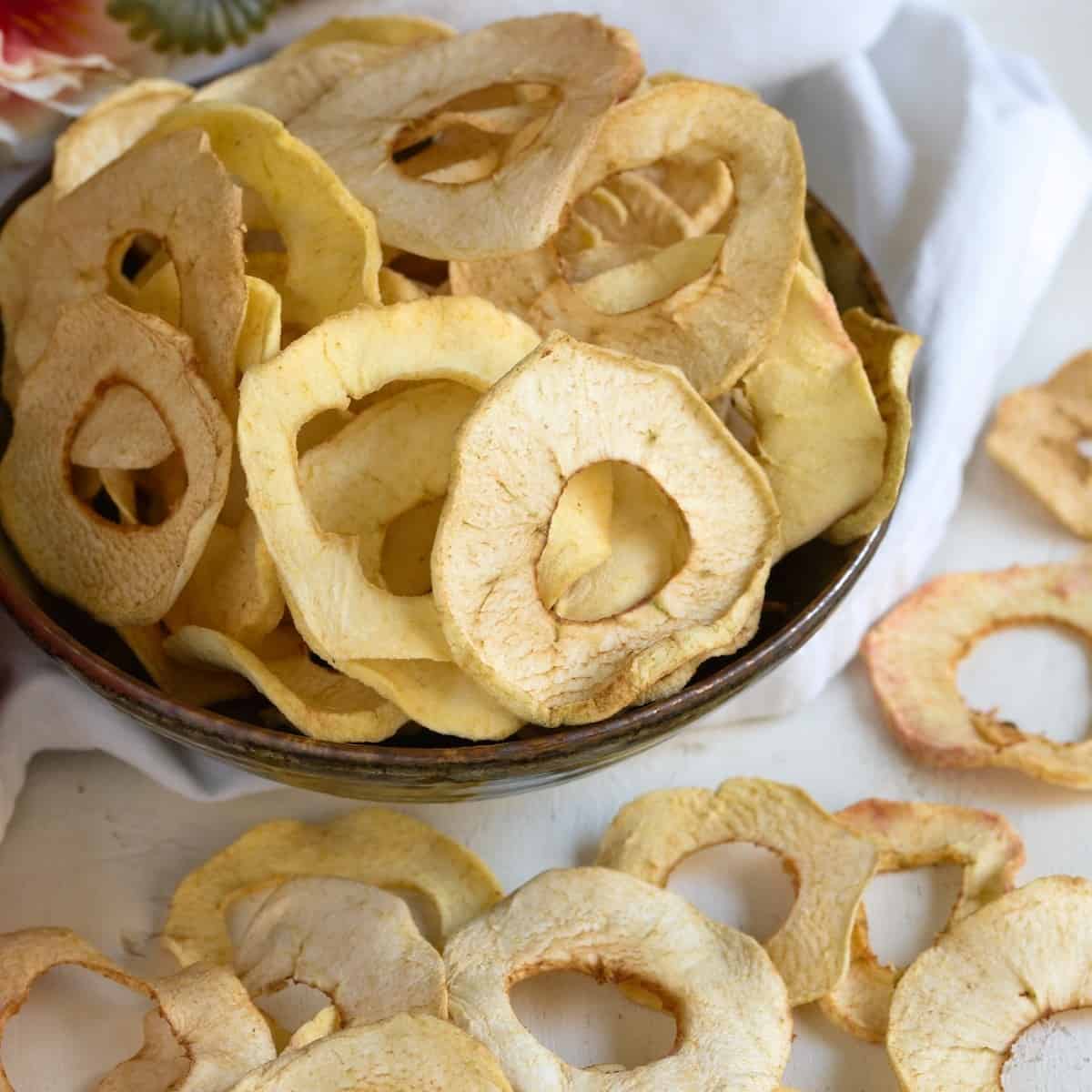
STEP 6: Dry at 150°F (65°C) for 8 to 12 hours. Swap the trays around once or twice during drying so all of them dry evenly. The time decides the texture: around 8 hours the rings are soft, juicy, and meant to be eaten within days. At 10 to 12 hours they are fully dry and ready for long storage - leave them the full time and they turn into crisp chips.
STEP 7: Check before you turn the dehydrator off. A properly dried ring bends without breaking, and no drops of juice appear when you fold it. If a ring feels moist inside, give the batch another hour.
➜ Drying apples in the oven
I dried apples in the oven for years before I owned a dehydrator, and it works - it is just less convenient. Set the oven to its lowest temperature, around 150°F (65°C), spread the rings on wire racks, and keep the oven door slightly ajar the whole time so the moisture can escape. The handle of a wooden spoon holds it open nicely. Count on 5 to 8 hours, depending on your oven and the thickness of the rings, and check the rings with the same bend test as above. If they sit on baking sheets instead of racks, turn them over every couple of hours so both sides dry evenly.
➜ How to dry apples in the sun
I will be honest with you: I have never dried apples in the sun, and neither did my ancestors. Czech autumns are too damp, which is exactly why our villages built sušárny. But the old American way works where the weather is right: you need several days of at least 86°F (30°C) with humidity below 60 percent. Spread the rings on screens or racks, cover them with cheesecloth against insects, bring them indoors overnight, and flip them once a day. After sun drying, heat the rings in a 160°F (70°C) oven for 10 to 15 minutes; this step destroys any insect eggs. And who knows - Czech summers keep getting hotter, so I may yet try it myself.
➜ Serving suggestions
Most křížaly never make it past the snacking stage, pour them into a bowl and watch them disappear. They also make a lovely winter tea - drop a few rings into the pot and let them steep with the tea leaves. Czechs chop them into fillings for sweet pastries, and at Christmas a handful can go into the muzika I mentioned above.
Apples still piling up after the dehydrator is full? Bake a pan of apple bread pudding (žemlovka), a tray of Czech apple slices (hraběnčiny řezy), or a quick no-bake apple jelly cake. Fry a batch of pan-fried apple rings for a weekend breakfast, or take the shortcut and make a puff pastry apple strudel. Dobrou chuť!
➜ How to store dried apples
Let the rings cool completely before they go into a container. Warm fruit sweats, and that moisture invites mold.
For the first week, a good habit is to keep fully dried rings loosely packed in a closed glass jar and give the jar a shake once a day. This evens out the remaining moisture between drier and moister pieces. If the glass fogs up, the batch needs another hour in the dehydrator.
After that, store the jar in a cool, dark, dry place. Fully dried křížaly keep for a year, easily until the next harvest. A clean cloth bag in a dry, airy pantry is the traditional way; a sealed jar is simply the safer choice in a modern kitchen, against both humidity and pantry moths. For extra insurance, fully dried apples also freeze well in a sealed bag.
The soft, half-dried batch is a different story: it is meant for eating within a few days, and in my experience it rarely survives even that long.
➜ FAQ
For eating, yes: the peel turns tough and chewy once dried. There is one charming exception - Czechs sometimes dry unpeeled rings to hang on the Christmas tree as decorations.
They held too much moisture for storage. Dry the rings fully before they go into a jar, and shake the jar daily during the first week; if the glass fogs up, give the batch another hour in the dehydrator.
Soak the rings in warm water for about 15 to 30 minutes, until pliable, then chop them into your dough or filling.
Tried this recipe?
Leave a review down in the comments! ⭐⭐⭐⭐⭐
Other readers and I love hearing what you think. Stay in touch by following me on Facebook and Pinterest. For more Czech stuff, subscribe to my newsletter!
📖 Recipe
Homemade Dried Apples (Czech Křížaly)
Tap or hover to scale
This recipe was developed in grams. For the most accurate results, tap the purple METRIC toggle and use a kitchen scale.
Ingredients
- 4 pounds apples any firm variety
- 2 Tablespoons lemon juice optional, for a dip against browning
- ground cinnamon optional, a very light dusting
Instructions
- Peel 4 pounds apples and trim away any bruised spots.
- Remove the cores: set each apple stem side down on the board and press the apple corer straight down through it. Without a corer, quarter the apples and cut out the cores.
- Slice the apples into even rings, ⅛ to ⅙ inch (3-4 mm) thick.
- Optional: dip the rings briefly in a bowl of cold water mixed with 2 Tablespoons lemon juice, then let the excess drip off.
- Arrange the rings on the dehydrator trays in a single layer, close together but not touching. If using ground cinnamon, dust the rings very lightly now.
- Dry at 150 °F for 8 to 12 hours, swapping the trays around once or twice. About 8 hours gives soft, juicy rings for eating within days; 10 to 12 hours dries them fully for storage.
- Check before turning the dehydrator off. A done ring bends without breaking and releases no drops of juice. Let the rings cool completely.
Notes
- Storage: store fully dried rings in an airtight glass jar in a cool, dark, dry place; they keep until the next harvest. For the first week, shake the jar once a day; if the glass fogs up, dry the batch one more hour.
- Oven method: lowest setting, about 150°F (65°C), rings on wire racks, oven door slightly ajar, 5 to 8 hours.
Serving: one serving ≈ a small handful, 1 oz / 25 g - No kitchen scale? One medium apple weighs about 6½ oz (180 g); 4 pounds is roughly 10 medium apples



Comments
No Comments