

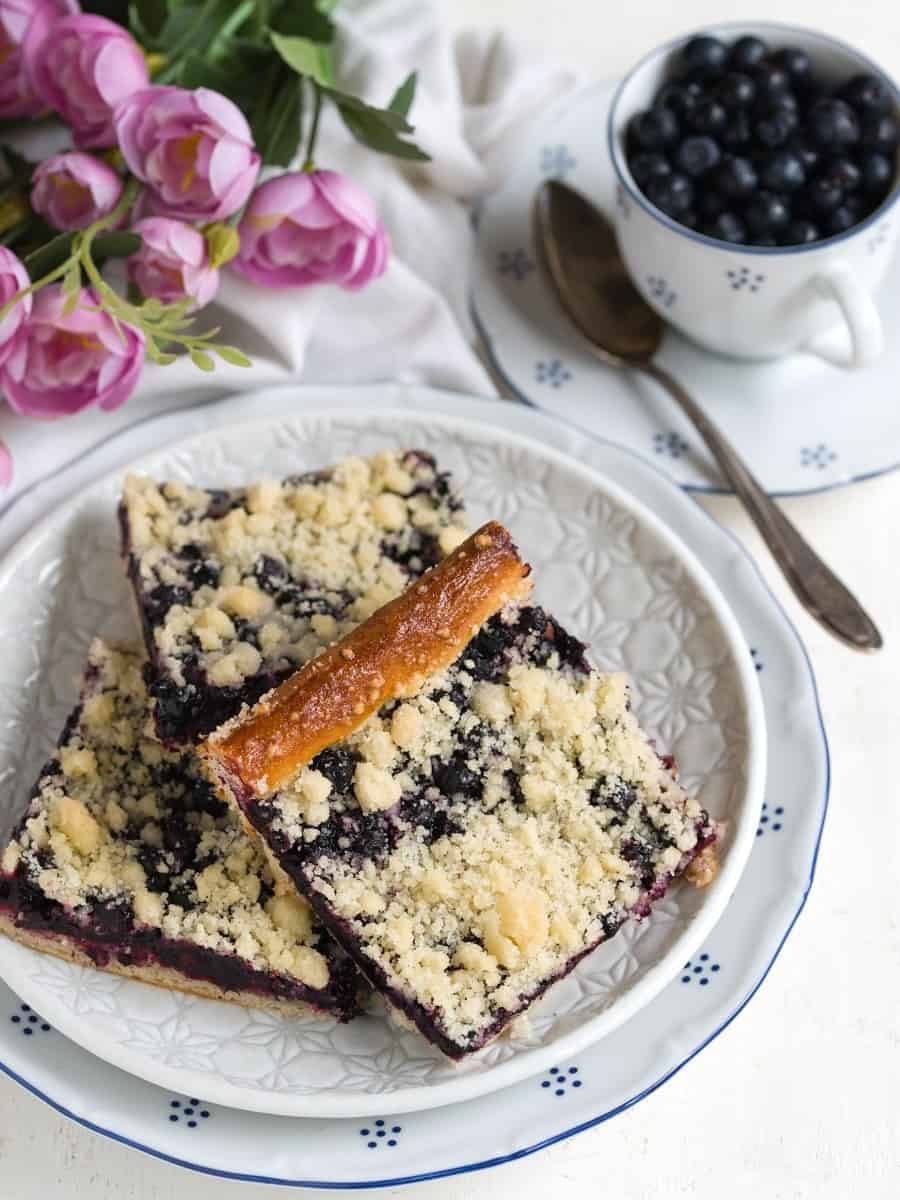
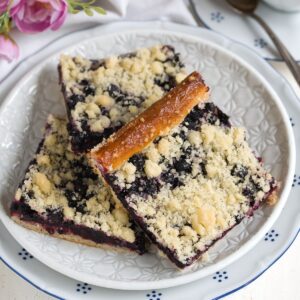
When summer fruit starts piling up on the kitchen counter, Czech bakers reach for one answer: kynutý koláč s ovocem, a yeast cake covered with fruit and buttery streusel. It is the cake of Czech weekends, baked on a big sheet and cut into generous squares, and if your family has Czech roots, one bite may taste strangely familiar.
This recipe was fully updated in July 2026 with clearer instructions, adjusted quantities, and a guide to Czech seasonal fruit.
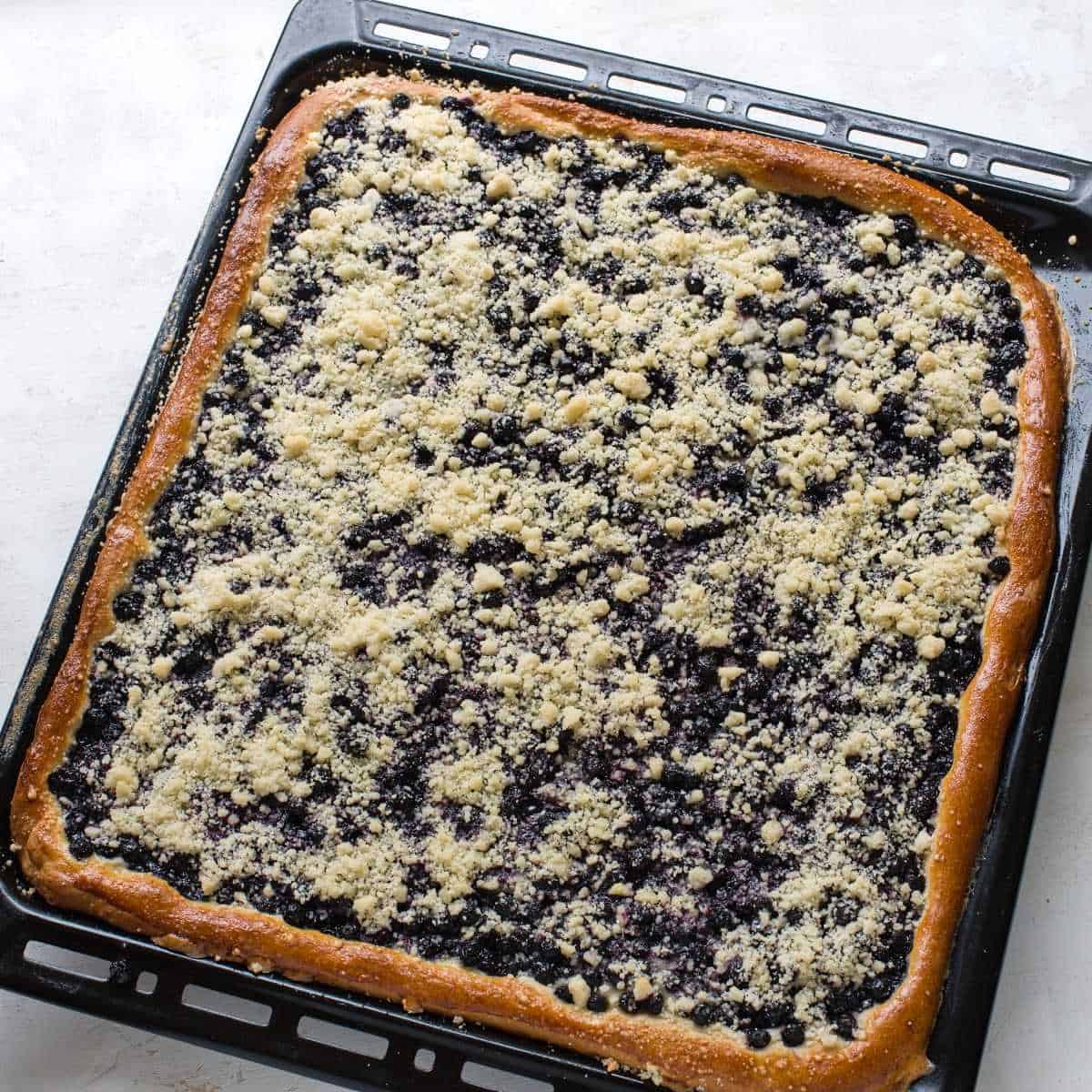
What is a yeast cake? In Czech baking, it is a sheet cake made from soft, sweet yeast dough that is pressed onto a baking sheet, covered with a thick layer of seasonal fruit, and finished with a streusel crumb of flour, butter, and sugar; Americans would call it a yeast coffee cake. Blueberries star in the photos here, but apricots, plums, peaches, or a mix of berries work just as well, and frozen fruit, scattered on straight from the freezer, turns it into a year-round cake.
The dough asks for a little patience, it rises for about an hour depending on how warm your kitchen is, but every step is simple and I walk you through each one, so do not let yeast scare you off. I have baked this cake more times than I can count, and it disappears fastest while still slightly warm, next to a cup of coffee.
➜ Why this recipe works
- The dough and streusel stay the same; only the fruit changes with the season. See the fruit guide below. Frozen fruit goes on straight from the freezer, which makes this a year-round cake.
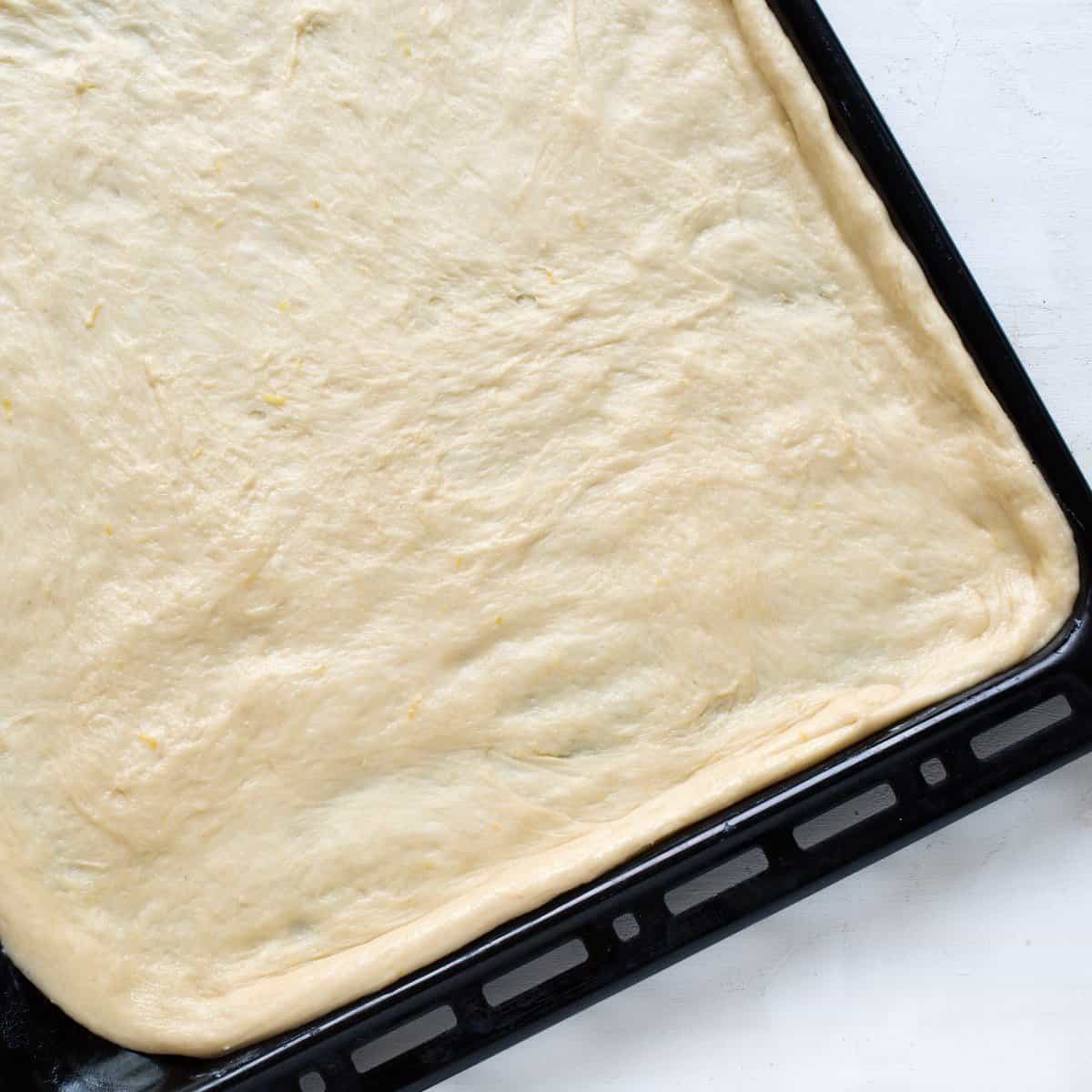
- A raised rim keeps the fruit juices on the cake. Press a low edge around the sheet with the side of your palm, and the juices stay on the cake, not on the bottom of your oven.
- The dough can be kneaded three ways. A stand mixer with a dough hook, a wooden spoon (vařečka) the way Czech grandmothers did it, or your own hands on a floured board. Give the dough about 10 minutes of work, and all three give the same result: a smooth, elastic dough.
"This recipe turned out AMAZINGLY and tasted just like my babicka and maminka would make it when I was a little girl in the 1970s in Canada."
Andrea, Vancouver
One sheet feeds a crowd, which makes this cake a natural for potlucks, church coffee hours, or a visit from the grandchildren. If homey Czech yeast bakes speak to you, try Czech kolaches with their filled centers, or the peach buchta sheet cake baked with canned peaches, next.
Jump to
➜ The story behind this cake
In the Czech Republic, cakes like this one are a weekend tradition. We have two names for it. Kynutý koláč s ovocem means "yeast cake with fruit" and describes what it is, while koláč na plech, literally "cake on a baking sheet," describes how it is baked and served. The fruit on top follows the seasons: whatever is ripe goes onto the dough. Similar cakes are found all across Central Europe, from German Streuselkuchen to the beloved fruit cakes of Poland and Hungary.
My favorite topping is blueberries. The ones we pick in the forests of northern Bohemia, where I live, are not the plump cultivated kind but wild bilberries: tiny, dark all the way through, and packed with flavor. They stain your fingers purple as you pick, and gathering them is slow work, so I treat it as a social event. I usually head into the woods with my mom or my brother, and while our buckets slowly fill, we catch up on family news and laugh over old memories.
Apricots and peaches, on the other hand, are the pride of South Moravia, the warm southeastern corner of the country. And many families simply bake with whatever is growing in their own gardens. At my father-in-law's cottage, we pick currants, raspberries, and jostaberries into one bowl, and the sweet-tart combination makes an unforgettable summer cake.
Czech pronunciation
I would call this cake kynutý koláč s ovocem. It sounds like KIH-noo-tee KOH-lahch SOH-vo-tsem, with the stress always landing on the first syllable of each word. I recorded a short clip so you can hear it from a real Czech: click and listen.
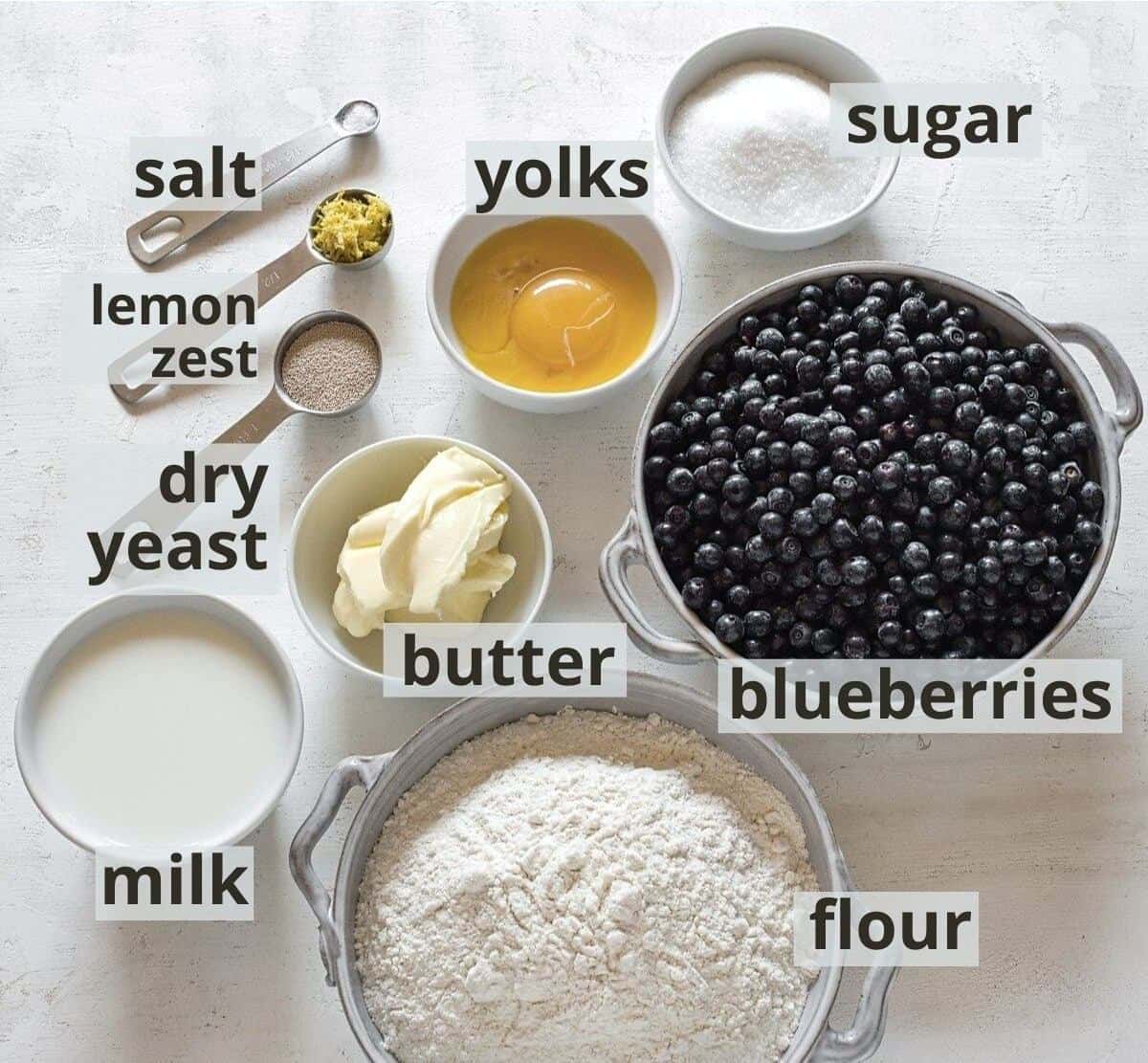
➜ Ingredients you will need
✅ See the recipe below with step-by-step photos and many helpful tips. Scroll down for the full printable recipe in both US cups and metric measurements.
Yeast dough:
- All-purpose flour, the standard cake flour in Czech kitchens, where it is sold as hladká mouka (UK readers: plain flour). It gives the dough its structure and soft crumb.
- Active dry yeast, or fresh yeast; both work. And if you have seen "cake yeast" in an old American recipe, that means a small cube of fresh compressed yeast, not a cake. Using fresh yeast? Crumble it into the sweetened lukewarm milk; it activates a little sooner than dry yeast because it holds more moisture.
- Milk, lukewarm to wake the yeast, never hot.
- Granulated sugar, for a gently sweet dough.
- Egg yolks, for a more tender dough; set aside a little of the egg white to brush the edges of the cake later.
- Unsalted butter, softened at room temperature so it blends into the dough easily; melted and cooled also works.
- Lemon zest, freshly grated, only the yellow layer; the white pith underneath is bitter.
- Salt, a pinch to balance the sweetness.
Fruit topping:
- Seasonal fruit, fresh or frozen; blueberries star in the photos, and the full fruit guide is below.
- Granulated sugar, a sprinkle over the fruit.
Streusel topping:
- All-purpose flour, granulated sugar, and unsalted butter, rubbed together into buttery crumbs. New to streusel? See how to make Czech drobenka.
Equipment
- Rimmed half sheet pan (18×13 inches / 45×33 cm): The standard large baking sheet in American kitchens and almost exactly the size of a Czech baking sheet. It is sometimes sold as a large jelly roll pan. What matters is the rim, because a flat cookie sheet cannot hold the dough's raised edge.
- Baking for fewer people? A 9×13-inch pan works with about ⅔ of the recipe.
- Stand mixer with a dough hook, which takes the work out of kneading. A wooden spoon or your own hands do the same job the traditional way.
- Dough proofer, entirely optional. For perfect dough rising I use this simple ✅ Dough Proofer by Czech brand Tescoma (affiliate link) and I am very satisfied with it.
➜ How to make a Czech yeast cake
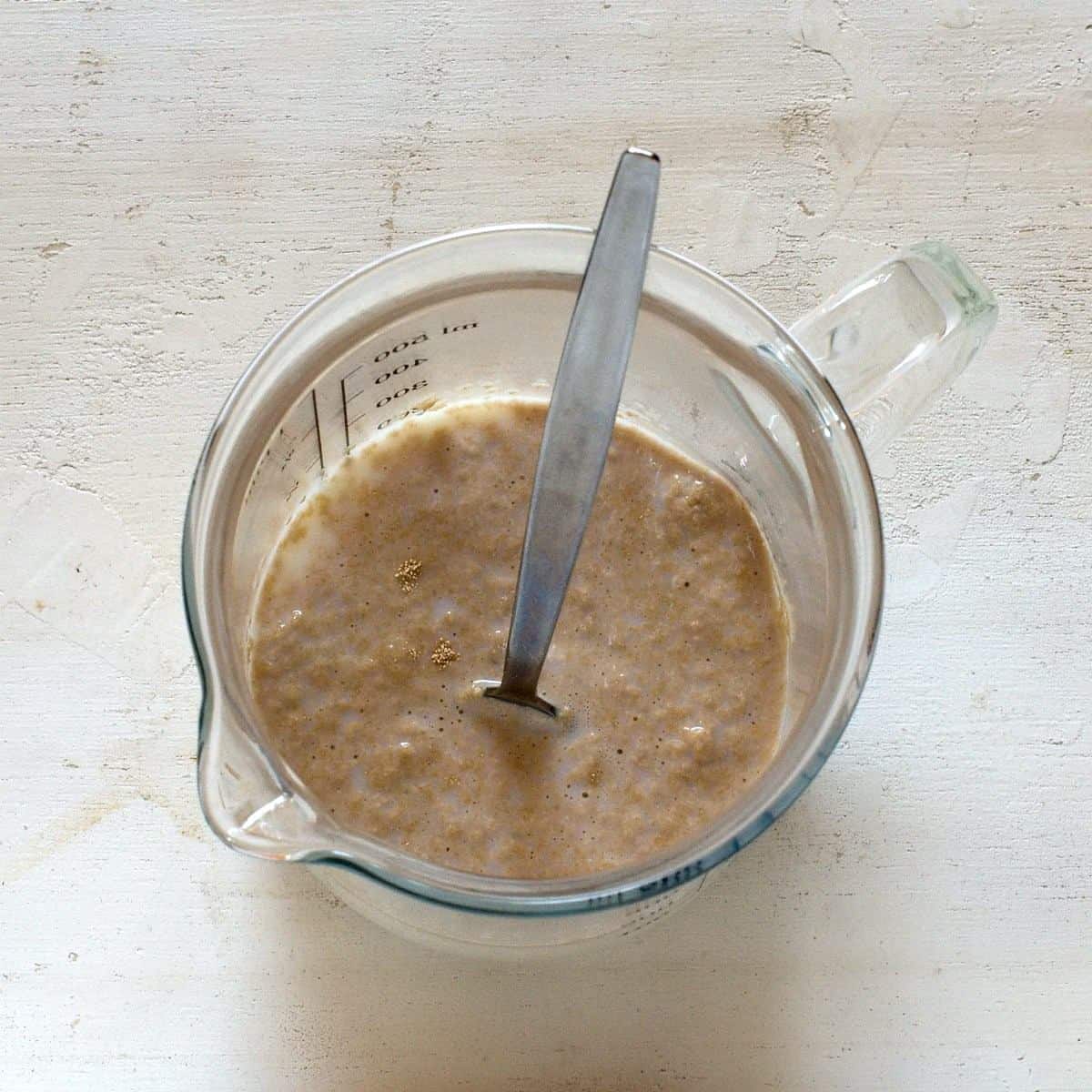
STEP 1: Activate the yeast. Pour ¼ cup of the lukewarm milk into a glass; lukewarm means about body temperature (around 100°F / 38°C). Stir in a teaspoon of the granulated sugar and the active dry yeast. Set the glass in a warm, draft-free place for 10-15 minutes, until foamy.
If the mixture does not foam, the yeast is past its prime - start over with fresh yeast before you waste the flour.
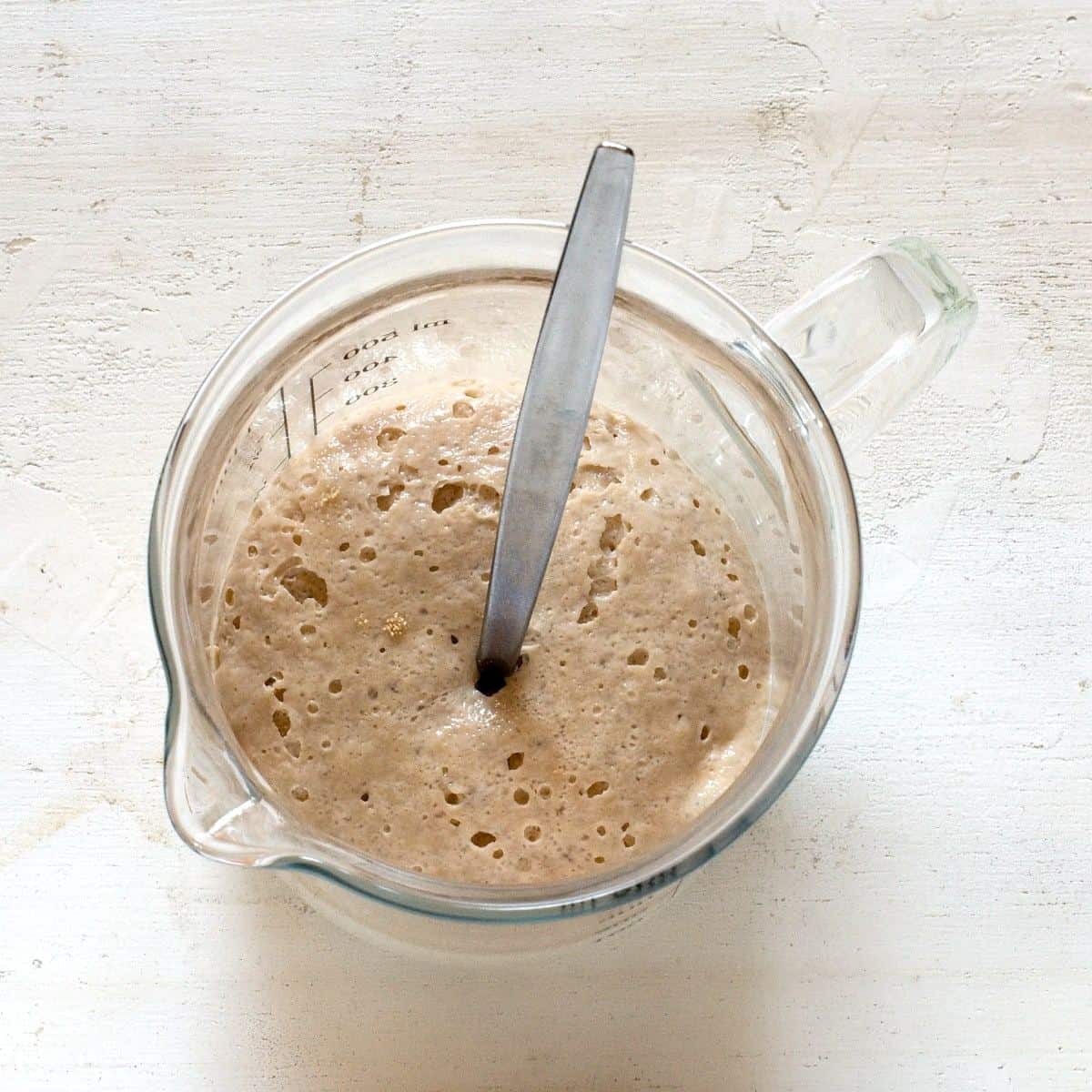
STEP 2: Mix the wet ingredients. Melt the butter in a small saucepan and take it off the heat. Pour in the rest of the milk to cool it down, then whisk in the egg yolks with a fork. The mixture should be lukewarm, not hot.
STEP 3: Mix the dry ingredients. In a large bowl, stir together the flour, the remaining sugar, the lemon zest, and the salt.
STEP 4: Bring the dough together. Make a well in the middle of the flour with a spoon. Pour in the butter mixture and the foamy yeast, and roughly combine everything with a fork.
STEP 5: Knead the dough. There are three ways to do it.
- With a stand mixer and the dough hook: the lowest speed for 1-2 minutes, until the dough comes together, then medium-low for about 8 minutes.
- The way Czech grandmothers did it: beat the dough in the bowl with a wooden spoon until it no longer sticks to the spoon and small blisters appear on the surface.
- Or knead by hand on a floured board for about 10 minutes.
However you work it, the dough is ready when it is smooth, elastic, and sticks to your fingers only a little.
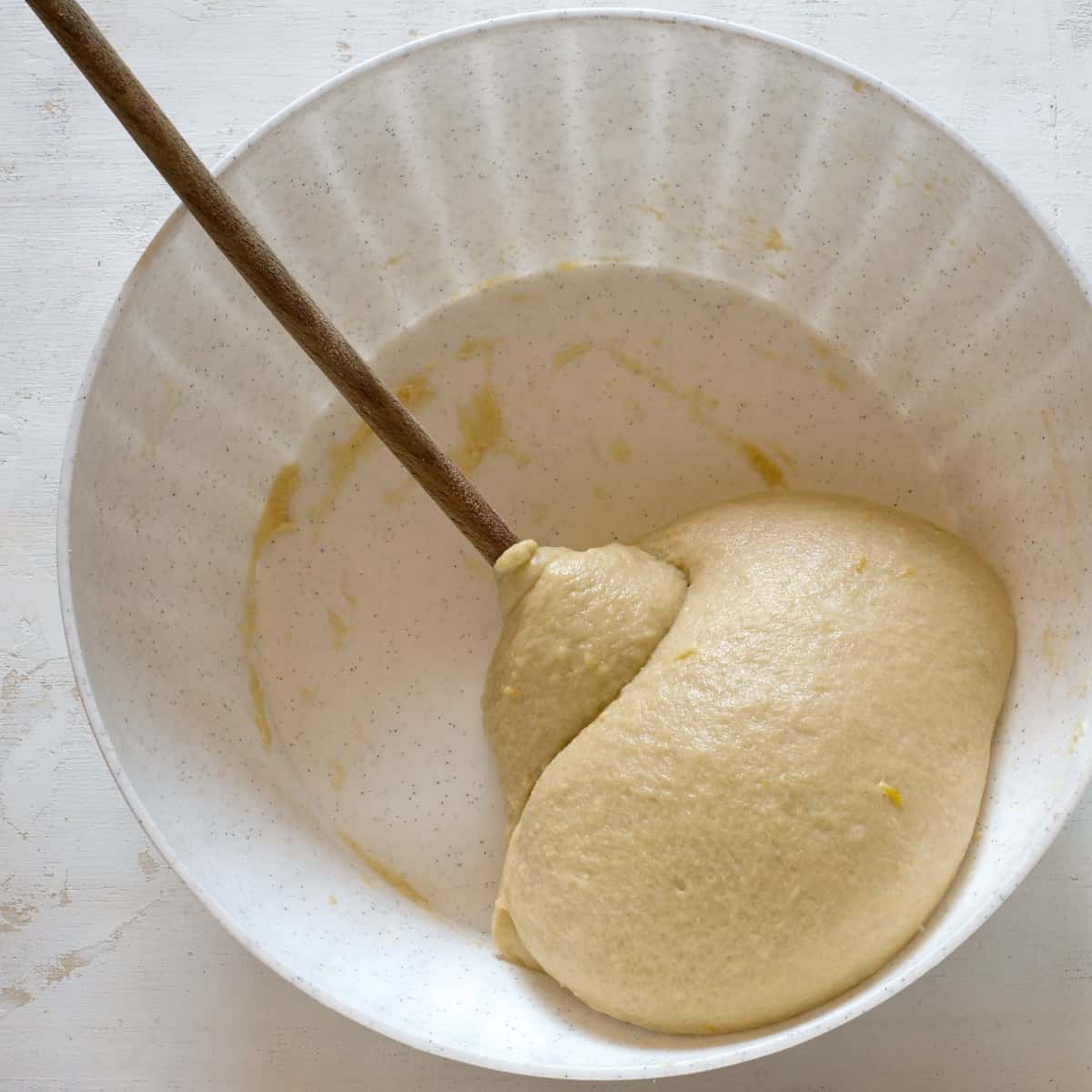
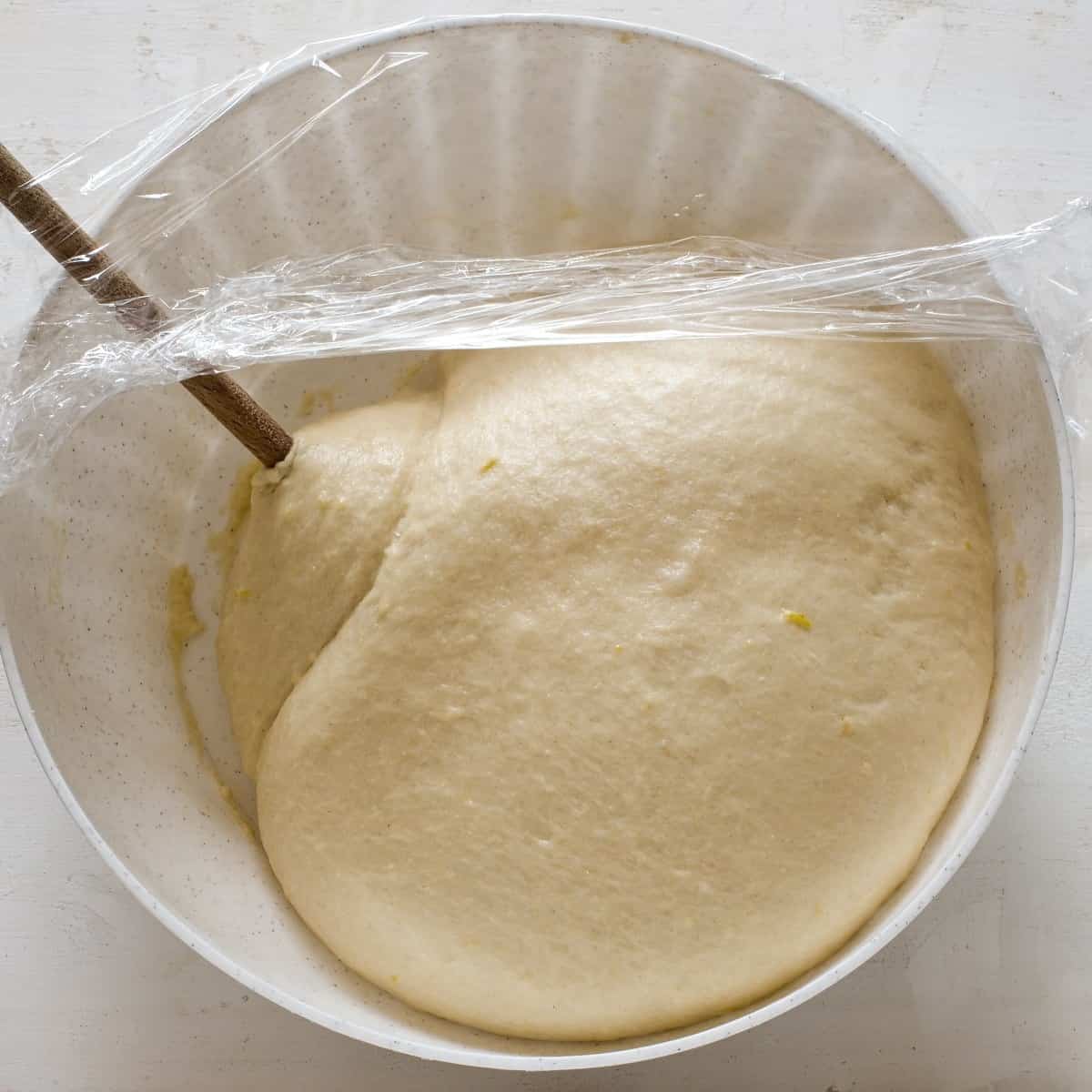
STEP 6: Let the dough rise. Place the dough in a plastic bowl, cover it with plastic wrap, and let it rise in a warm, draft-free spot for about 1 hour, until doubled in size. My favorite spot is a briefly warmed, switched-off oven; see how to make dough rise in the oven.
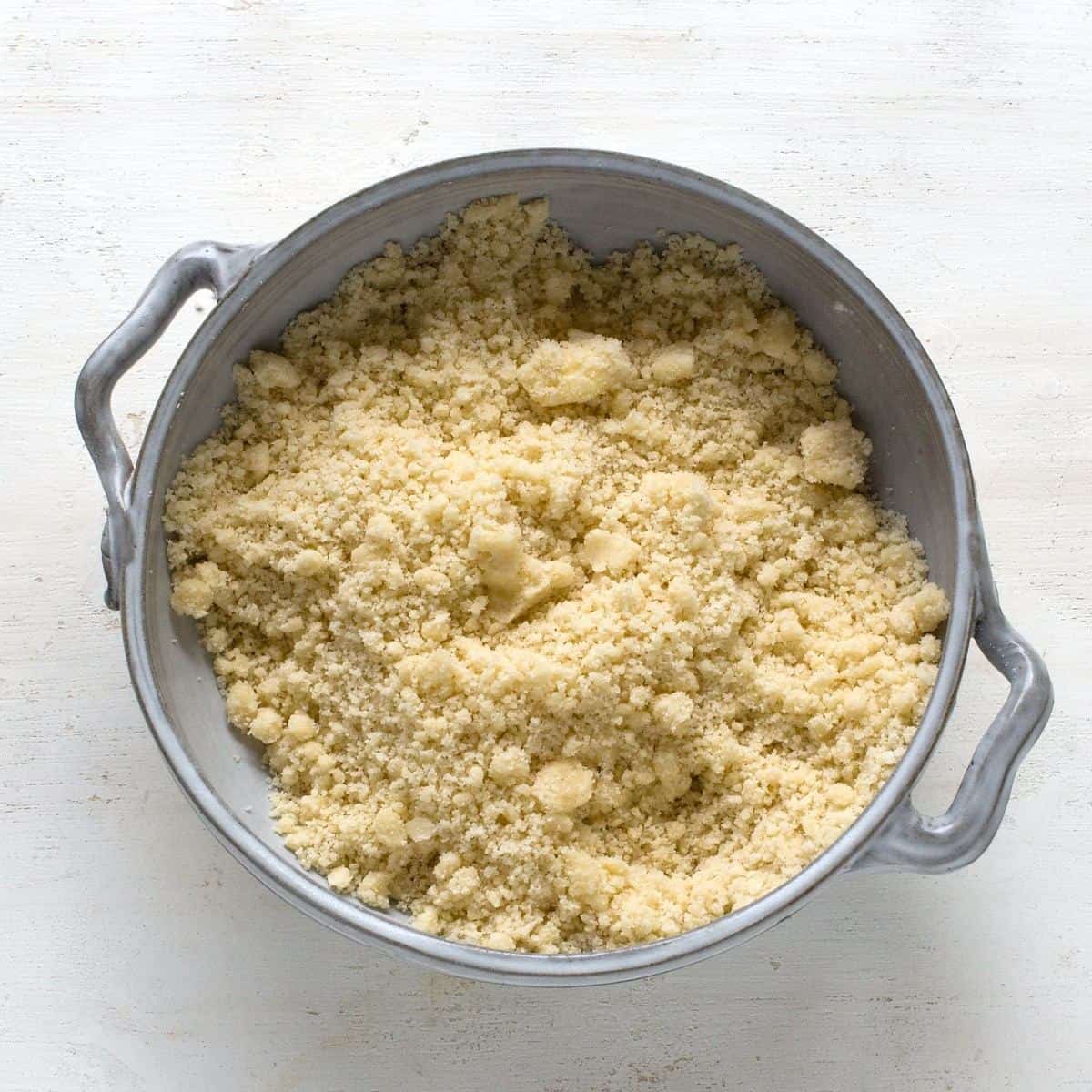
STEP 7: Make the streusel. While the dough rises, place the butter, sugar, and flour in a bowl and rub them between your fingers until crumbs form.
STEP 8: Shape and rest. Turn the risen dough out onto a floured board, knead it briefly, and shape it into a ball. Cover it and let it rest in a warm place for about 15 minutes.
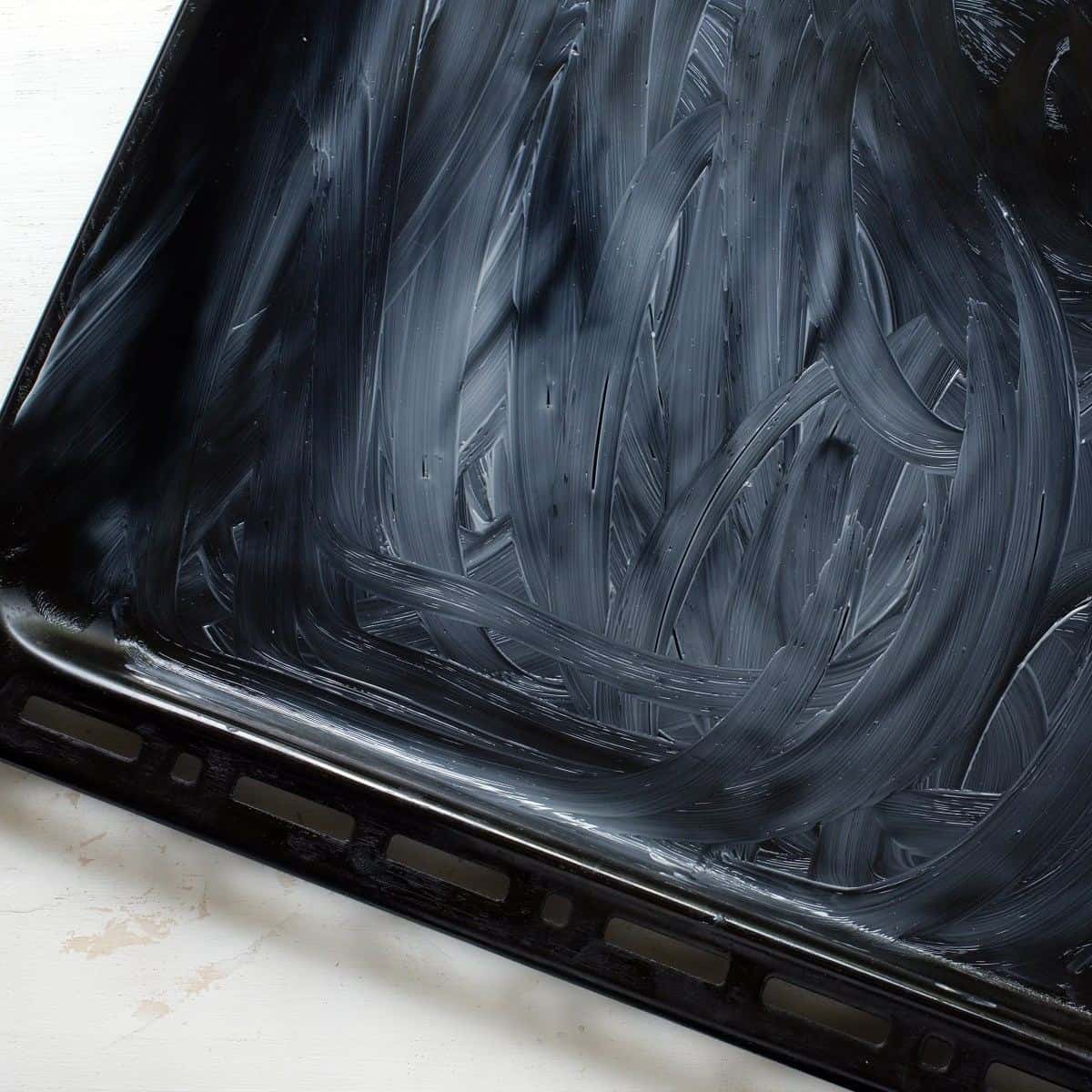
STEP 9: Spread the dough. Grease the half sheet pan with butter, or line it with parchment paper. Press or roll the dough thinly to the sides, and shape a slightly raised rim around the edge with the side of your palm. Let the dough rest on the pan for about 15 minutes while the oven preheats to 350°F (180°C).
STEP 10: Top with fruit and streusel.
TIP: Lightly whisk the leftover egg white until smooth and brush the raised rims; they bake up glossy.
Then scatter the fruit in a thick layer over the dough; cut fruit such as apricots or plums lies cut side up. Sprinkle the fruit with sugar, more generously if it is tart, and cover it with the streusel crumbs.
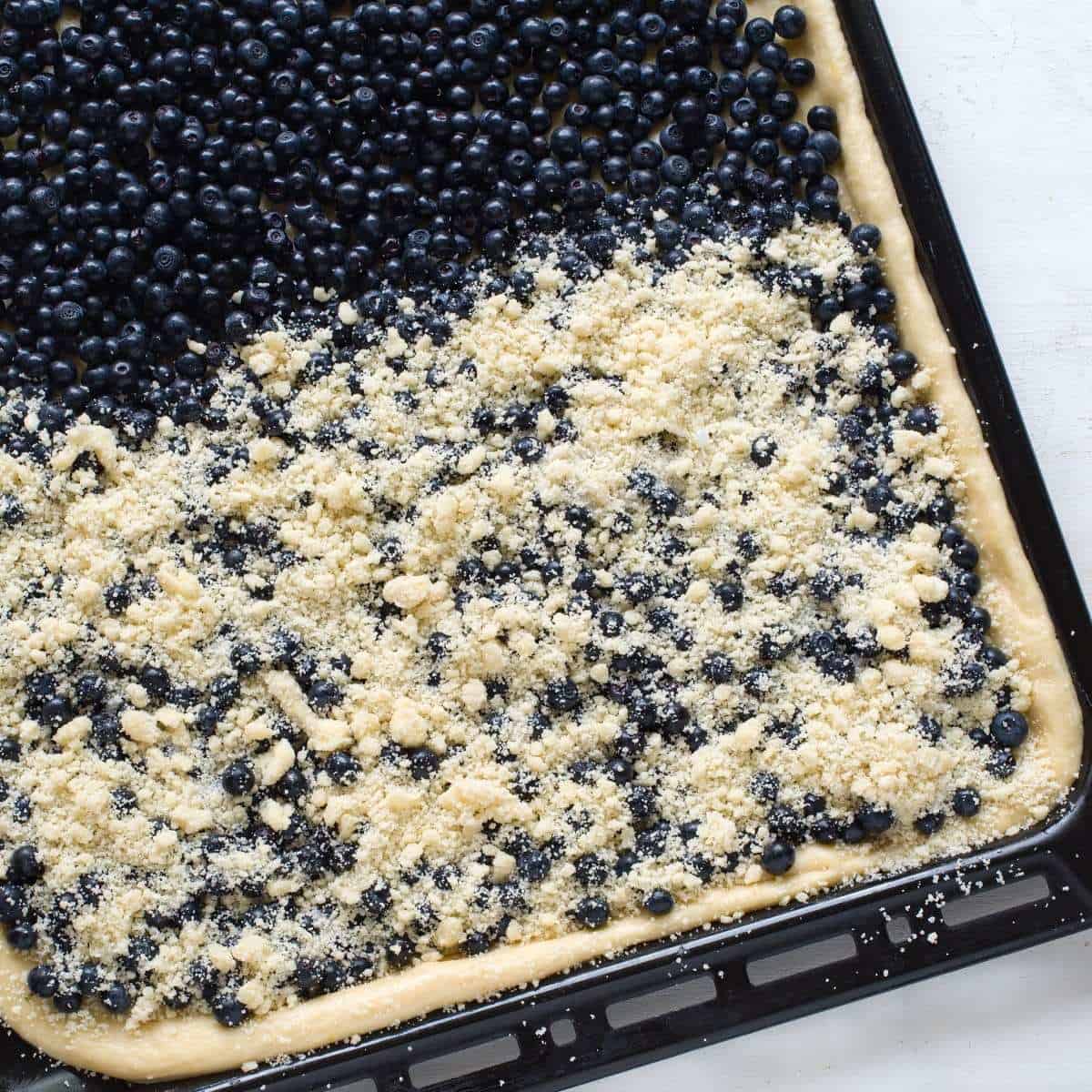
STEP 11: Bake. Bake at 350°F for 35-40 minutes, until the edges turn golden brown.
TIP (optional): For a fantastic twist, drizzle the hot cake with melted butter stirred with two tablespoons of spiced rum right after it comes out of the oven.
➜ Which fruit to use
The dough and streusel stay the same; only the topping changes with the season. There should be enough fruit to cover the dough in a thick, generous layer; the weight in the recipe card is your guide. Choose from what is ripe:
- Blueberries, whole. This is the classic Czech blueberry cake, and the version in the photos here; wild bilberries, if you can find them, give the deepest flavor and color.
- Apricots, halved, pitted, and laid cut side up. If this is your favorite version, I have a full recipe for Czech apricot sheet cake.
- Peaches, pitted, cut into smaller pieces, and laid cut side up.
- Plums, halved or quartered, pitted, cut side up. Try them in a Czech plum streusel cake.
- Raspberries, whole.
- Currants, black or red, stemmed. They are tart, so sugar them generously.
- Gooseberries and jostaberries, whole. Also tart; be generous with the sugar.
- Apples, in thin slices. They are the fall variant, once the berry season has passed; their flavor is gentler than the summer fruit.
- A garden mix. Combining tart fruit with something sweeter gives the most balanced cake; currants with raspberries is a classic pairing from Czech gardens.
Frozen fruit works any time of year: scatter it over the dough straight from the freezer, and do not thaw it first.
➜ How to store yeast coffee cake
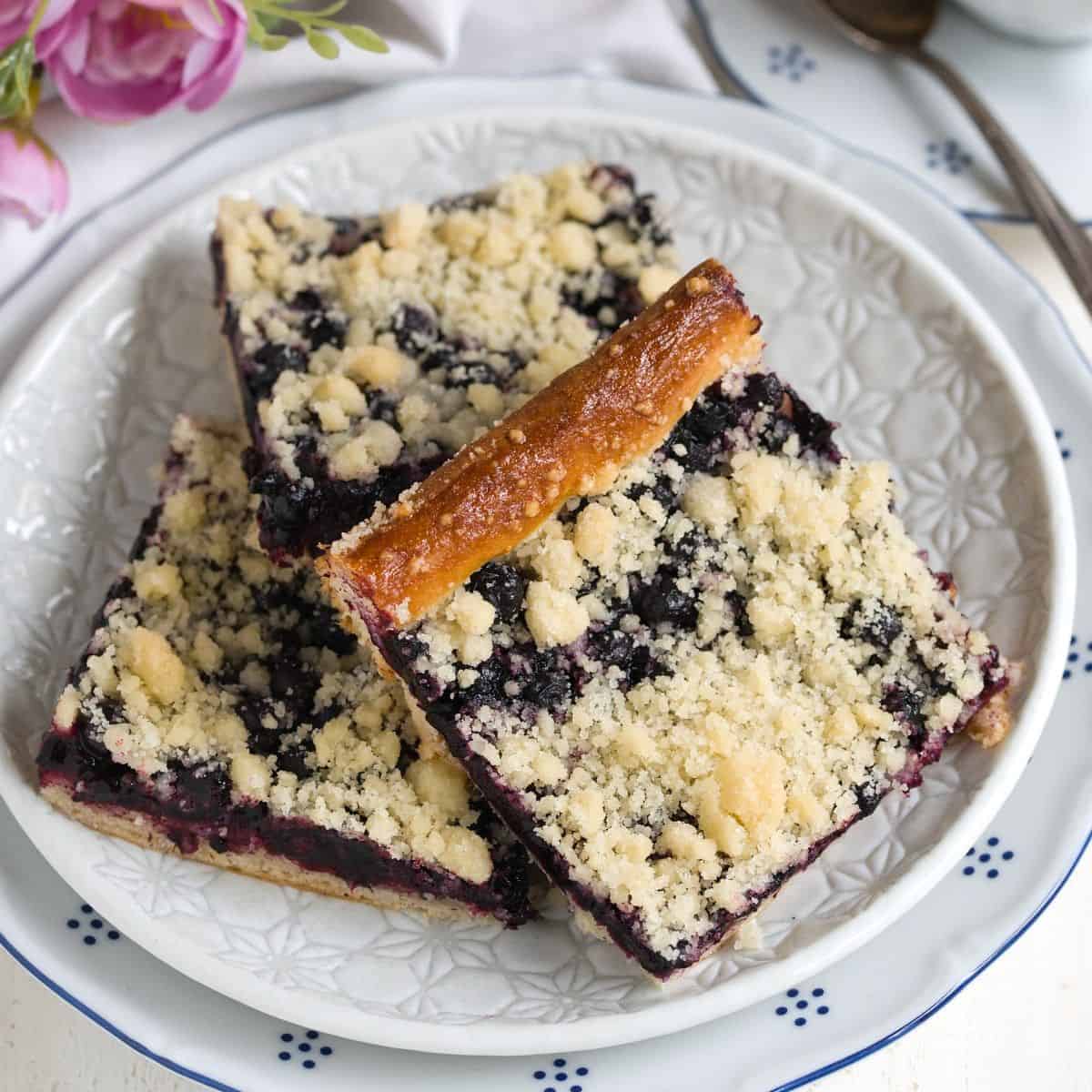
Let the cake cool for a while before cutting; then slice it into squares of about 4×4 inches (10×10 cm). Fresh from the oven, the fruit layer is still soft and juicy, so serve the warm squares on small dessert plates with a spoon. Once the cake cools completely, it firms up, and a square holds nicely in your hand.
For a bakery-pretty finish, dust the cooled cake with confectioners' sugar. Pour a cup of coffee or tea alongside, and you have a true Czech afternoon. Dobrou chuť!
➜ How to store
Cover the cooled cake with plastic wrap, aluminum foil, or a clean kitchen towel. It will keep in a cool spot at room temperature for about 3 days.
The whole sheet will not fit in a refrigerator, so cut the cooled cake into squares first. Stored in an airtight container, they keep in the fridge for up to 5 days; let a square come back to room temperature before eating, because the cold stiffens yeast dough.
Freezing works well. Pre-freeze the squares in a single layer, then stack them in an airtight container and return them to the freezer. The pieces will not stick together, so you can take out exactly as many as you need. They keep for up to 3 months. Thaw at room temperature, then warm the squares in a 300°F (150°C) oven for a few minutes to crisp up the streusel and soften the dough.
➜ FAQ
Coffee cakes usually contain no coffee at all. The name only means the cake is meant to be served with a cup of coffee or tea, at breakfast, at brunch, or in the afternoon.
No. Most American coffee cakes are quick batters leavened with baking powder. This Czech cake is a true old-fashioned yeast cake: the dough rises for about an hour and bakes into a soft, gently bread-like crumb.
Yes. For a 9×13-inch pan, make about ⅔ of the recipe; for a 9×9-inch pan, half of the recipe works nicely. Start checking for doneness a few minutes earlier, because a smaller cake can bake slightly faster.
Yes, with one extra step. Give the dough its first rise in the refrigerator overnight, 8 to 12 hours, instead of the warm hour. The next day, let the dough revive at room temperature for about an hour before you shape it; straight from the fridge, it is stiff and slow. That said, I usually make the dough fresh the same day, and if you can, I recommend it.
For a filling that never runs, cook it first. Simmer the fruit with sugar for a few minutes, then stir in a little cornstarch slurry (about 1 tablespoon cornstarch per 2 cups of fruit, whisked into 2 tablespoons cold water) and cook until it turns thick and glossy. Let the filling cool before spreading it on the dough. This works beautifully with frozen fruit too.
More Czech yeast baking to try: loupáčky (sweet crescent rolls), Czech buchty (filled buns), and dukátové buchtičky with vanilla sauce.
Tried this recipe?
Leave a review down in the comments! ⭐⭐⭐⭐⭐
Other readers and I love hearing what you think. Stay in touch by following me on Facebook and Pinterest. For more Czech stuff, subscribe to my newsletter!
📖 Recipe
Yeast Cake with Fruit and Streusel
Tap or hover to scale
This recipe was developed in grams. For the most accurate results, tap the purple METRIC toggle and use a kitchen scale.
Ingredients
Yeast dough:
- ⅞ cup milk lukewarm, about 100°F/38°C
- 2 teaspoon active dry yeast
- ⅓ cup granulated sugar
- 6 Tablespoons unsalted butter melted
- 2 egg yolks whites reserved for brushing the rims
- 3 cups all-purpose flour
- 1 Tablespoon lemon zest freshly grated, yellow layer only
- ¼ teaspoon salt
Fruit topping:
- 2 pounds seasonal fruit fresh, or frozen straight from the freezer
- 2 Tablespoons granulated sugar to sprinkle; more if the fruit is tart
Streusel topping:
- 1 ⅔ cups all-purpose flour
- 7 Tablespoons unsalted butter
- ½ cup granulated sugar
Instructions
- Pour ¼ cup of the milk into a glass. Stir in 1 teaspoon of the sugar and 2 teaspoon active dry yeast. Rest in a warm spot 10-15 minutes, until foamy.
- Melt 6 Tablespoons unsalted butter, take it off the heat, and pour in the remaining milk to cool it. Whisk in 2 egg yolks. The mixture should be lukewarm, not hot.
- In a large bowl, stir together 3 cups all-purpose flour, the remaining sugar, 1 Tablespoon lemon zest, and ¼ teaspoon salt.
- Make a well, pour in the butter mixture and the foamy yeast, and combine. Knead with a dough hook (lowest speed 1-2 minutes, then medium-low about 8 minutes), with a wooden spoon until it blisters and leaves the bowl, or by hand about 10 minutes. The dough is smooth, elastic, and only slightly sticky.
- Cover and let the dough rise in a warm, draft-free spot about 1 hour, until doubled.
- Rub the streusel 7 Tablespoons unsalted butter, ½ cup granulated sugar, and 1 ⅔ cups all-purpose flour together into crumbs.
- Turn the dough out, knead briefly, shape into a ball, cover, and rest 15 minutes.
- Butter the pan or line it with parchment. Press the dough thinly to the edges and shape a slightly raised rim. Rest on the pan 15 minutes while the oven heats to
 350 °F.
 - Lightly whisk a little reserved egg white and brush the rims. Scatter 2 pounds seasonal fruit thickly (cut fruit cut side up), sprinkle with 2 Tablespoons granulated sugar, and cover with streusel.
- Bake for 35-40 minutes, until the edges are golden brown.
Notes
- Weigh the flour for the most reliable dough. Too much flour from a packed cup is the usual cause of a stiff, dry cake.
- Lukewarm, never hot: liquid over about 110°F kills the yeast.
- The dough should be soft and slightly tacky, not stiff. If it feels dry, work in a splash more milk.
- Fruit: use enough to cover the surface in a thick layer. Frozen fruit goes on straight from the freezer, do not thaw.
- Oven: temperatures are for a conventional (non-fan) oven; for convection, lower by 25°F.
- Smaller pans: for a 9×13-inch pan use about ⅔ of the recipe; for a 9×9-inch pan, half. Check for doneness a little earlier.
- Optional finish: dust the cooled cake with confectioners' sugar, or drizzle the hot cake with melted butter stirred with 2 tablespoons spiced rum.
- STORE: covered at room temperature about 3 days; refrigerate cut squares up to 5 days; freeze up to 3 months.



Petra Kupská says
Thank you very much for your sharp eye, Daria! In the yeast dough will come two teaspoons of active dry yeast. I have already added to the recipe. Thank you again!
Lorraine Vítámvás says
Hi Petra,
Fresh blueberries are extremely expensive nowadays. Would it be possible to use frozen, or thawed frozen? Would it make a difference?
Petra Kupská says
Frozen blueberries are a wonderful choice, and much kinder to the wallet right now. Scatter them on straight from the freezer, no need to thaw: by the time the fruit goes on, the dough has already risen and been shaped, so the cold berries will not hold back the rise. One tip, since frozen berries give off more juice than fresh ones: toss them with a spoonful of cornstarch before they go on, and the cake bakes up juicy but not soggy.
Sean says
So I tried making this recipe because my Babi would make the same one for us when we were little. I only had oat milk and vegan butter. I also used thawed frozen blueberries. It turned out ok with 1:1 substitutions for both, not as good as hers (probably because of the substitutions) but still good!
Petra Kupská says
How lovely that you baked this for your Babi! It turned out well even with the substitutions, and next time real butter and whole milk will carry that familiar richness, a step closer to hers. One little thing: you do not need to thaw the blueberries, just scatter them on frozen.
Petra Kupská says
Jan, I'm sorry you had a bad experience with the recipe. I checked the quantities, and everything seems to be fine. Did you please use a kitchen scale to accurately weigh the ingredients? When making baked goods, it's better than measuring with cups.
Kandy says
Can this recipe be cut in half for a 9 x 9 pan? Thank you
Petra Kupská | Cook Like Czechs says
Absolutely, halve all the ingredients and it will fit a 9x9 pan beautifully. I would check it a little sooner than the recipe says, since a smaller cake likes to brown faster.
Andrea, Vancouver, BC says
This recipe turned out AMAZINGLY and tasted just like my babicka and maminka would make it when I was a little girl in the 1970s in Canada. I forgot to weigh out the flour (as per the recommendation to Jan), and ended up using too much, with a lumpy, fry fough that I was worried I would not be able to salvage, but I just added about 1/2 cup more milk (remembering to warm it up, as I saw my babicka doing when she needed to add extra milk!), and it worked out beautifully. I'm so very delighted at how well this recipe captures the subtle flavours of the dough that I remember from my childhood - tonight we are making the zemlovka : )!
Petra Kupská says
Andrea, what a joy to read this, and how special that it tasted like your babička and maminka's baking from 1970s Canada! Your rescue was perfect: a splash of warm milk is exactly what the dough wants when it turns stiff, so your babi's instincts are clearly in your hands. Enjoy the žemlovka (Czech bread pudding) whenever you make it!
Ken says
I made this recipe with 3 cake pans instead of the sheet pan and it was great.
Petra Kupská says
Three round pans is a clever way to do it, and the cake is easier to serve that way too. Thank you for sharing, I am sure other readers will try it. 👍