

Boiled potatoes may be simple, but in Czech kitchens they are never boring. We cook them with whole caraway seeds and fresh lovage, an herb Czech grandmas loved to toss into the pot whenever they had it on hand, making a side dish full of flavor.
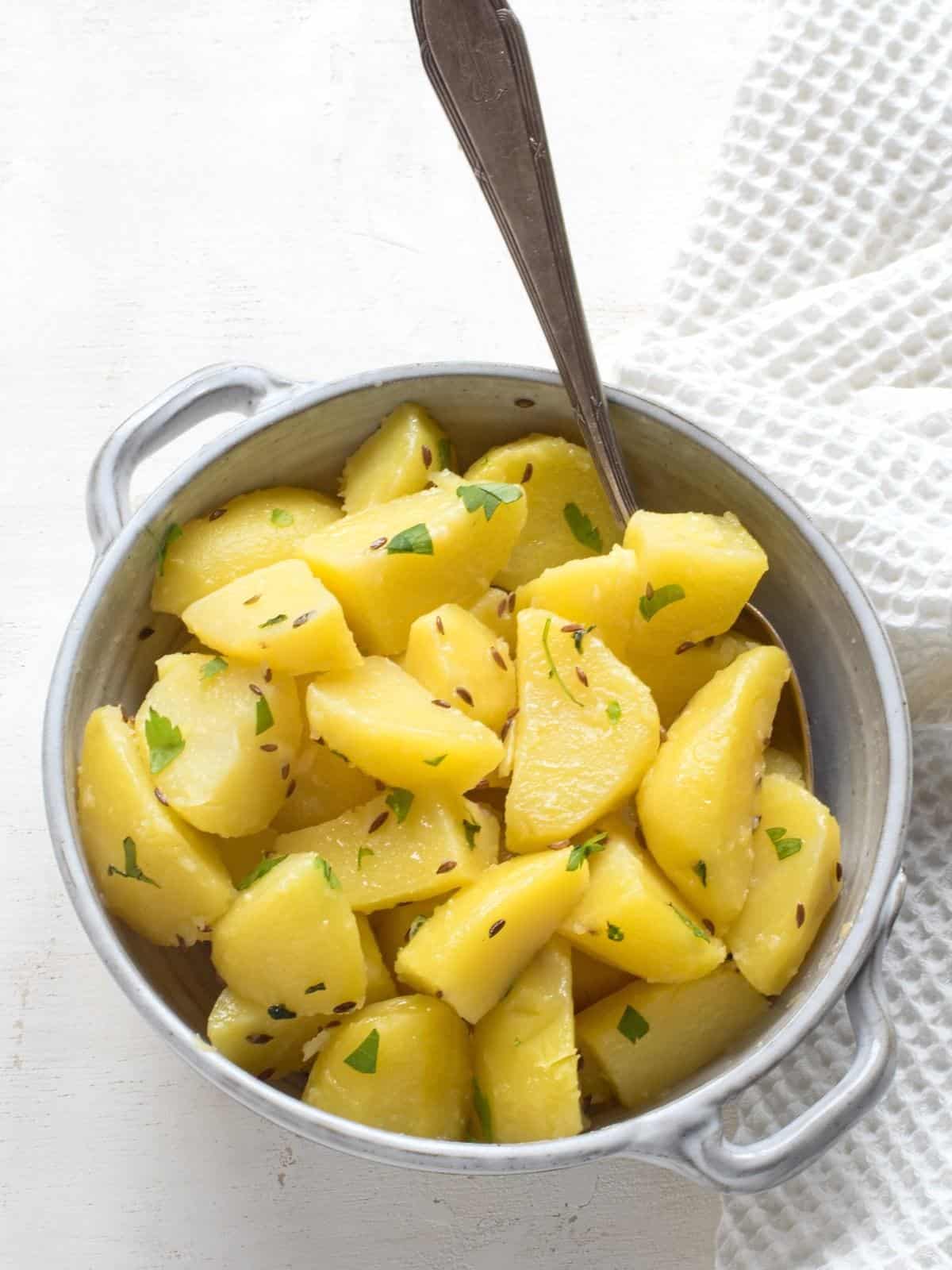
What are Czech boiled potatoes? They are raw, peeled potatoes cut into even pieces, simmered in salted water with whole caraway seeds and chopped lovage, and finished with melted butter. In Czech we call them vařené brambory, and this dish is the quintessential everyday side in Czech cooking.
It is a true beginner recipe: if you can peel a potato, you can make it. You will need about 35 minutes from start to finish, most of it hands-off while the pot simmers. I grew up on potatoes cooked this way, and a few small habits make all the difference. Here is what matters most.
Jump to
➜ Why this boiled potatoes recipe works
- Pick waxy or all-purpose potatoes. Starchy types soak up water and fall apart in the pot. Waxy potatoes such as Red Bliss hold their shape best, and all-purpose Yukon Golds work well too.
- Season the cooking water, never the finished potatoes. Salt, caraway, and lovage simmer together with the potatoes, so the flavor cooks in instead of sitting on top.
- Cover the pot and keep the water at a gentle simmer. The potatoes should bubble quietly, not rapidly, so the pieces cook through without breaking apart.
"I usually season boiled potatoes with butter and caraway seeds, butter and chopped spring onions, or butter and chopped parsley. But lovage is a wonderful addition too!"
Jitka
In my kitchen these potatoes appear next to fried and roasted mains all year long, or with just buttered vegetables when we want a lighter meal. Serve these potatoes next to a crispy breaded pork schnitzel (řízek), grilled cevapcici sausages, or a slice of Czech sekaná meatloaf.
➜ The story behind Czech boiled potatoes
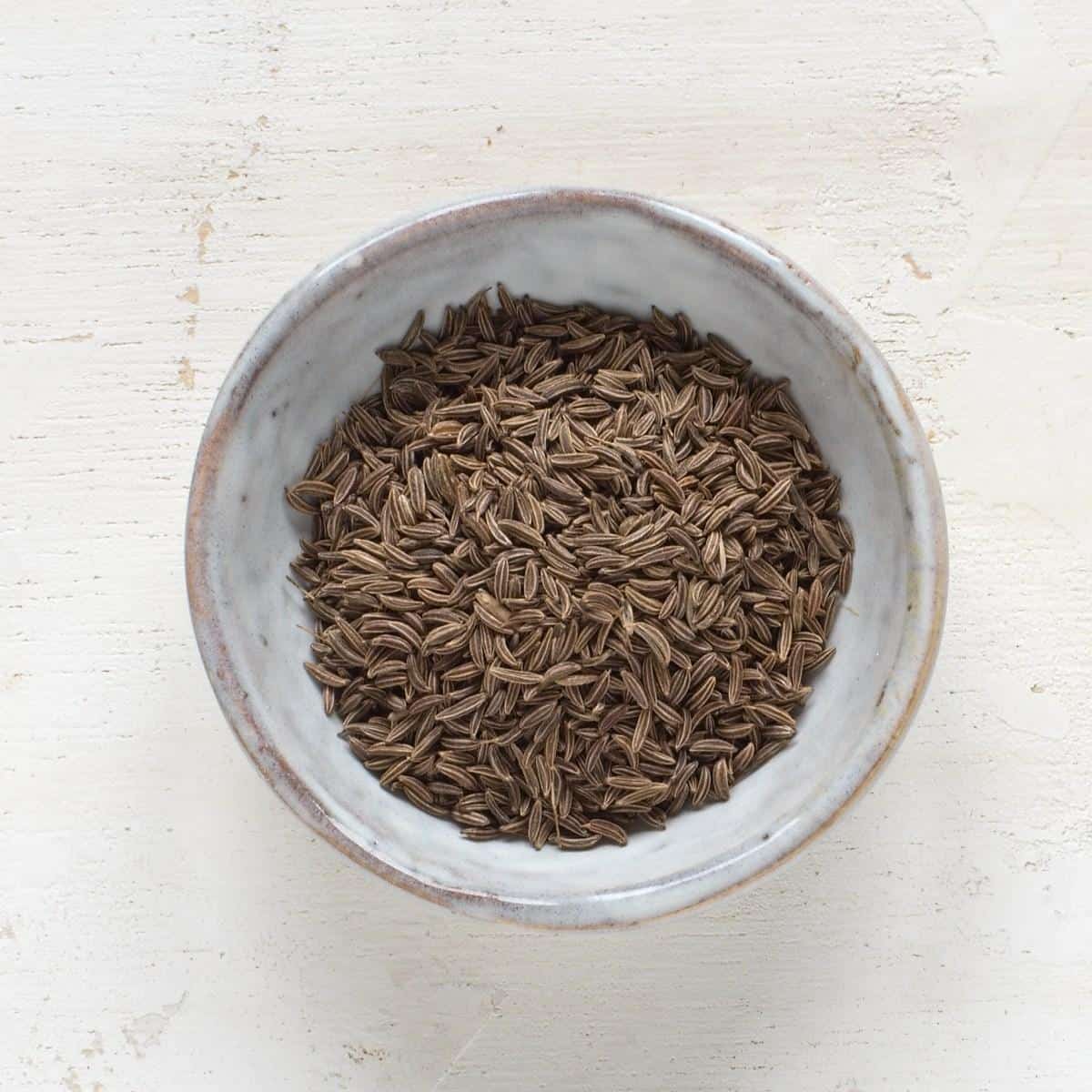
Potatoes have been a backbone of Czech cooking for over two centuries, with every household holding its own small rituals around them. One of the oldest traditions belongs to Bohemian grandmothers, who always added a spoonful of caraway seeds to the pot. They believed caraway helped neutralize solanine, the compound that forms in sprouting potatoes. Whether or not the science held up, they were certainly right about one thing: it makes the potatoes taste better.
The second Czech secret is libeček, or lovage. Czechs often call this herb "natural Maggi" after the Swiss seasoning created in the late nineteenth century, as its leaves carry that same deep, savory aroma. In times past, a bush of lovage could be found in nearly every Czech kitchen garden.
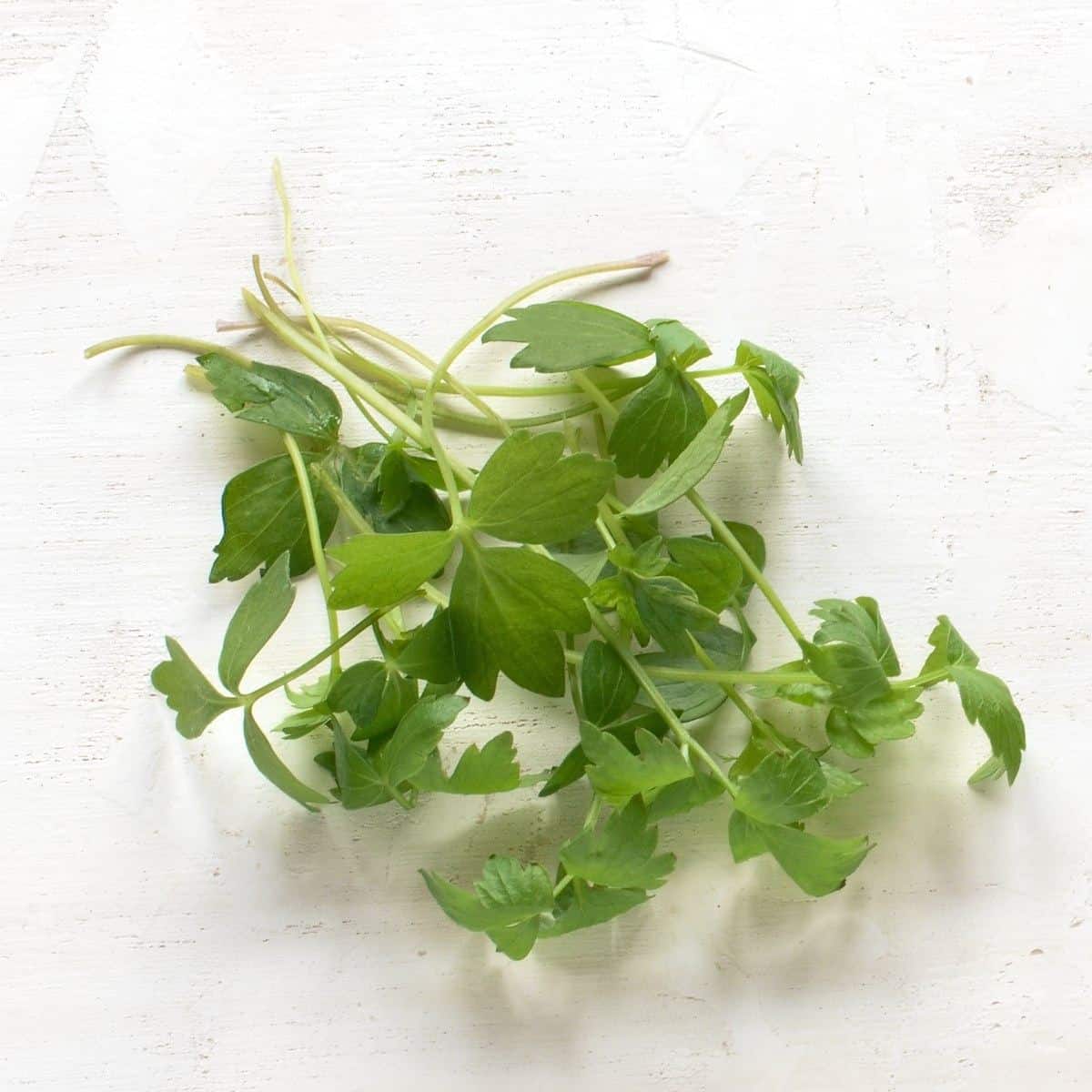
My grandmother kept a garden on a sunny slope in the Jizera Mountains of northern Bohemia, where her herbs truly thrived. Alongside parsley and chives, she grew lovage, which found its way into her potato pot as well as into her Czech beef noodle soup.
Czech pronunciation
In Czech, this side dish is called vařené brambory, which sounds roughly like VAH-rzheh-neh BRAM-boh-rih. Would you like to hear it said by a native speaker? Click and listen.
➜ Ingredients
✅ See the recipe below with step-by-step photos and many helpful tips. Scroll down for the full printable recipe in both US cups and metric measurements.
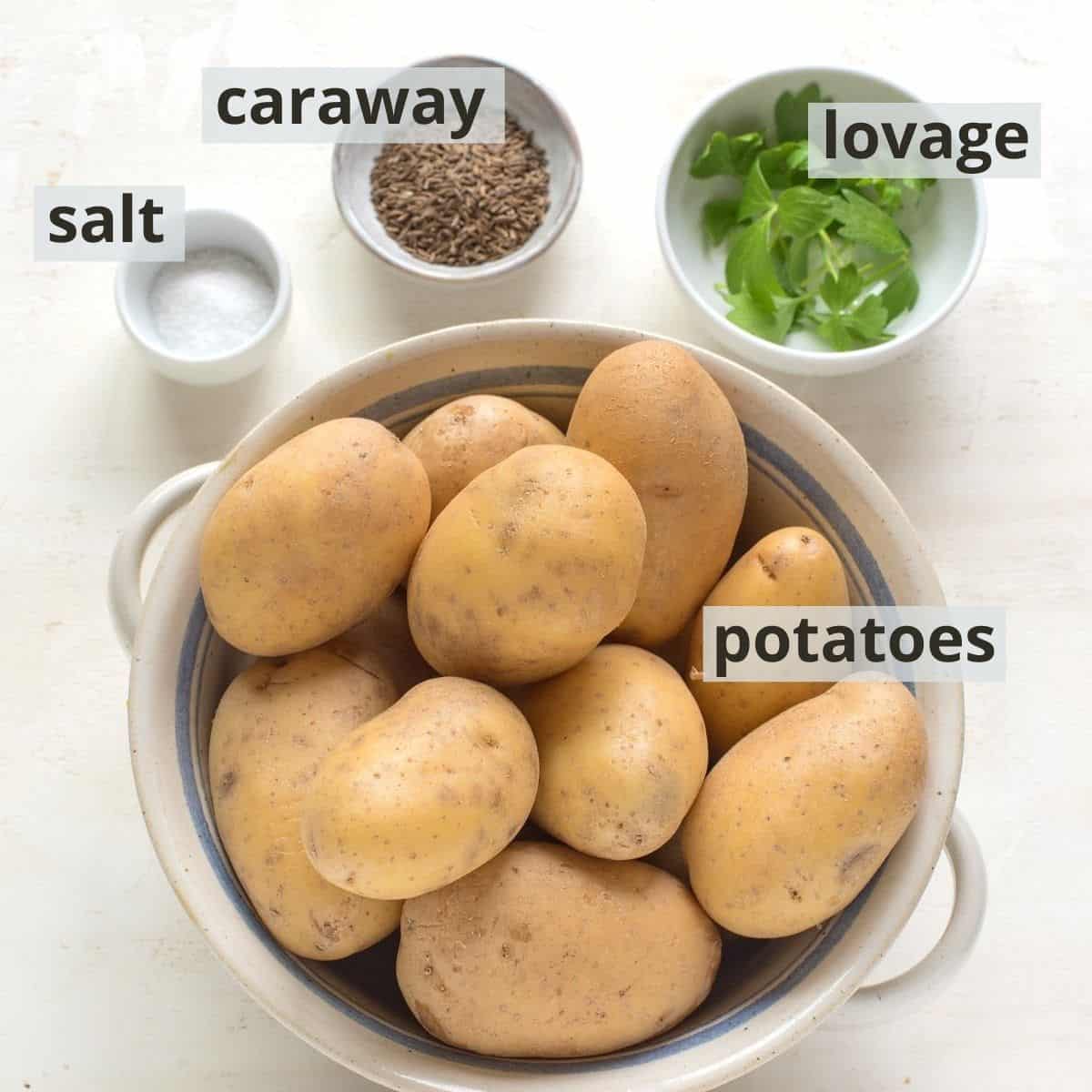
- Potatoes, waxy or all-purpose. Waxy potatoes such as Red Bliss, fingerlings, or new potatoes hold their shape best in water; all-purpose Yukon Golds, sold as yellow potatoes, are a safe choice too. Skip starchy russets for this recipe: they cook up dry and fluffy and tend to fall apart in the pot. Choose firm potatoes without sprouts, and keep in mind that a Czech "medium" potato is smaller than an American one, which is why the recipe card measures by weight.
- Caraway seeds (kmín), whole, not ground. The classic Czech seasoning for potatoes; the seeds release their aroma slowly as the water simmers.
- Lovage, fresh green leaves, chopped. This is the herb Czechs call "natural Maggi" for its deep, savory taste. Cannot find it fresh? Dried lovage works too: start with a smaller amount, since dried leaves taste more concentrated, and a little chopped fresh parsley brightens it up. No lovage at all? The caraway seeds alone will still season the potatoes beautifully.
- Salt, to season the cooking water.
- Unsalted butter, melted and drizzled over the potatoes just before serving.
Equipment
- Vegetable peeler (affiliate link), a swivel peeler makes quick work of the skins, but any style you are comfortable with is fine.
➜ How to make boiled potatoes
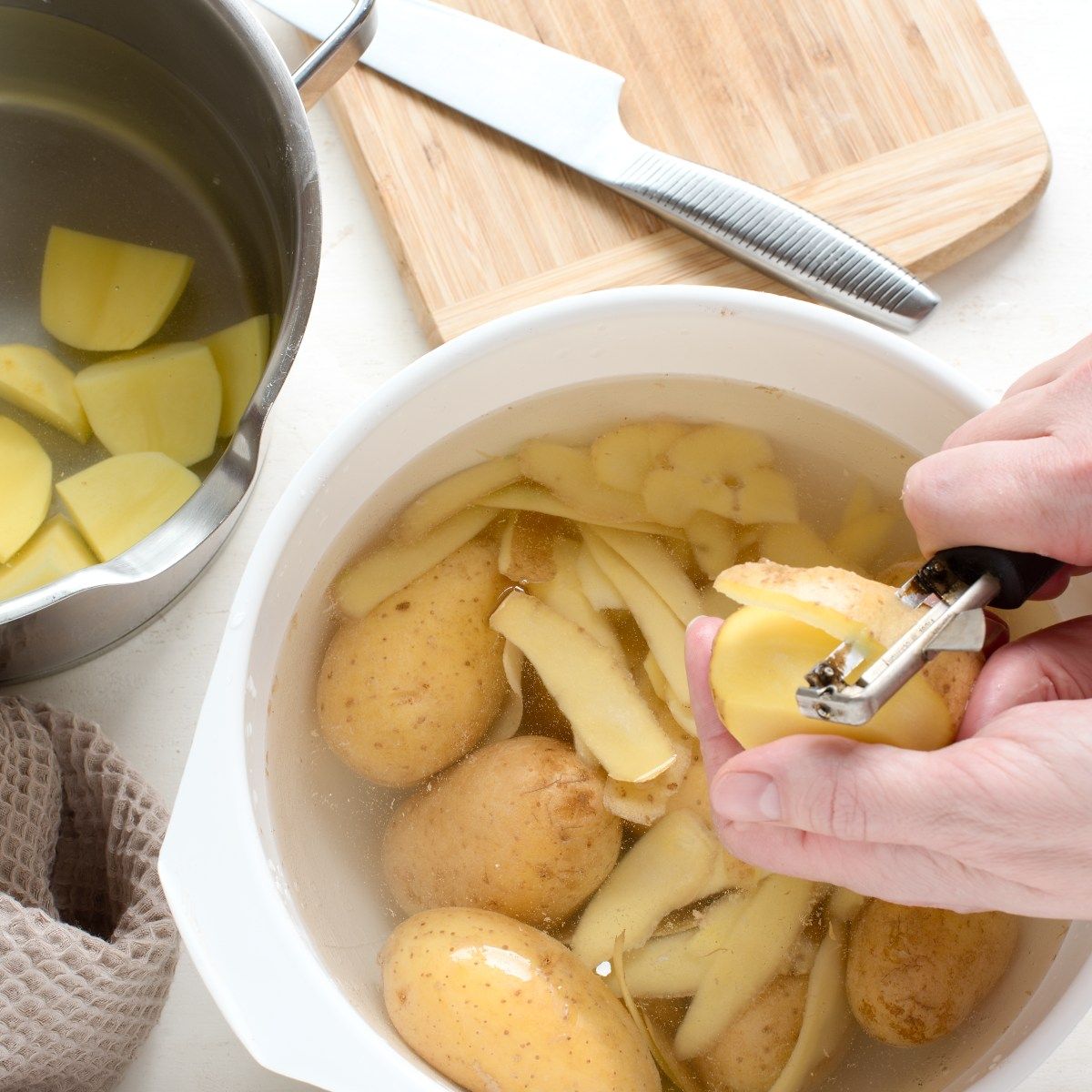
STEP 1: Rinse and peel the potatoes. Put the potatoes in a large bowl and cover them with lukewarm water. Peel them right in the water with your vegetable peeler; any dirt rinses away as you work. As you peel, cut out any black spots or eyes. If a potato is partly rotten, throw the whole potato out; cutting the bad piece away is not enough.
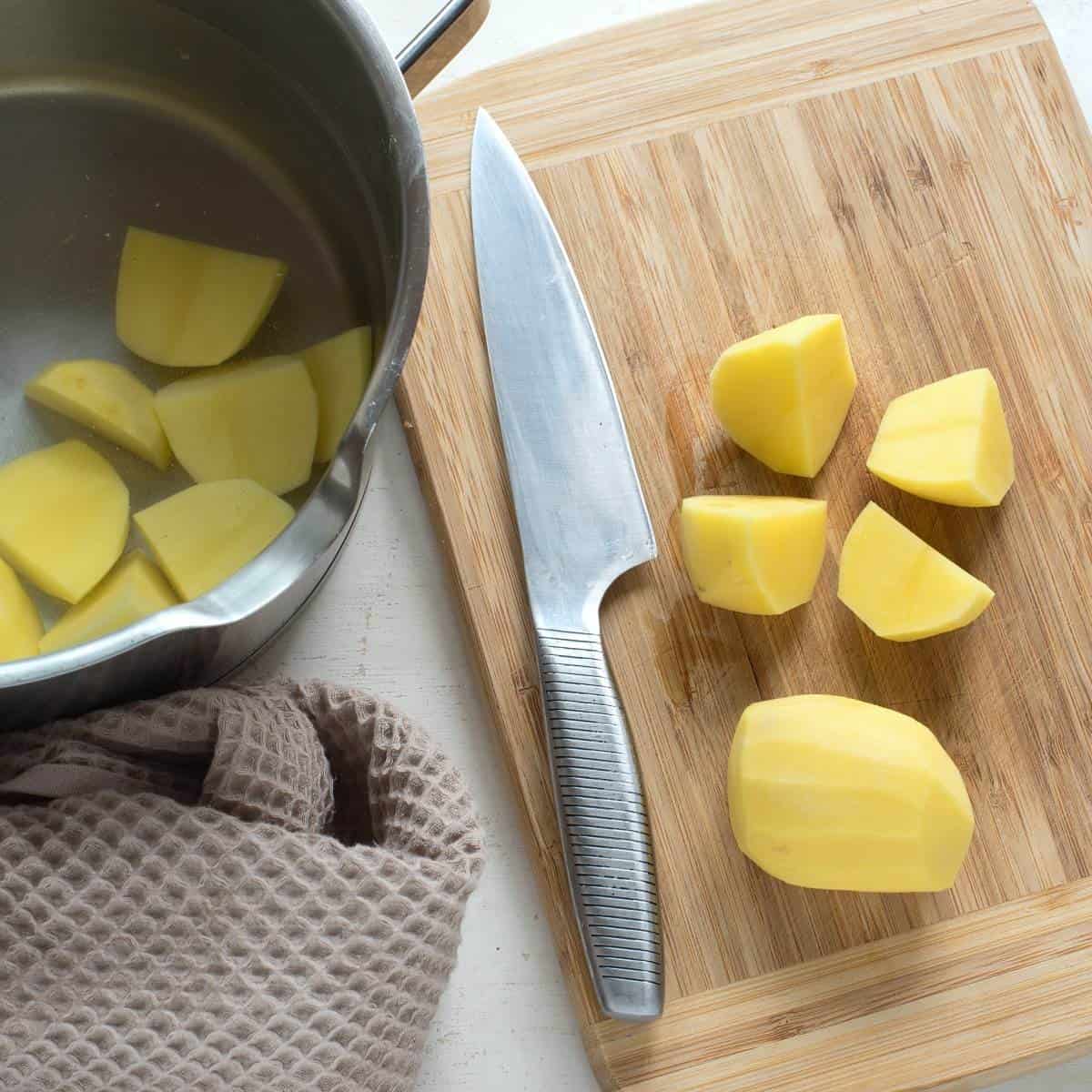
STEP 2: Cut the potatoes into even pieces. Place each peeled potato on a cutting board and cut it into quarters. Halve small potatoes, and cut very large ones into six chunks. The shape matters less than the size: pieces of the same size finish cooking at the same time. Drop the cut potatoes into a pot of cold water as you go.
STEP 3: Refresh the water. Drain the potatoes, leave them in the pot, and pour in fresh cold water until it sits about 1 inch above the potatoes. Starting in cold water lets the pieces heat through evenly, from the edges to the center.
STEP 4: Season the cooking water. Add the salt, caraway seeds, and chopped lovage straight into the water.
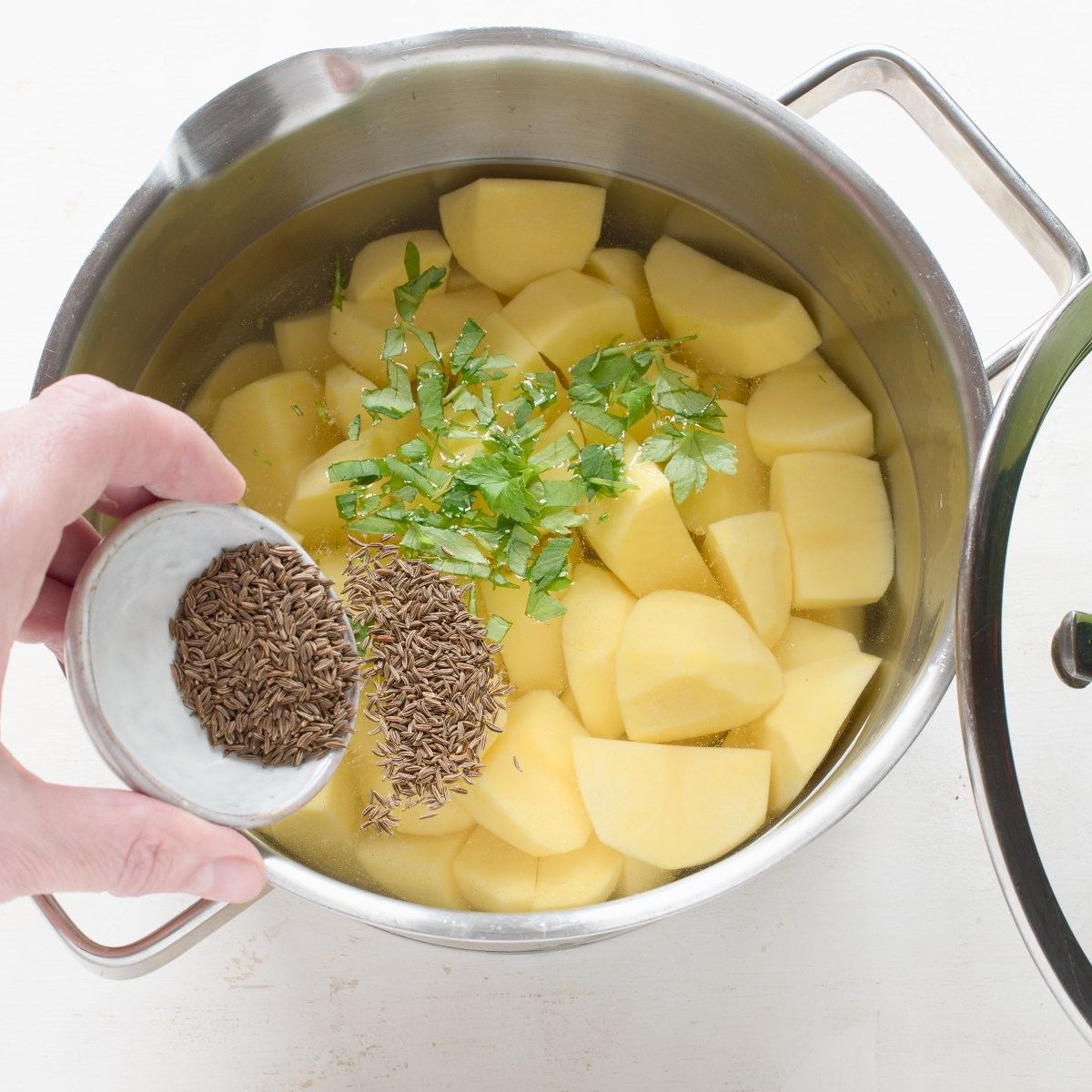
STEP 5: Bring to a boil, then turn the heat down. Cover the pot and set it over high heat. As soon as the water boils, turn the heat down to minimum and leave the lid slightly ajar so steam can escape. The water should bubble gently, never at a rolling boil.
STEP 6: Test for doneness. Medium quartered potatoes need 15 to 20 minutes from the moment the water starts to boil. After about 15 minutes, lift out a piece and prick it with a fork. If the fork slides in with no resistance, the potatoes are done. If not, cook them 3 to 5 minutes more and test again.
STEP 7: Drain and serve. Drain the potatoes carefully so the pieces stay whole, and serve them as a side dish warm with melted butter.
➜ How to serve boiled potatoes
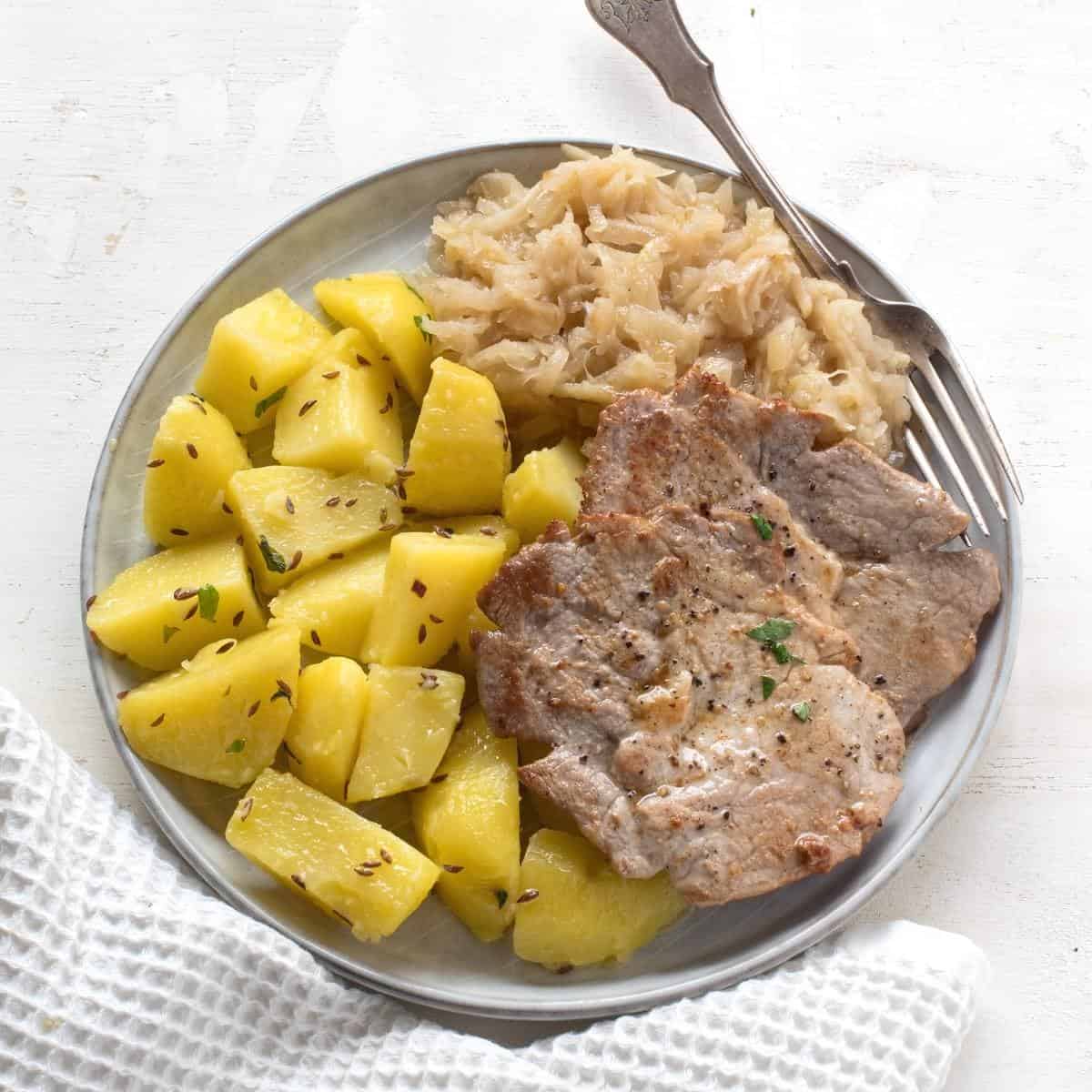
Czechs serve boiled potatoes without any fuss: drained, steaming, and drizzled with melted butter right on the plate. A sprinkle of fresh parsley or chives adds a vibrant pop of color and fresh flavor to replace the boiled-away herbs.
They are the perfect side for anything crispy or rich: think breaded cutlets, roasted meats with pan drippings, or the Czech classic, fried cheese (smažený sýr), with tartar sauce. Dobrou chuť!
➜ How to store boiled potatoes
- Fridge: Let the potatoes cool, then keep them in an airtight container for 3 to 4 days.
- Freezer: I do not recommend freezing boiled potatoes. Thawed potatoes turn watery and grainy.
- Reheat: Warm them in a covered skillet over low heat with a little butter, or steam them briefly. Leftover boiled potatoes are also wonderful pan-fried until golden.
➜ FAQ
Medium quartered potatoes take 15 to 20 minutes from the moment the water starts to boil. Smaller pieces cook faster, so start testing with a fork after 12 minutes.
You can, but they will not hold their shape. Russets are best saved for mashing; for boiling in pieces, reach for waxy or all-purpose potatoes.
Always in cold water. When potatoes go into boiling water, the outside turns soft before the center cooks through.
Turn them into Czech potato flatbread (bramborové placky), a favorite way to use them up in Czech kitchens. Or simply pan-fry the pieces in butter until golden for a quick breakfast side.
More potato recipes:
- Czech potato dumplings
- French potato gratin
- Slovak lokše flatbread
- Crispy breadcrumb potatoes
- Chunky mashed potatoes
Tried this recipe?
Leave a review down in the comments! ⭐⭐⭐⭐⭐
Other readers and I love hearing what you think. Stay in touch by following me on Facebook and Pinterest. For more Czech stuff, subscribe to my newsletter!
📖 Recipe
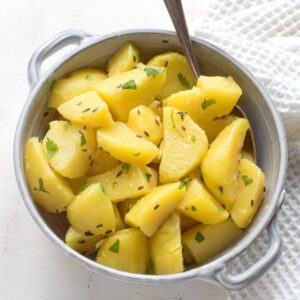
Boiled potatoes as a side dish (Czech Vařené brambory)
Tap or hover to scale
This recipe was developed in grams. For the most accurate results, tap the purple METRIC toggle and use a kitchen scale.
Ingredients
- 2 pounds potatoes waxy or all-purpose, e.g. Red Bliss or Yukon Gold
- 1 Tablespoon lovage greens fresh, chopped
- 2 teaspoons caraway seeds whole
- 1 teaspoon salt to season the cooking water
- 2 Tablespoons unsalted butter melted, to serve
Instructions
- Put 2 pounds potatoes in a large bowl, cover them with lukewarm water, and peel them with a vegetable peeler. Cut out any black spots.
- Quarter the peeled potatoes and drop them into a pot of cold water.
- Drain the potatoes, then pour in fresh cold water until it sits about 1 inch (2.5 cm) above them.
- Add 1 teaspoon salt, 2 teaspoons caraway seeds, and chopped 1 Tablespoon lovage greens to the water.
- Cover the pot and bring the water to a boil over high heat. Then turn the heat down to minimum and leave the lid slightly ajar, so the water bubbles gently.
- Cook for about 15 minutes, then prick a piece with a fork. If the fork slides in with no resistance, the potatoes are done. If not, cook them 3 to 5 minutes more and test again.
- Drain the potatoes carefully. Serve them warm, drizzled with 2 Tablespoons unsalted butter, melted.
Notes
- Potatoes: Waxy or all-purpose types hold their shape when boiled; starchy russets tend to fall apart.
- No kitchen scale? One medium US potato weighs roughly 6 oz (170 g); use that to estimate the amount you need.
- Simmer, never a rolling boil: gentle bubbles keep the pieces whole.
- No fresh lovage? Use dried lovage (start with less, it is stronger), or skip it and let the caraway season the potatoes.


Paul:-) says
Hi Petra,
I like the idea of these potatoes enormously but it’s almost impossible to buy fresh Lovage in Britain. I managed to buy ONE bunch this summer from a Polish shop and haven’t seen any since.
Which brings me to my question: Would this work by using dried Lovage with a little fresh Parsley?
Your view on this would be much appreciated,
Paul:-)
Petra Kupská says
I completely understand—fresh lovage can be tricky to find. Using dried lovage with a little fresh parsley is a very good solution. Dried lovage has a more concentrated flavor, so I’d suggest starting with a smaller amount and tasting as you go, then adding parsley to brighten it up.
It won’t be quite the same as fresh lovage, but it will still give the dish that lovely aromatic, slightly celery-like flavor. I think you’ll enjoy it!
Petra 🙂