

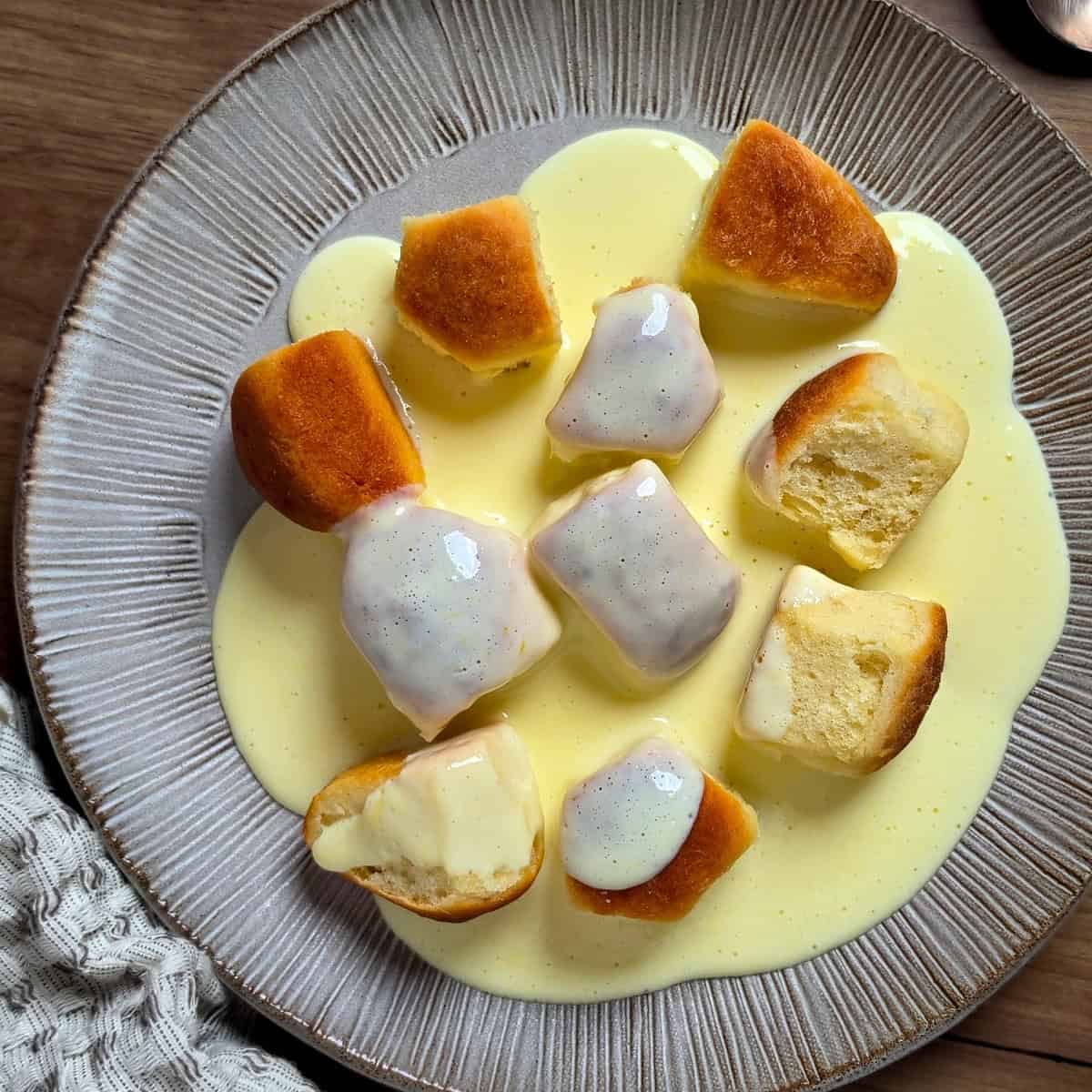
Soft little buns, nestled so close together that they come out of the oven as one buttery cluster, then poured over with warm vanilla sauce. Ask anyone who grew up in the Czech Republic about dukátové buchtičky, and you will likely get a smile and a story about lunch. Yes, lunch: this is one sweet dish we Czechs happily eat as a main course!
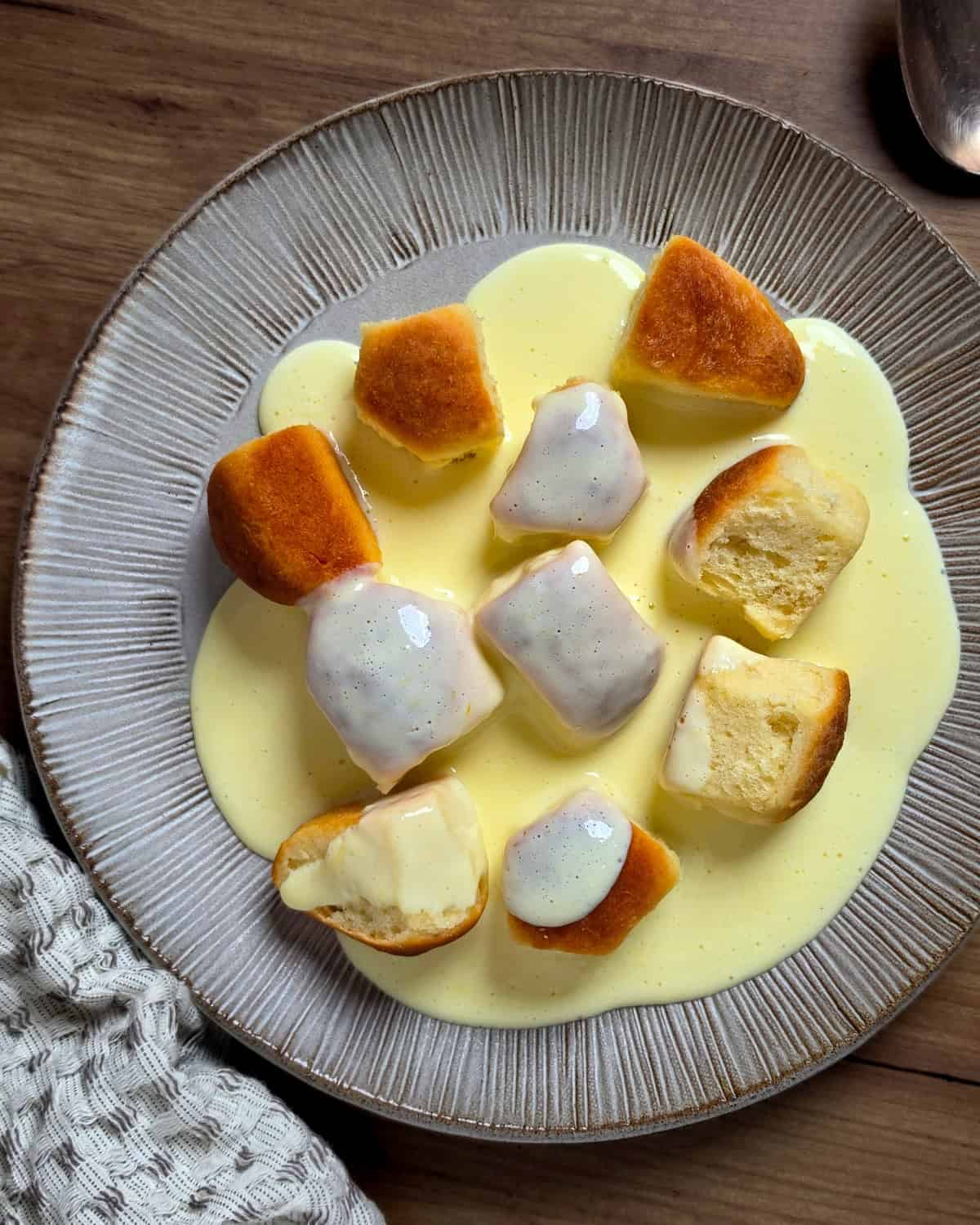
What are dukátové buchtičky? Dukátové buchtičky, or Czech ducat buns, are bite-size yeast buns with no filling. They bake side by side in one dish, so they come out as soft pull-apart buns, brushed with melted butter and served warm under a pourable vanilla custard sauce.
If you have baked with yeast before, this recipe is easy. If you have not, it is a friendly place to start: the dough comes together by hand or in a stand mixer, and the only slow part is rolling about 40 little balls. Plan on about 3½ hours from start to table, most of it rising time, and make the sauce while the buns bake. Back in the 1980s, whenever buchtičky showed up on the menu in our school cafeteria, I was the kid going back for seconds.
Jump to
➜ My best tips on this recipe
- No need to proof the yeast. Both active dry and instant yeast work well when mixed directly into the flour. I tested the recipe with Red Star active dry yeast that my dear friend Sandy brought me from Minnesota when she visited the Czech Republic. The dough rose beautifully!
- Keep the liquids lukewarm, never hot. I warm the milk, stir in the melted butter, and then whisk in the egg. If the mixture is too hot, the egg may start to cook, and the heat can kill the yeast. Remember that kneading also warms up the dough, especially in a stand mixer, so starting with lukewarm liquids is best.
- Homemade custard instead of pudding mix. I make my vanilla sauce from scratch using egg yolks and half-and-half, the closest American match to Czech cooking cream (smetana na vaření, 12% fat). It takes a little extra effort, but the flavor is worth it!
"I remember having dukátové buchtičky at least twice a month. I adored them as a child, but since I emigrated to the USA with my parents in 1986, I couldn't find a recipe until I stumbled upon this one. Thank you, Petra, for showing me how to make the best food of my childhood!"
Alena
Love a sweet lunch? Czech cooks have plenty of them. Try my apple bread pudding (žemlovka) or creamy baked rice pudding (rýžový nákyp). Dumpling fans will love potato dumplings with sweet buttered breadcrumbs (šišky se strouhankou) and fruit dumplings (ovocné knedlíky) filled with blueberries or apricots.
➜ Why they are called ducat buns
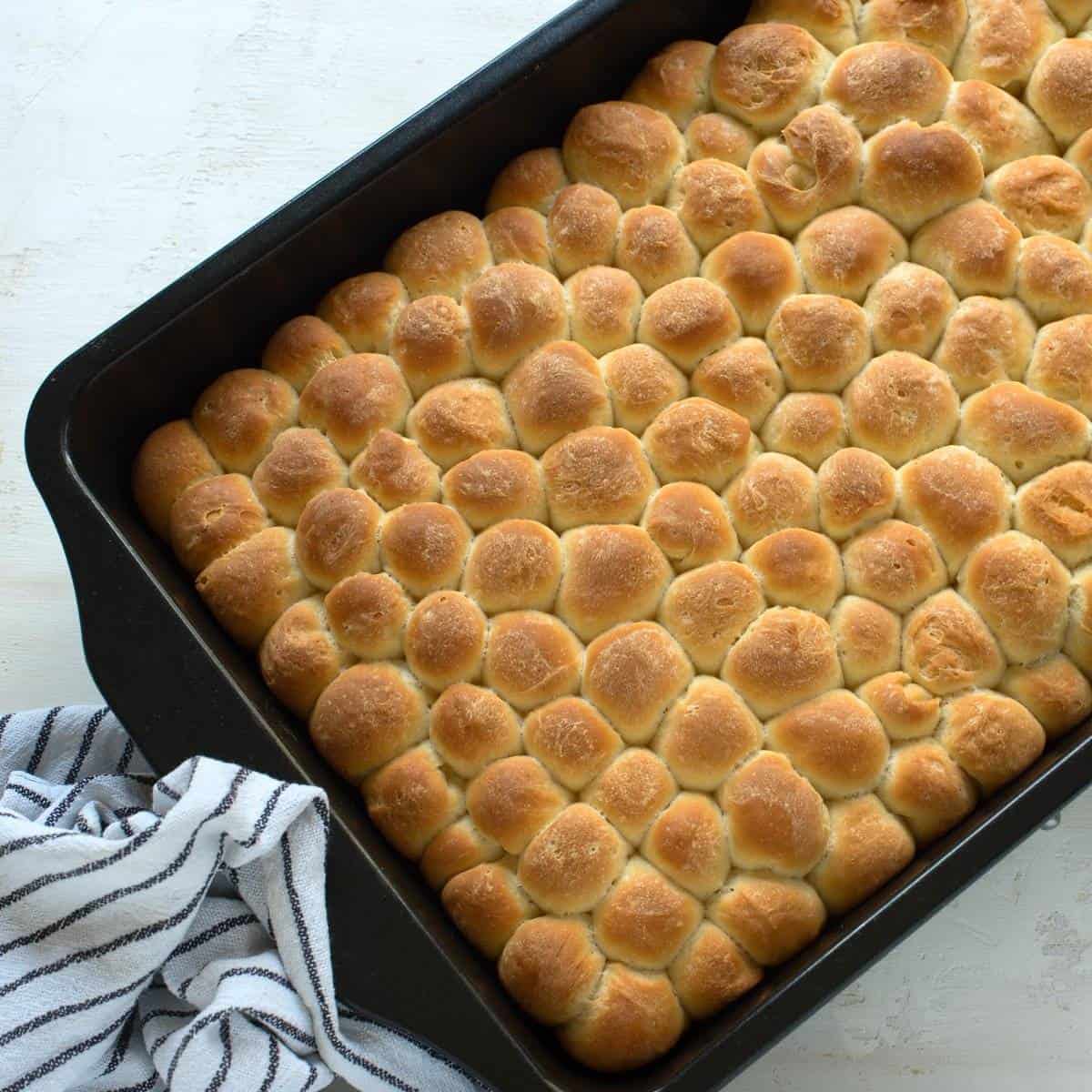
Little yeast buns like these have been baked in Bohemia for over 200 years. A cookbook published there in 1805 by Marie Anna Neudecker already describes baked "vanilla noodles," a sweet yeast dough cut into pieces, baked golden, and poured over with a warm foam of cream or wine whisked with egg yolks. Back then, the pot of buns was set right into the hearth and covered with glowing embers. Butter, cream, and egg yolks were costly, so the dish may well have started in noble kitchens.
The name comes from the Prague Household Cookbook (Hospodářská pražská kuchařka), published in 1819. The buns were packed tightly in the pot, so after baking they tumbled onto the platter like ducats, the old gold coins, poured out of a little purse. In the 1800s, wealthier homes served them with a fancy wine sauce called šodó, while most families made a simple milk or cream sauce, with a little vanilla when they could afford it. Later, school and factory cafeterias switched to sauce made from vanilla pudding powder, and that is the version most Czechs today grew up with.
In my school, buchtičky day split the class in two. Some kids skipped lunch altogether. The rest of us could not wait.
Czech pronunciation
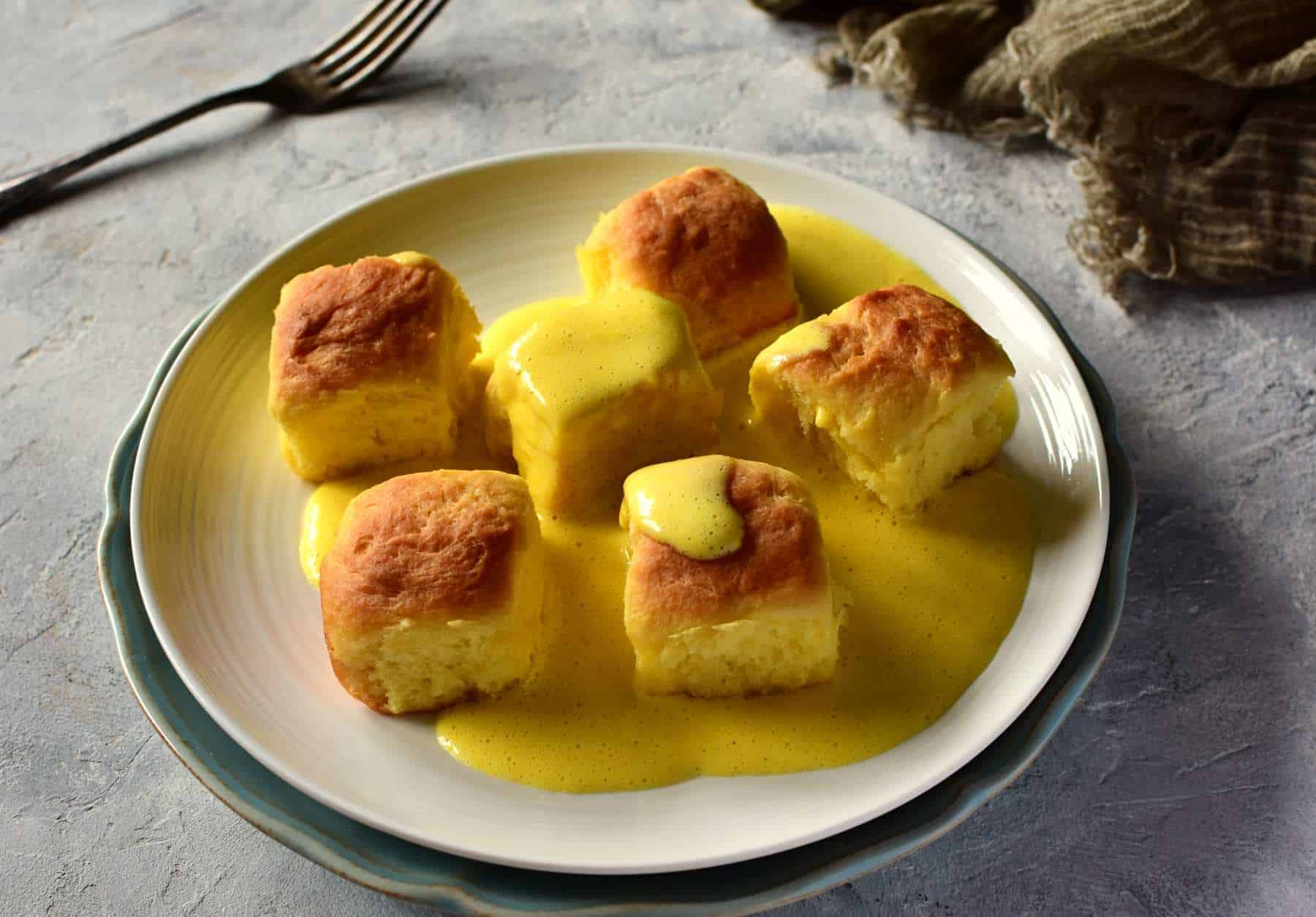
The Czech name sounds harder than it is: dukátové buchtičky. You will also hear buchtičky se šodó. Šodó is simply the French word chaudeau, a warm custard sauce, spelled the way Czechs say it: SHOH-doh. Click and listen to how I say both.
➜ Ingredients
For the buns:
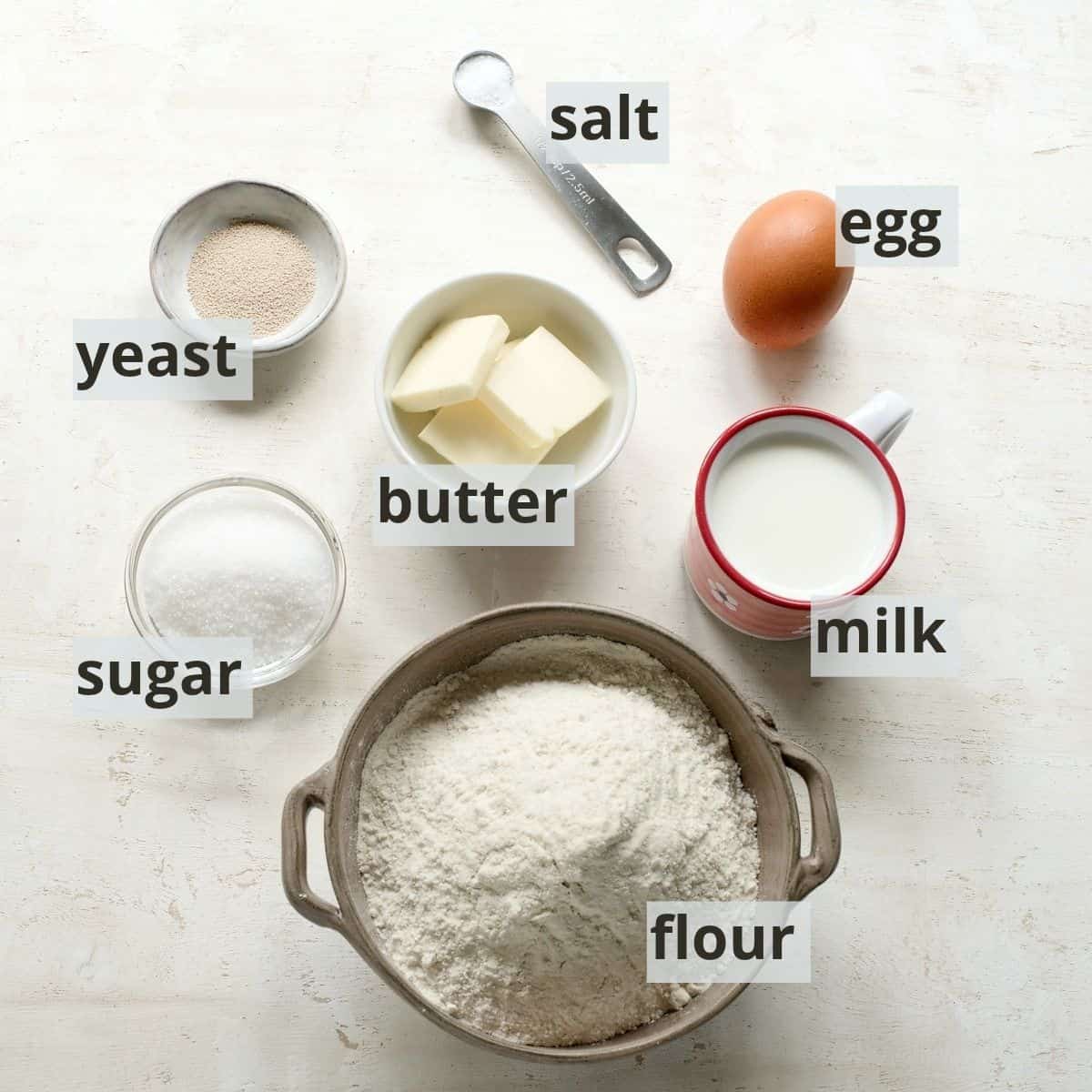
- All-purpose flour. Czech cooks use fine wheat flour (hladká mouka). All-purpose flour is the closest match and behaves similarly.
- Active dry or instant yeast. Either kind works. One packet holds about 2¼ teaspoons, more than this recipe needs.
- Granulated sugar. Just enough to make the dough lightly sweet. The sauce brings most of the sweetness.
- Salt. A little salt keeps the buns from tasting flat.
- Milk. Makes the dough soft and tender.
- Unsalted butter. Some is melted into the warm milk for a soft, rich dough. The rest greases the dish, coats each bun, and gets brushed on right after baking.
- Egg. Adds richness and a golden color.
For the vanilla sauce:
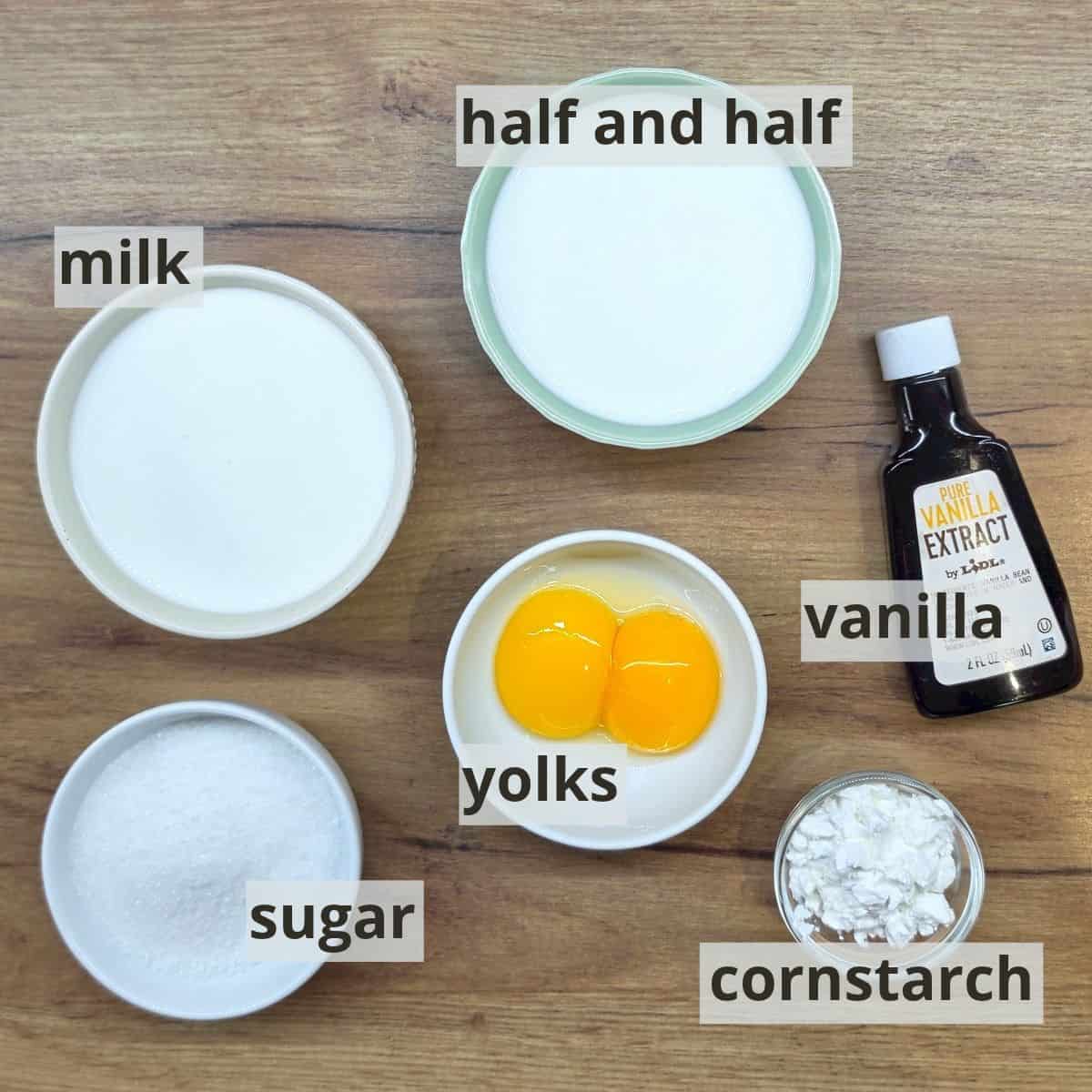
- Milk and half-and-half. Together they make a sauce that is creamy but still pourable. For a richer, thicker sauce, use heavy cream instead of half-and-half.
- Granulated sugar.
- Cornstarch. Thickens the sauce and keeps it smooth.
- Egg yolks. They give the sauce its custard flavor and pale yellow color.
- Vanilla extract. Use pure vanilla extract. Czech cooks usually reach for a little packet of vanilla sugar (vanilkový cukr), sold in every Czech grocery store.
Optional: a splash of spiced rum to stir into the butter for brushing. In the Czech Republic, this would be tuzemák, a spiced-rum-style spirit.
Equipment
- 11 × 7-inch baking dish (about 27 × 20 cm)
- Stand mixer with a dough hook, or a large bowl and a wooden spoon
- Large bowl and plastic wrap for rising
- Pastry brush
- Instant-read thermometer (optional, for the sauce)
➜ How to make dukátové buchtičky
Make the dough:
STEP 1: Mix the dry ingredients. In a mixing bowl, combine the flour, yeast, sugar, and salt. Make a small well in the center.
STEP 2: Prepare the liquids. Melt the butter and stir it into lukewarm milk. Whisk in the egg with a fork. The mixture should feel lukewarm, never hot.
STEP 3: Mix the dough. Pour the liquids into the well and stir with a fork, from the center out, into a rough dough.
STEP 4: Knead. Knead with the dough hook for 8 minutes, or beat with a wooden spoon, until smooth and only slightly sticky.
STEP 5: First rise. Put the dough in a large bowl and cover with plastic wrap. Let it rise in a barely warm oven (on 30 seconds, then off) 1½-2 hours, until doubled.


Do not punch the dough down. If it rises slowly, gently fold it over a few times with a wooden spoon and cover it again. It will rise faster.
Shape and bake the buns:
STEP 6: Short rest. Turn the dough out onto a lightly floured surface. Knead briefly, shape into a ball, cover with a clean kitchen towel, and let rest 10 minutes.
STEP 7: Butter the dish. Grease the dish with butter, pour in a little extra melted butter, and keep the dish somewhere warm so the butter stays liquid.
Instead of the extra melted butter, you can use a neutral oil. Czech cooks reach for sunflower or canola.
STEP 8: Shape the buns. Roll the dough into 1-inch (2.5 cm) ropes, cut into small pieces, and roll into balls. Coat each ball in the butter in the dish.
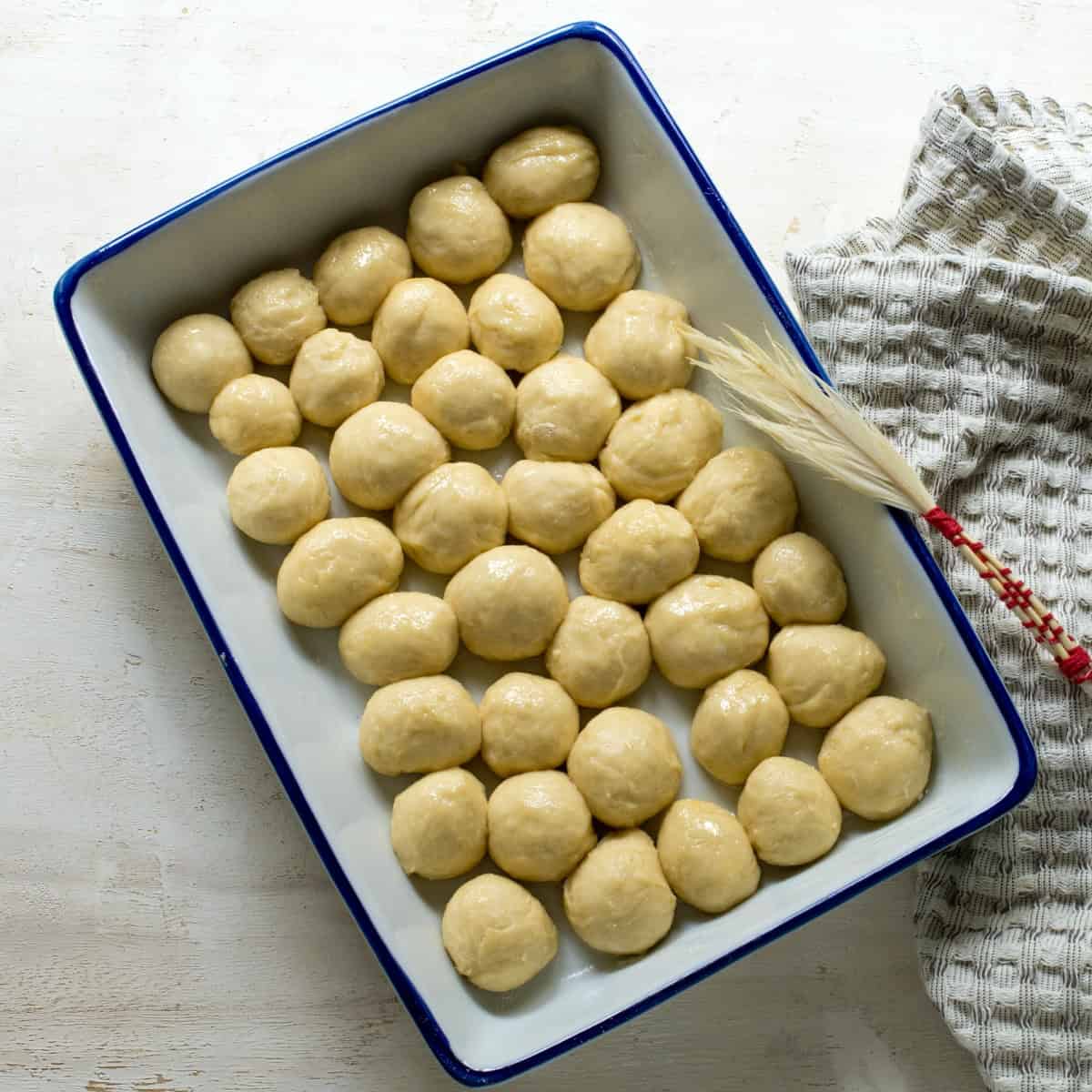
STEP 9: Second rise. Arrange the balls loosely, with room to rise. Cover with a towel and let rise 15-20 minutes. Meanwhile, heat the oven to 375 °F (190 °C).
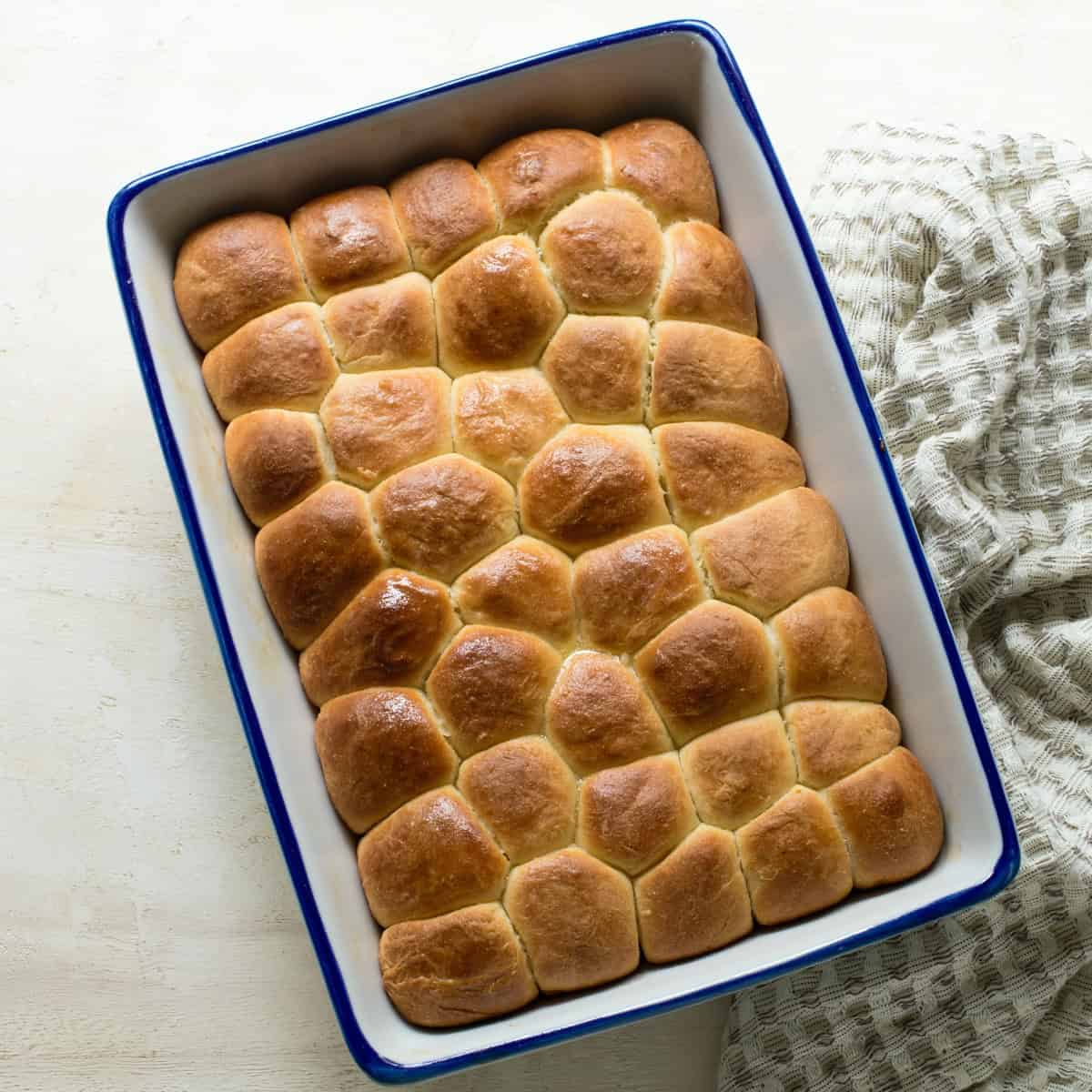
STEP 10: Bake and brush. Bake 20-25 minutes, until golden. Brush right away with the remaining butter, then let the buns cool in the dish for a few minutes.
Make the vanilla sauce:
STEP 11: Warm the milk. In a saucepan, combine the milk, half-and-half, sugar, and vanilla. Heat until warm, not hot, or the cornstarch will form lumps.
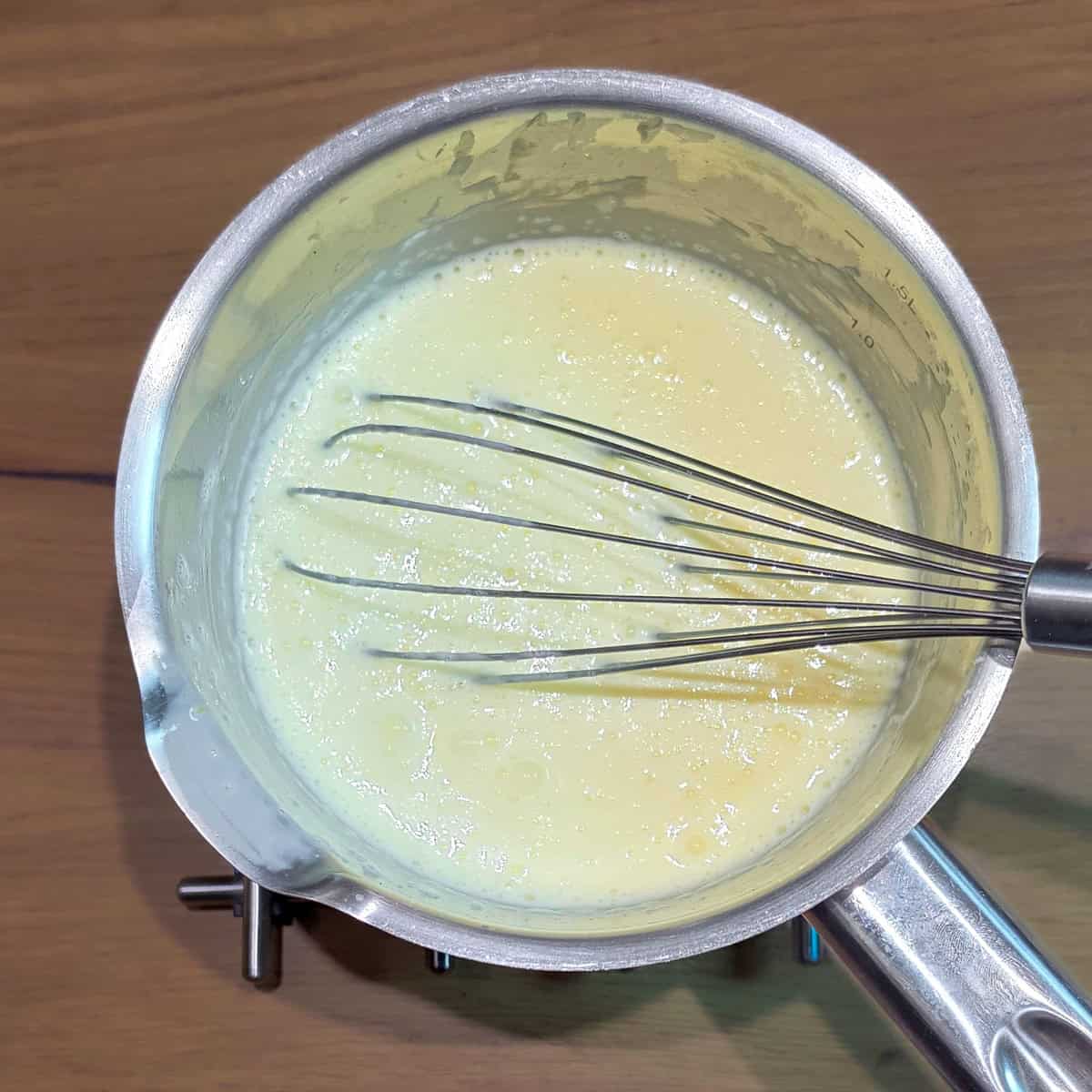
STEP 12: Cook the sauce. Off the heat, whisk in the cornstarch. Return to the heat, and once it bubbles, lower the heat and simmer 1 minute, whisking.
STEP 13: Add the yolks. Take the pan off the heat and let stand 2-3 minutes. Whisk in the yolks one at a time.
STEP 14: Check the heat. If you have a thermometer, the sauce should read at least 160 °F (71 °C). If cooler, warm briefly over low heat, whisking, without boiling.
STEP 15: Cool and serve. Whisk the sauce now and then as it cools, so it thickens evenly. Pull the buns apart and pour the warm sauce over them.
➜ Serving dukátové buchtičky
Serve the buns warm, piled in a deep plate and covered generously with the vanilla sauce. A light dusting of powdered sugar on top is optional. Keep extra sauce in a small pitcher on the table, because someone always asks for more. Dobrou chuť!
➜ How to store buchtičky and vanilla sauce
- Buns: Store in a covered container in the refrigerator for up to 4 days. Warm them briefly in the oven before serving.
- Sauce: Press plastic wrap onto the surface and refrigerate for up to 2 days. It thickens in the fridge. Reheat over low heat with a splash of milk, whisking.
- Freezing: The baked buns freeze well for up to 3 months. The sauce does not freeze well, so make it fresh.
➜ FAQ
Because the word stuck. It first meant a foam of wine and egg yolks, but today Czechs use it for any warm vanilla sauce, so buchtičky se šodó and buchtičky s krémem are the same dish.
Both. In the Czech Republic, they are most often a sweet lunch, served after a bowl of soup. Smaller portions also work as dessert.
Buchty are larger yeast buns with a filling, such as plum jam, poppy seeds, or sweet cheese. Buchtičky are their small, unfilled cousins. Buchteln is the Austrian and German name for the same family of baked buns. For an open-face version with the filling on top, try Czech kolache (koláče).
No. Many brands, including Red Star, say on the packet that the yeast can go straight into the dry ingredients. If you are not sure your yeast is still active, proof it first: stir it into a little warm milk with a pinch of sugar and wait until it foams.
Yes, as long as it gets hot enough. The yolks go into the just-cooked sauce, which should read at least 160 °F (71 °C) on a thermometer, the safe temperature for eggs.
Usually the liquids were too hot and killed the yeast, or the kitchen was too cold. Keep the milk lukewarm and let the dough rise in a barely warm oven. A gentle fold with a wooden spoon helps a slow dough along.
Whisk it hard off the heat, or pour it through a fine sieve. Next time, make sure the milk is only warm, not hot, before you whisk in the cornstarch.
Tried this recipe?
Leave a review down in the comments! ⭐⭐⭐⭐⭐
Other readers and I love hearing what you think. Stay in touch by following me on Facebook and Pinterest. For more Czech stuff, subscribe to my newsletter!
📖 Recipe
Dukátové Buchtičky (Czech Ducat Buns with Vanilla Sauce)
Tap or hover to scale
This recipe was developed in grams. For the most accurate results, tap the purple METRIC toggle and use a kitchen scale.
Ingredients
Dough:
- 2 cups all-purpose flour plus a little for dusting
- 1 ½ teaspoons active dry or instant yeast
- 3 Tablespoons granulated sugar
- ½ teaspoon salt
- 3 Tablespoons unsalted butter melted
- ½ cup milk lukewarm
- 1 egg
For the dish and brushing:
- 4 Tablespoons unsalted butter melted, divided
Vanilla sauce:
- 1 cup milk
- 1 cup half and half or heavy cream
- 5 Tablespoons granulated sugar
- 1 teaspoon vanilla extract
- 1 ½ Tablespoons cornstarch
- 2 egg yolks
Instructions
Buns:
- Mix the dry. Combine 2 cups all-purpose flour, 1 ½ teaspoons active dry or instant yeast, 3 Tablespoons granulated sugar, and ½ teaspoon salt in a bowl. Make a well in the center.
- Add the liquids. Stir 3 Tablespoons unsalted butter, melted, into the lukewarm ½ cup milk and whisk in 1 egg. Pour into the well and stir with a fork into a rough dough.
- Knead. Knead with a dough hook for 8 minutes, or beat with a wooden spoon, until smooth and only slightly sticky.
- First rise. Cover with plastic wrap. Let rise in a barely warm oven (on 30 seconds, then off) for 1½-2 hours, until doubled.
- Short rest. Knead briefly on a floured surface, shape into a ball, cover with a towel, and rest 10 minutes.
- Butter the dish. Grease the baking dish with some of the 4 Tablespoons unsalted butter and pour in a little more. Keep the dish warm so the butter stays liquid.
- Shape the buns. Roll the dough into 1-inch (2.5 cm) ropes, cut into small pieces, and roll into balls. Coat each in the butter and arrange loosely.
- Second rise. Cover and let rise 15-20 minutes. Heat the oven to 375 °F (190 °C).
- Bake and brush. Bake 20-25 minutes, until golden. Brush at once with the remaining butter and cool a few minutes in the dish.
Vanilla sauce:
- Warm the milk. In a saucepan, heat 1 cup milk, 1 cup half and half, 5 Tablespoons granulated sugar, and 1 teaspoon vanilla extract until warm, not hot.
- Cook the sauce. Off the heat, whisk in 1 ½ Tablespoons cornstarch. Return to the heat, and once it bubbles, lower the heat and simmer 1 minute, whisking.
- Add the yolks. Off the heat, let stand 2-3 minutes, then whisk in 2 egg yolks one at a time. Whisk now and then as it cools.
- Serve. Pull the buns apart and pour the warm sauce over them.
Notes
- Oven: Temperatures are for a conventional oven. For convection, use 350 °F (175 °C).
- Liquids: Keep the milk mixture lukewarm. If it is hot, it kills the yeast.
- Food safety: After the yolks go in, the sauce should read at least 160 °F (71 °C). If cooler, warm briefly without boiling.
- Cream: Half-and-half is close to Czech cooking cream (12% fat). Heavy cream makes a richer, thicker sauce.
- Quick version: Spread the whole dough in the dish, cut it into a grid, let it rise, and bake.
- Rum: Add a splash of spiced rum to the butter for brushing.


Alena says
I grew up in former Czechoslovakia, and I remember having dukátové buchtičky at least twice a month. I adored them as a child, but since I emigrated to the USA with my parents in 1986, I couldn't find a recipe until I stumbled upon this one. Thank you, Petra, for showing me how to make the best food of my childhood!
SR says
Love this! Can you also provide a recipe for Bramborové šišky s mákem in English? My great-aunt made them when I was a child amd I am sad that I cannot pass this recipe also on to my children as the only recipes I can find are in Czech!
Petra Kupská says
Hi and thanks for your comment! Here's a recipe for "bramborove sisky": instead of fried breadcrumbs, sprinkle them with ground poppy seeds mixed with powdered sugar and top with melted butter.
Dough for sisky in the Czech Republic is usually made with coarse flour (hrubá mouka), but all-purpose flour works just as well. The dough is very simple, you need potatoes pre-cooked in the skin, let them cool, peel them, and add an egg and a bit of salt, and enough flour to make a non-sticky dough. Quickly shape the sisky, then put them to boil in water. Sprinkle the sisky according to taste, it can be made both sweet and salty - for example, with braised cabbage and cubes of fried bacon.
SR says
Thanks so much - I truly appreciate this! Can you provide some measurements for the ingredients?
SR says
Oh I found them at the bottom of the recipe - thanks!
Petra Kupská says
You are very welcome, I hope you enjoyed the recipe! 😊