

When your garden or the farmers' market overflows with sweet peppers and ripe tomatoes, this is the dish that turns them into dinner. Hungarian lecho, lečo in Czech, is the one-pan summer stew I have been eating since childhood, and it needs nothing more than a slice of fresh bread.

What is lecho? Lecho is a simple vegetable stew made from onions, sweet peppers, and ripe tomatoes, thicker than a soup and closer to a chunky sauce. The dish comes from Hungary, where it is called lecsó, but it is loved across Central Europe; you may also see it spelled letcho or leczo. My version is the Czech twist I grew up with: the stewed vegetables are thickened with eggs, and pan-fried rounds of sausage make it a full meal.
There is nothing tricky about it: one pot, about 30 minutes, and you do not need any cooking experience. Lecho tastes best in late summer, when peppers and tomatoes are at their peak, and it is a clever way to use up a big harvest, since it also cans beautifully for winter. Serve it with rye bread or boiled potatoes. This is my tried and tested Czech recipe that simply tastes good.
Jump to
➜ Two tips for perfect lecho
- Fry the sausage rounds in a skillet first. Browning builds a layer of flavor that raw slices dropped into the pot never give the stew.
- Stir in the eggs at the end to thicken the stew. Stewed peppers and tomatoes release a lot of liquid; eggs bind it into a rich sauce. And if a little lecho sauce stays on the plate, that is fine, bread was made for it.
"It is a taste from childhood and I started cooking it occasionally again a couple of years ago. I also like to add a bit of kmín and serve with boiled potatoes"
Paul
Lecho is a summer main course, but it keeps good company all year. If you enjoy Hungarian cooking, try lángos, the famous fried flatbread, another favorite of mine; and for heartier classics, my readers love Szegedin goulash (segedínský guláš) and chicken paprikash with dumplings.
Czech pronunciation
Curious how to say lečo the way we do back home? It sounds like LEH-choh, short and simple. I recorded a short audio clip for you, so click and listen.
➜ Ingredients
✅ See the recipe below with step-by-step photos and many helpful tips. Scroll down for the full printable recipe in both US cups and metric measurements.
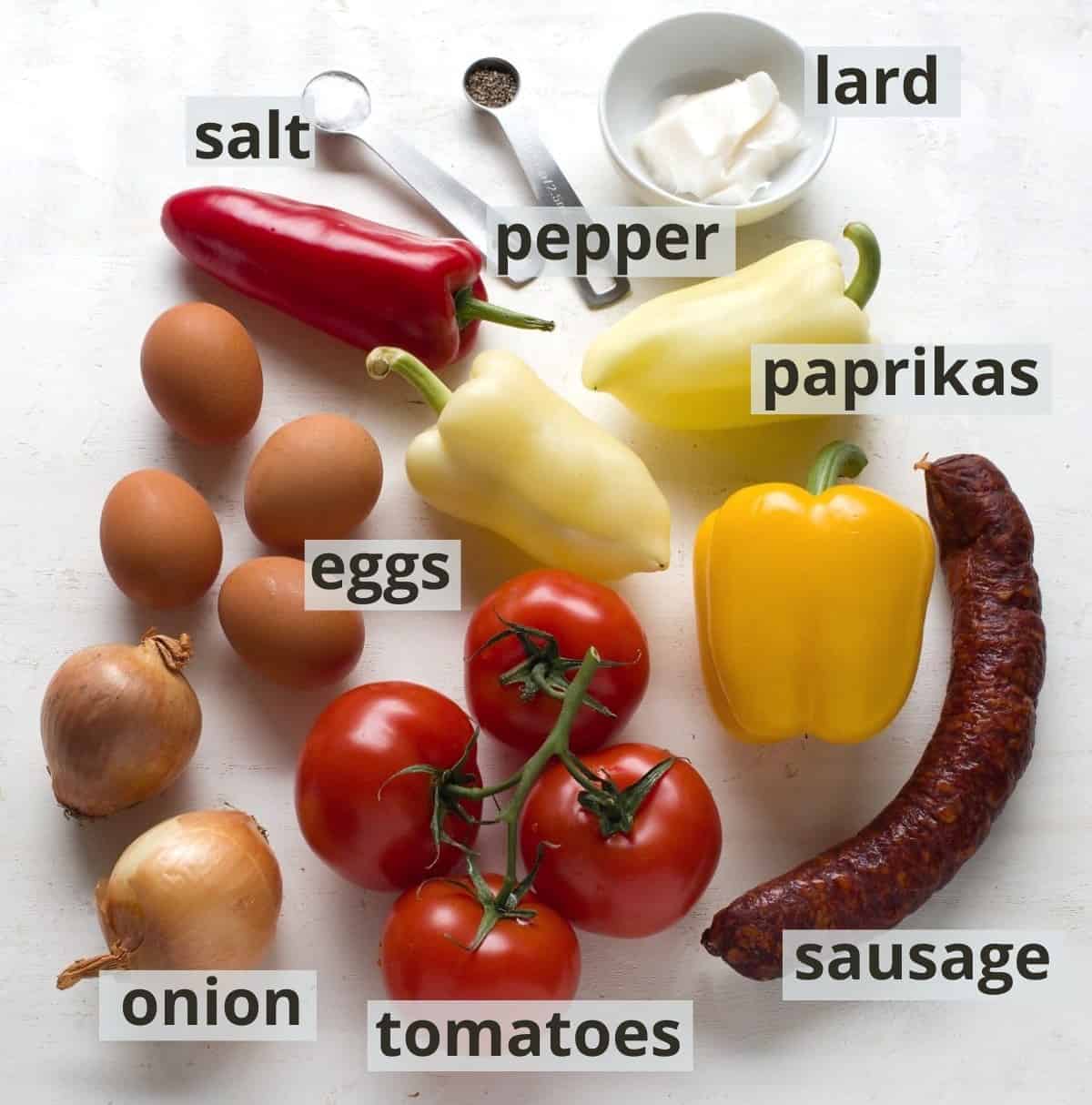
- Sweet peppers, Hungarian cooks use pale, yellow-green Hungarian wax peppers; abroad, banana peppers come closest, and red or yellow bell peppers work well too, they just need a few more minutes of stewing. Use whatever sweet peppers are in season and will not cost a fortune.
- Tomatoes, ripe and juicy; they give the stew its flavor and most of its liquid.
- Onions
- Eggs
- Sausage, ideally a spicier Hungarian-style one. In the Czech Republic I use ostravská klobása, a coarse smoked sausage. Abroad, look for Polish kielbasa or Hungarian kolbász at a European deli. One of my readers swaps in cured chorizo with good results.
- Lard, the traditional fat here, or a neutral vegetable oil such as sunflower or canola; olive oil works as well.
- Salt and black pepper
➜ How to make Hungarian lecho the Czech way
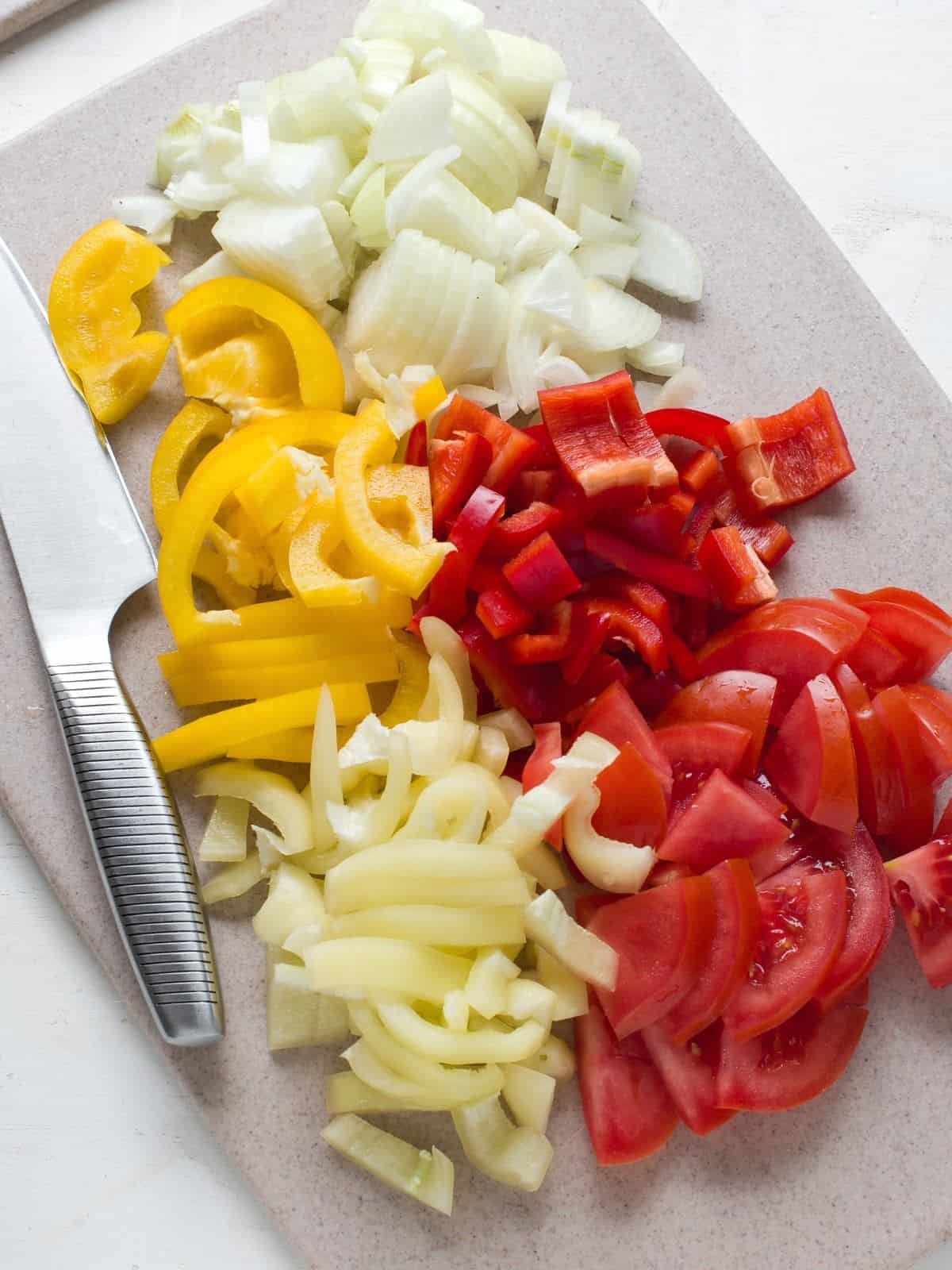
STEP 1: Prepare the vegetables. Wash the tomatoes and peppers. Halve the peppers and scoop out the seeds, then cut them into strips or wedges. Peel and finely chop the onions.
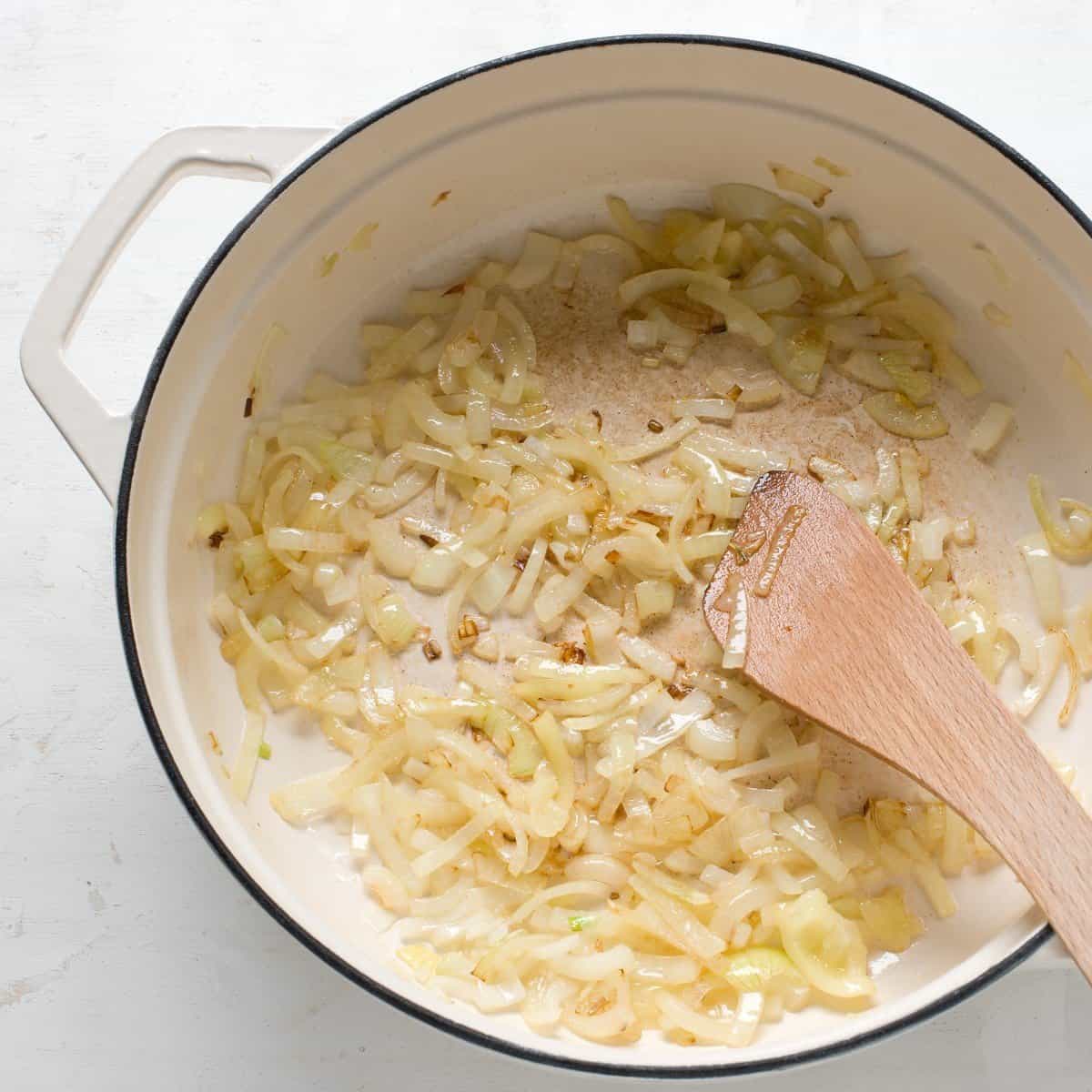
STEP 2: Fry the onions. In a large pot, heat the lard over medium heat and fry the onions until they soften and just begin to turn golden.
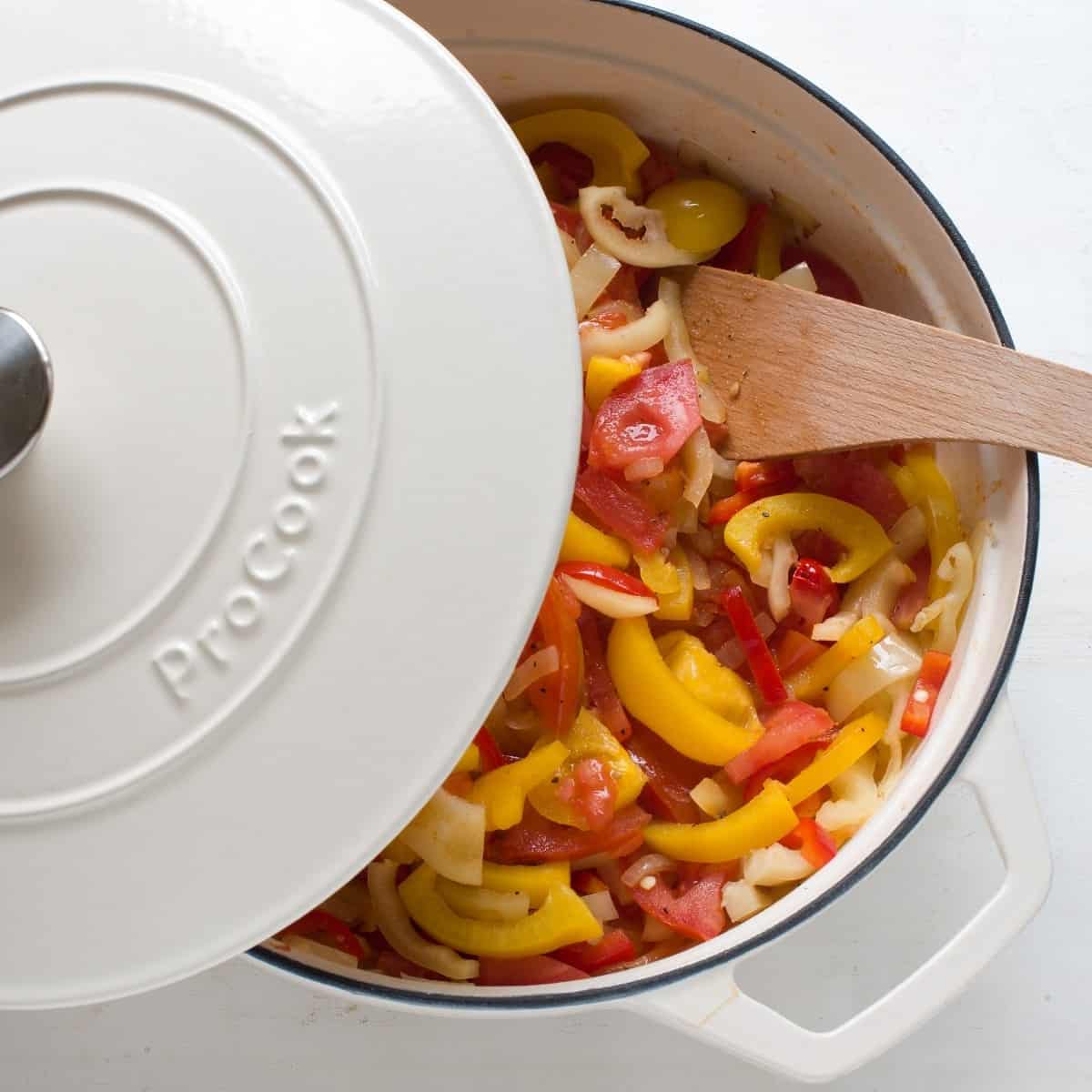
STEP 3: Stew the vegetables. Add the peppers and tomatoes, season with salt and black pepper, and stir. Turn the heat down, cover the pot with a lid, and let everything stew for 10 minutes.
STEP 4: Fry the sausage. Meanwhile, slice the sausage into rounds and fry them in a little fat in a separate skillet until browned.

STEP 5: Thicken with eggs. Take the pot off the heat. Crack in the raw eggs and stir; the heat of the vegetables will cook them as you go. If the stew still looks thin, return the pot to low heat for a few more minutes and keep stirring until the eggs thicken it. Do not overcook the eggs.

STEP 6: Add the sausage. Stir the fried sausage rounds into the lecho and serve.
➜ How to serve lecho
Lecho is filling enough to eat on its own. At our table it gets a side of boiled potatoes or a thick slice of bread to mop up the sauce; potatoes turn it into a heartier dinner, bread keeps it light. A sprig of fresh parsley on top makes the red stew look even better. Dobrou chuť!

➜ Storage
- Let leftover lecho cool, then keep it in an airtight container in the fridge for 3 to 4 days.
- I do not recommend freezing the finished stew: the eggs turn grainy after thawing. If you want a freezer stash, freeze the stewed vegetable base on its own, without eggs and sausage, for up to 3 months, and stir in fresh eggs and fried sausage after reheating.
- To reheat, warm the lecho gently in a pot over low heat with a splash of water.
Making a big batch for winter? Lecho also cans well in jars; just leave out the eggs and sausage, the same as for freezing.
➜ FAQ
Yes. You crack them in raw at the very end, off the heat, and stir until they bind the stew. Do not let them scramble into firm curds.
Yes. Bell peppers work well when you cannot find Hungarian wax or banana peppers; just give them a few extra minutes of stewing, since they are firmer.
Not the finished dish, since the eggs turn grainy once thawed. Freeze the plain stewed vegetables instead, then add fresh eggs and sausage after reheating.
Tried this recipe?
Leave a review down in the comments! ⭐⭐⭐⭐⭐
Other readers and I love hearing what you think. Stay in touch by following me on Facebook and Pinterest. For more Czech stuff, subscribe to my newsletter!
📖 Recipe

Hungarian Lecho
Tap or hover to scale
This recipe was developed in grams. For the most accurate results, tap the purple METRIC toggle and use a kitchen scale.
Ingredients
- 1 Tablespoon lard or neutral oil (sunflower or canola)
- 2 medium onions peeled and finely chopped
- 4 sweet peppers seeded, cut into strips; Hungarian wax, banana, or bell
- 6 medium tomatoes cut into wedges
- 1 teaspoon salt or more, to taste
- ¼ teaspoon black pepper ground
- 7 ounces sausage Polish kielbasa or Hungarian kolbász, sliced into rounds
- 4 eggs
Instructions
- Wash 6 medium tomatoes and 4 sweet peppers. Halve the peppers, scoop out the seeds, and cut them into strips or wedges. Peel and finely chop 2 medium onions.
- In a large pot, heat 1 Tablespoon lard over medium heat and fry the onions until they soften and just begin to turn golden.
- Add the peppers and tomatoes. Season with 1 teaspoon salt and ¼ teaspoon black pepper, stir, then lower the heat, cover, and stew for 10 minutes.
- Meanwhile, slice 7 ounces sausage into rounds and fry them in a little fat in a separate skillet until browned.
- Take the pot off the heat. Crack in 4 eggs and stir until they thicken the stew. If needed, return to low heat for a few minutes, stirring, until thickened. Do not overcook the eggs.
- Stir the fried sausage into the lecho and serve.
Notes
- Peppers: Hungarian wax or banana peppers are traditional; bell peppers work but need a few extra minutes.
- Eggs: added raw at the end. Stir them in off the heat so they thicken the stew without scrambling into firm curds.
- No kitchen scale? Average piece weights: 1 medium onion ≈ 4 oz (110 g), 1 sweet pepper ≈ 5 oz (135 g), 1 medium tomato ≈ 5 oz (150 g).
- Store: airtight in the fridge for 3 to 4 days. To freeze, freeze the plain stewed vegetables only, without eggs or sausage; the eggs turn grainy after thawing.
- Stronger flavor: add a dash of chili to the vegetables while they stew.
- Canning: to preserve in jars, leave out the eggs and sausage.




BrigittaV says
Exactly as my mother used to make! I make it every summer, too. It is easy and fast, healthy for you and delicious. If there are no east european delis around you, the sausage can be mail ordered. I have also substituted cured chorizo without any noticeable loss of taste, or the sausages can be omitted. It is still good without them. And if I crave lecso in the winter, I substitute canned chopped tomatoes for fresh.
Petra Kupská says
Thank you so much, Brigitta, for your comment with so many insightful tips! In our house, we also sometimes have lecho without sausage, especially if I'm only eating with the kids. My husband likes meat, I always add sausage for him. Greetings from Bohemia, Petra
Sandra says
Looking forward to making this! 1 question: are the eggs added in raw? Thanks!
Anicka Cooklikeczechs.com says
Ahoj Sandra, thank you for asking! The eggs are indeed added in raw, to thicken the dish. And please, let me know how the cooking turns out - fingers crossed!
Kay says
This was a staple growing up in my house, as my Mum is Hungarian. This recipe is exactly how my family makes it. Thanks for sharing with others 🙂
Petra Kupská | Cook Like Czechs says
It is amazing that our culture meet in this recipe. And you are welcome! 🙂