

Many people are hesitant to bake with yeast dough. A common worry about baking bread, pizza, or other pastries is that the dough won't rise enough. Let me show you my simple, tried-and-true method for rising dough in the oven, which ensures constantly a perfect result even if you are a beginner!
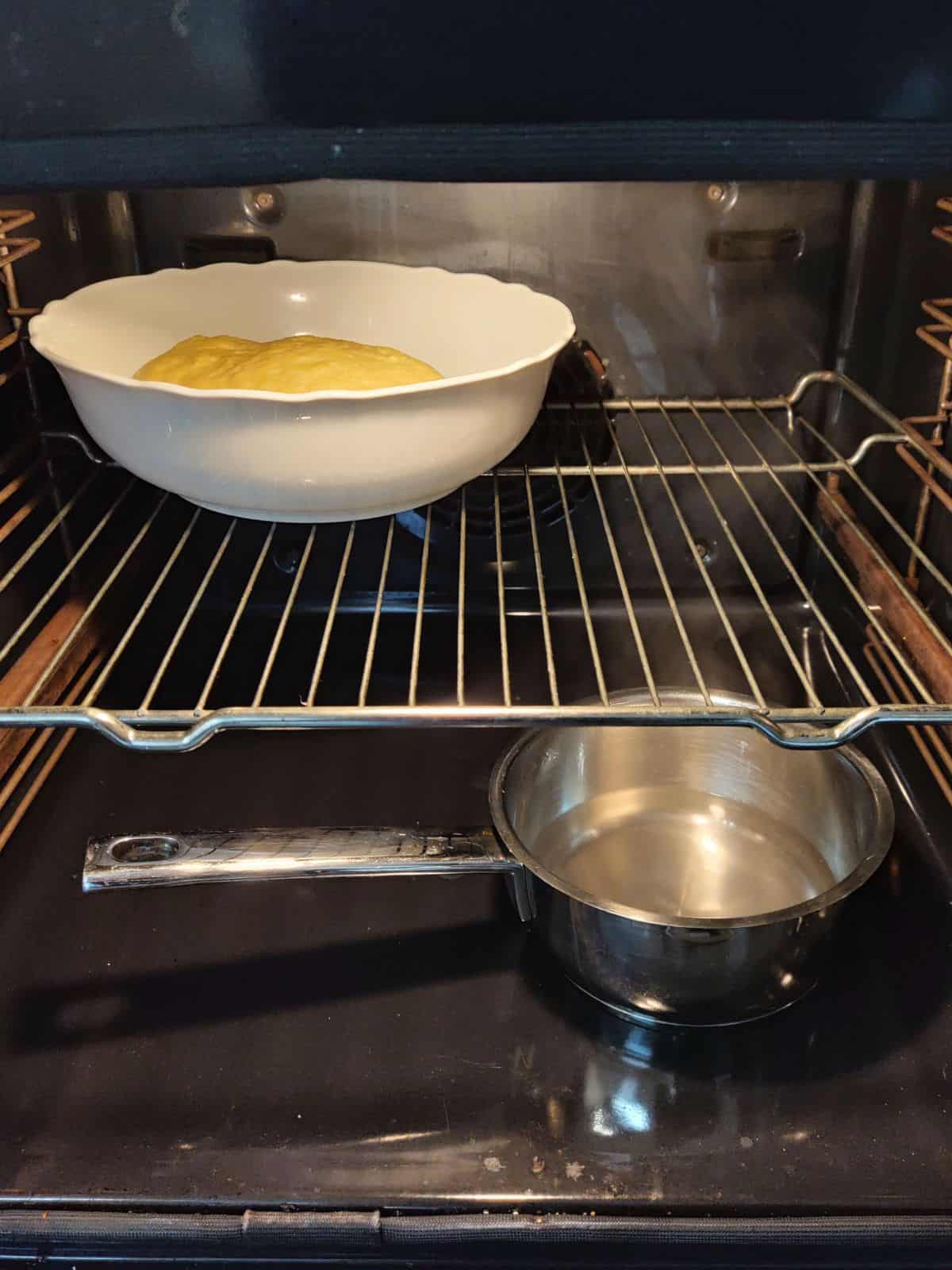
The basic idea is that you already have smooth, kneaded dough made from the ingredients in the recipe. The types of yeast you used include either active dry yeast or fresh yeast.
Now the recipe says to let the dough rise in a warm place until it has doubled in size.
Here's what you do:
- Fill a pot or larger mug with hot steaming water.
- Place the pot of water in the bottom of your turned-off oven.
- Move the oven rack to the upper position so that you can still place a bowl of dough on it.
- Put the bowl of dough on a wire rack, ideally in a corner, so that it doesn't sit directly above the pot of steaming water.
- Close the oven door and let the dough rise. Do not turn on the oven, not even to the lowest temperature!
This technique is equally effective for shaped dough or dough in a bowl.
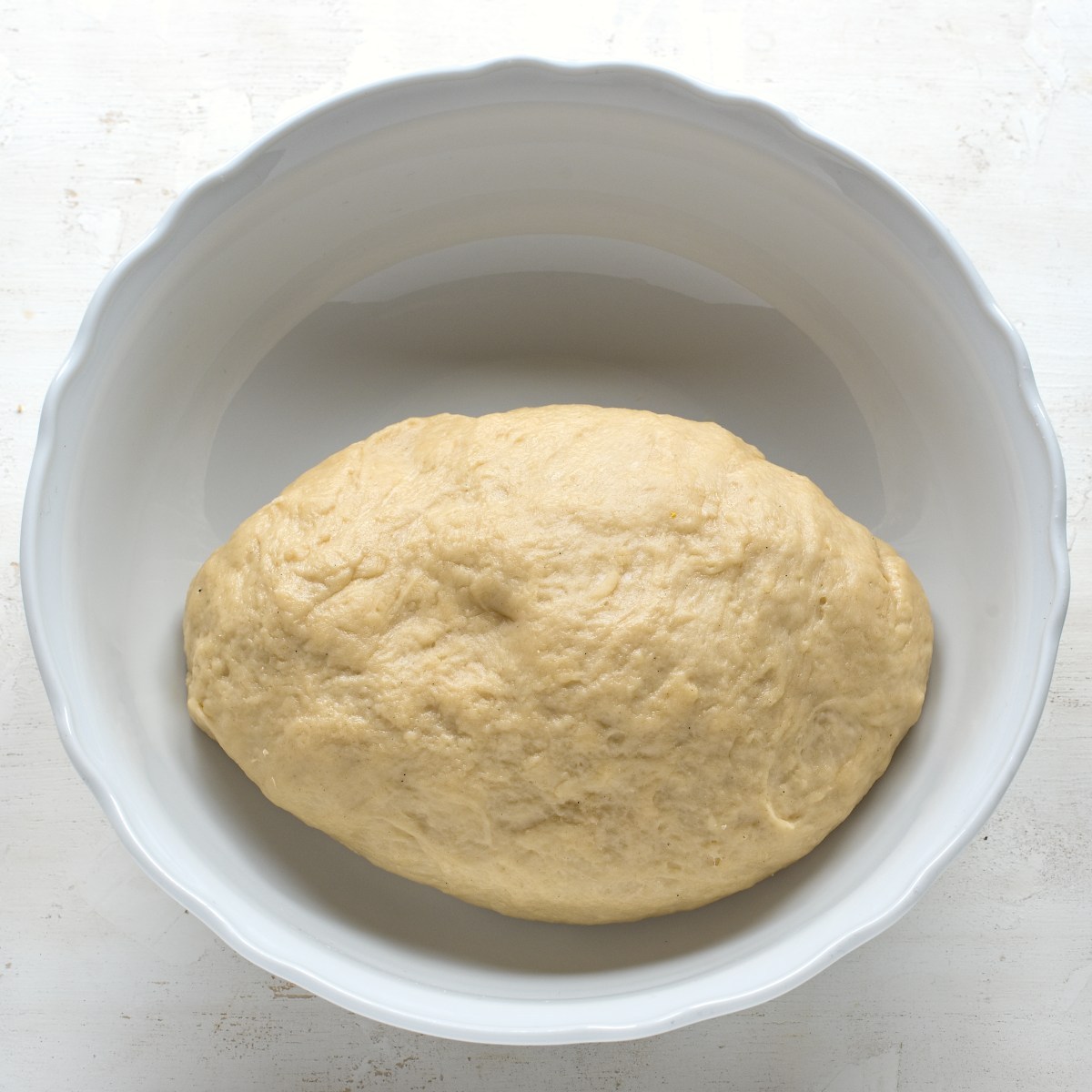
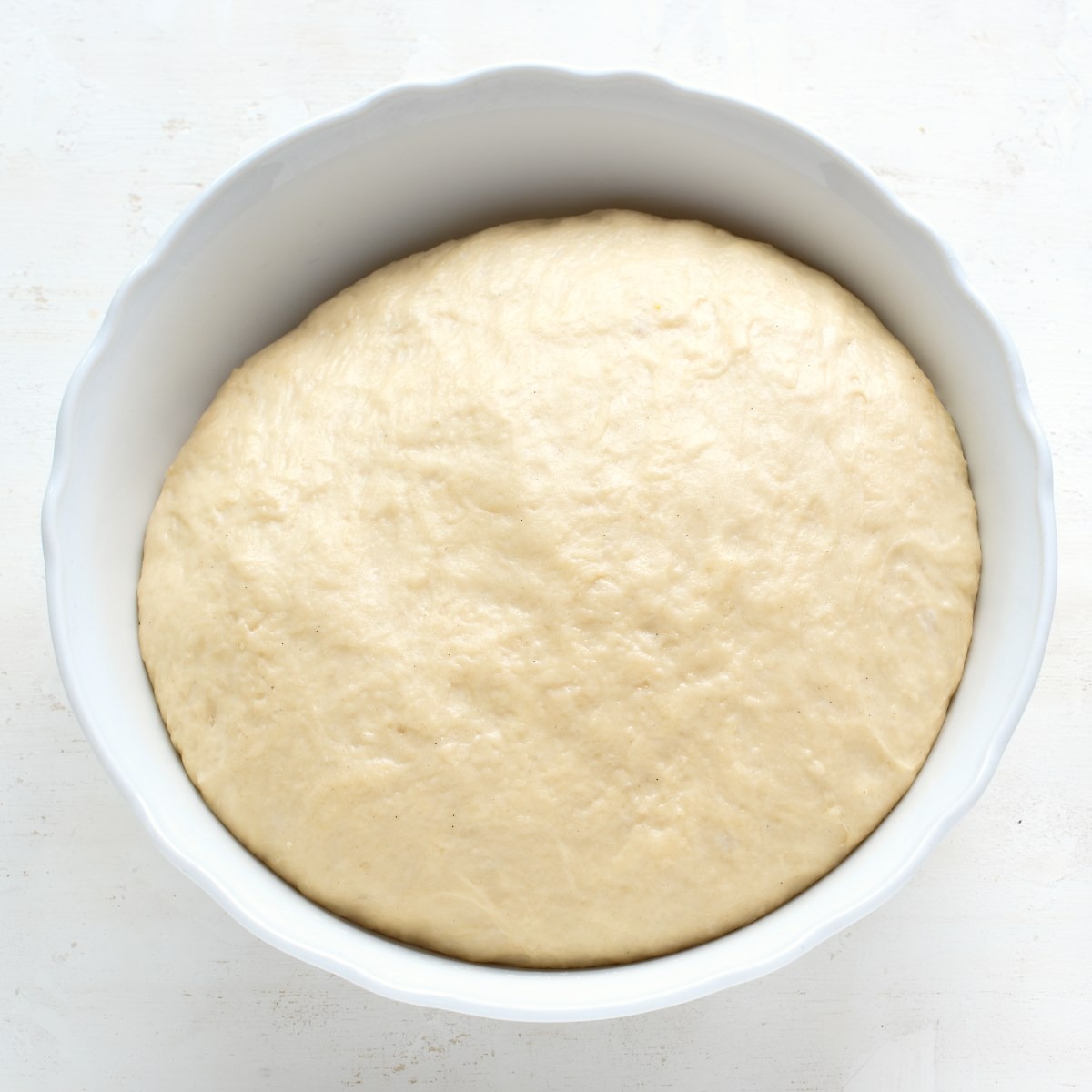
5 Benefits of rising dough in the oven
- Hot water and steam create the perfect conditions for the dough to rise inside the oven. They help achieve consistent results with better flavor development and texture.
- The moist, warm environment makes dough rise faster than simply letting it sit on the counter.
- The humidity inside the oven will keep the dough from drying out while rising. You don't need to cover the bowl with plastic wrap or a kitchen towel.
- This method will allow the dough to rise in any outdoor conditions, for example, if your house is cold in the winter months or your kitchen is drafty.
- Rising the dough in a turned-off oven with a pot of hot water will ensure an even distribution of mild heat without damaging the dough.
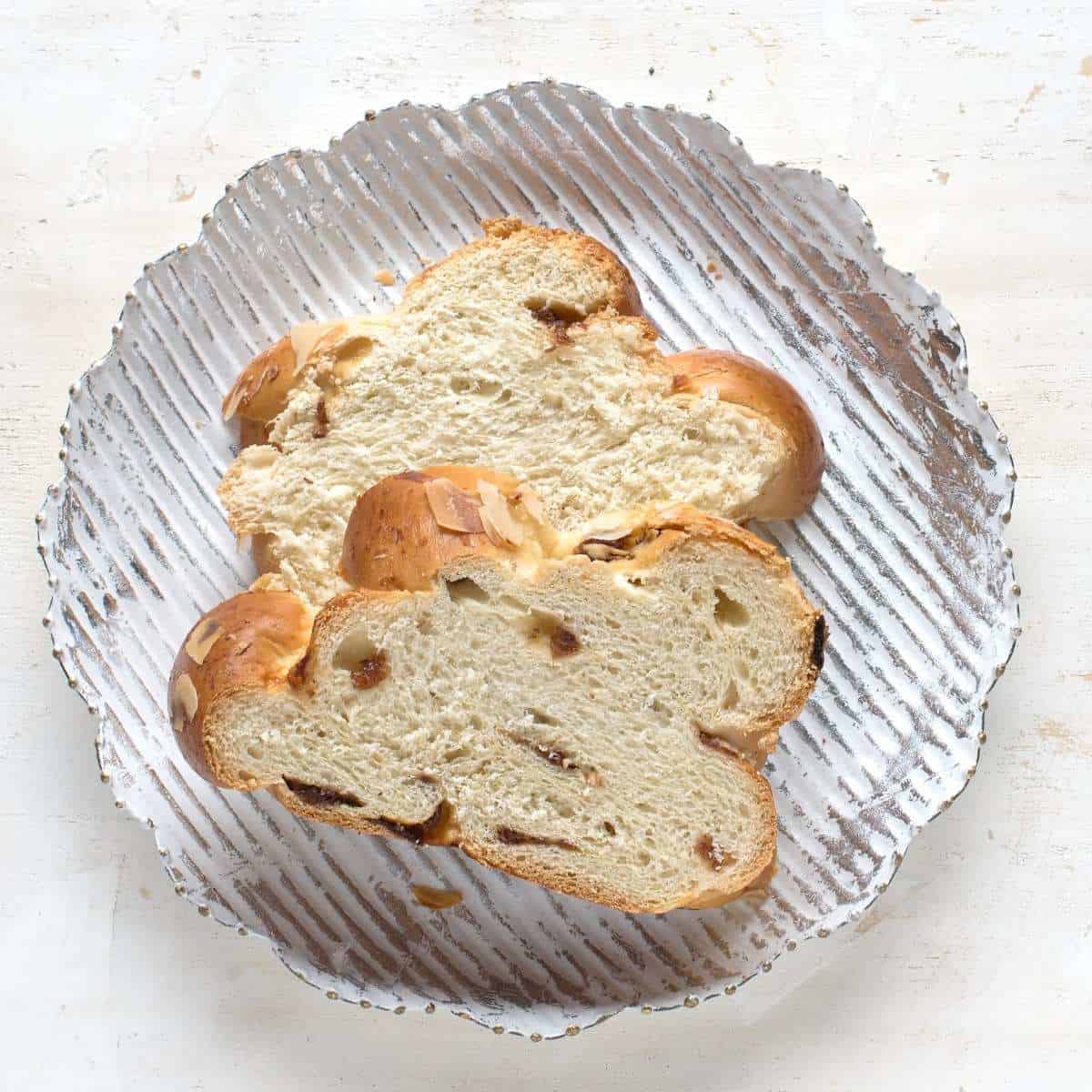
I learned this oven-proofing method many years ago while working as a student in a professional bakery.
They had there high racks into which we stacked baking sheets with pastries. We always moved the racks to a large steam room, which was warm and full of moisture. The dough inside was rising like crazy!
For my home baking, I found a clear answer to the question of where to rise dough and how to speed up the rising process.

Frequently asked questions
Yeast dough rises due to the production of carbon dioxide gas that is released by the yeast. This gas gets trapped in the dough, causing it to expand and rise.
Generally speaking, yeast dough needs 1-3 hours to double in size. The rise time is affected not only by the environment in which the dough is allowed to rise but also by the amount of fat in the dough. The more fat in the dough, the heavier it is and the longer it takes to rise.
While light doughs for bread or dumplings rise faster, rich doughs for sweet pastries require much more time.
There are several possible reasons your dough may not be rising, even in the warm and moist environment of the oven.
One of the most common causes is that the yeast you are using is old or weak.
Another possible reason is that you didn't dissolve the yeast in warm liquid with a little bit of sugar before pouring it into the dough.
Furthermore, if you used too much flour or not enough liquid, the dough may not rise as desired.


Django says
What a great tip. Thanks for sharing.
Anicka Cooklikeczechs.com says
You are welcome!
Cindy says
I still have problems getting dough to rise. I tried the pot hot water idea but no luck. apparently my dough was not enough water (although used measurements given) also think the Butter inhibited the yeast. I checked everything else. warm water good yeast etc. No rise Nut roll.! I want to try klockys but should i try instant rise yeast.?
Jane Simek says
Cindy, I keep my jar of dry active yeast in the fridge to make sure that it will stay fresh up to the best before date. I take the butter and eggs out of the fridge at least 1 hour before I start making the dough. You don't need to melt the butter. I cut it into 1/2 inch cubes so it would get uniform room temperature. The milk has to be lukewarm, slightly wormer than your finger. I stir it to get uniform temperature before I stick my clean finger in it to check the temperature. I use 2 1/4 tsp of dry active yeast for 2 cups of milk. (Enough for dough made of 5 cups of flour, which makes about 44 kolaches.) I stir it into the lukewarm milk and I add 1 tsp of granulated sugar to feed the yeast. I cover the pot and let the yeast rise for about 15 minutes. The risen yeast should look puffy. (If I don't see the beautiful puffiness, that means that the yeast is too old and no longer active. In which case, I through it out and run to the store to get a new jar of dry active yeast.) Then I start adding 1 cup of flour mix the dough, then bit of the milk with yeast. I make sure that I mix the dough well before adding another cup of flour followed by the milk yeast mixture, and I keep alternating and mixing in between each addition until all the flour and all the milk yeast mixture is incorporated into the dough. Next important step: I heat enough water to fill my large ceramic mixing bowl. I let the hot water sit inside the bowl for about 10 minutes, until the bowl starts feeling warm when I touch it on the outside. I pour out the water, dry the inside of the bowl with a kitchen towel and put about 1/2 tsp of oil in the bowl to grease it from bottom to the rim.
Then I transfer the mixed dough into the ceramic bowl and roll the ball of dough inside the bowl to get it greased all over a bit. I cover the bowl with plastic wrap and a dry kitchen towel and I put it in the oven. I don't add anything else inside the oven. I just turn the OVEN LIGHT ON for about 20 minutes and then turn the light off. I DON'T open the oven door. The heat from the lightbulb is enough to help the dough rise beautifully. It takes about 90 minutes for the dough to rise to more than double in size. I never punch down the dough before I start forming and filling the kolaches. I bake my kolaches at 350F for about 20 - 25 Minutes, until golden. My oven is large enough to hold two 15.25 x 10.25 x .75 inches baking pans, side by side.
Petra Kupská says
Jane, thank you so much for taking the time to write all this down for Cindy! The oven light trick and the warmed bowl are exactly the little details that make yeast dough succeed. I truly appreciate it, you are one of those readers whose answers are always well informed and helpful. 🧡
cat todd says
what temp do you turn the oven up to before turning it off (i apologize if you stated this)..
Petra Kupská says
Hi, the oven is turned off, and I just place a pot of warm to hot water on the bottom—just 1 to 2 inches. By closing the oven door, you create an ideal, moist, and warm environment inside for the yeast dough to rise.
Julia says
I'm using my dad's Houska recipe. My loafs do not rise as high as his did. I'm doing two rises. His were well above the pan, mine are flat. ? gonna try the steam proof you recommended here, too.
Thank you
Janet says
Hi Petra, I love this tip on how to limit the dough rising time. When you use this method, about how long does a houska dough take to double in size?
Petra Kupská says
I am so glad you found the tip useful! 😊 For houska dough, usually takes about 40 minutes at room temperature for the dough to double in size with this method it could be reduced about a half. Of course, the exact time can vary a bit depending on your kitchen and the specific yeast you’re using. It is still better to go by the looks then time exactly.