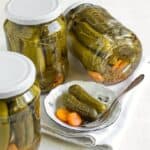
Homemade Dill Pickles (Czech Recipe)
Dill pickles are a staple in Czech cuisine, canned in a sharp sweet and sour brine with fresh dill, onion, carrot, and aromatic spices. You can easily make these crispy Czech-style dill pickles at home. Just follow the detailed canning recipe below.
Servings 4 jars
Calories 339kcal
Equipment
- 4 1-quart mouth wide jars with rings and new lids
- 1 large stock pot for water bath
- 1 jar lifter
- 1 canning thermometer
Ingredients
- 4 pounds pickling cucumbers size 2 ½-5 inches
Pickling brine:
- 3 ½ cups water
- 2 ½ cups distilled white vinegar 5% acidity
- ¾ cup granulated sugar
- 2 Tablespoons salt
Herbs and spices:
- 16 allspice (4 per jar)
- 32 peppercorn (8 per jar)
- 4 full dill stems (1 per jar) cut into 2-inch pieces
- 8 cloves (2 per jar) optional
- 16 pieces of sliced carrot (4 per jar)
- 16 onion rings (4 per jar)
- 4 bay leaves (1 per jar)
Instructions
- Washing cucumbers: Place 4 pounds pickling cucumbers in a plastic tray, cover them with lukewarm water, and let them stand for an hour to release dirt and other impurities. Scrub them with a sponge and rinse with clean water. Remove any remaining cucumber stems.
- Prepare canning jars: 1-quart wide mouth jars with a screw cap are best for pickling cucumbers. Wash the jars and lids thoroughly in soapy water or in the dishwasher.
- Fill the jars: Place a few fresh dill sprigs including the thick stems, onion rings, carrots, allspice, and peppercorn in the bottom of each jar. Stuff the jars tightly with cucumbers. The cukes will shrink and float in the brine when sterilized. Start with larger cucumbers around the perimeter, then fill in the gaps with smaller pickles. If you have any dill left over, put it on top of the cucumbers.
- Boil water for canning in a water bath: Pour water into a canning pot and bring it to a boil. Carefully place a tea towel on the bottom to prevent the jars from cracking when sterilizing or handling.
- Cook pickling brine: In a saucepan, boil 3 ½ cups water with ¾ cup granulated sugar and 2 Tablespoons salt. When dissolved, remove from the stove and stir in 2 ½ cups distilled white vinegar. Ladle hot (not boiling) pickling brine over the filled jars leaving about ½ inch head space.
- Sterilization: Screw the jars of pickles in and tighten. Keep the water temperature in the pot at around 185 °F (I am using a canning thermometer). Preferably using a pair of tongs, carefully insert the jars into the pot of water so that they do not touch each other. The water level in the pot should reach about 1 inch below the lid.
- Sterilize for 20 minutes. Then, using lifting tongs, remove the jars with pickles and flip them lid-side down onto a folded clean kitchen towel or other heatproof surface. Allow the jars to cool completely. Be careful, as they will be hot when taken out of the water bath!
Notes
- Makes four full 1-quart jars of pickles.
- The next day after pickling, push down on the middle of the lid to ensure that the seal has formed. The lid should not move up and down; no clicking or popping sounds should be made. If no seal forms, refrigerate pickles and consume them within one week.
- Let the pickles sit for about three weeks before opening and digging in to soak up the brine thoroughly.
- STORAGE: Store the jars of dill pickles in the pantry in a dark, dry place at room temperature. Stored in this way, they will keep for a year without any problems. Once you have opened the jar of pickles, store it refrigerated and use it within a week.
Nutrition
Calories: 339kcal | Carbohydrates: 75g | Protein: 7g | Fat: 1g | Saturated Fat: 0.2g | Polyunsaturated Fat: 0.3g | Monounsaturated Fat: 0.1g | Sodium: 2466mg | Potassium: 1381mg | Fiber: 12g | Sugar: 49g | Vitamin A: 27459IU | Vitamin C: 42mg | Calcium: 183mg | Iron: 2mg